


In combat sports, we often talk about paying the price. Usually, we mean a blown-out ACL, a cauliflower ear, or the soul-crushing weight of a 250lb brown belt’s knee on belly, but there is a steeper, quieter price that doesn’t always show up on an X-ray, Chronic Traumatic Encephalopathy (CTE).
If you plan on spending years on the mats or in the ring, understanding this condition isn’t just medical talk, it’s career and life preservation.
What Exactly Is CTE?
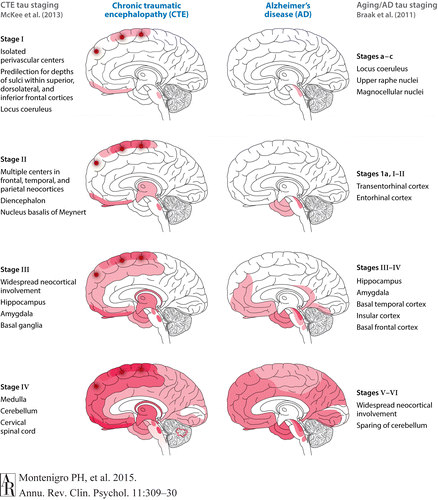
CTE is a progressive neurodegenerative disease found in people with a history of repetitive brain trauma. Unlike a broken bone that knits back together, CTE involves the buildup of an abnormal protein called Tau in the brain.
Think of Tau like brain sludge. It slowly strangles healthy neurons, disrupting the brain’s ability to communicate with itself.
How It Develops
It’s a common misconception that you need to be “knocked out cold” to develop CTE. In reality, it is often the sub-concussive hits, the thousands of small jars to the head during routine sparring, that do the most damage.
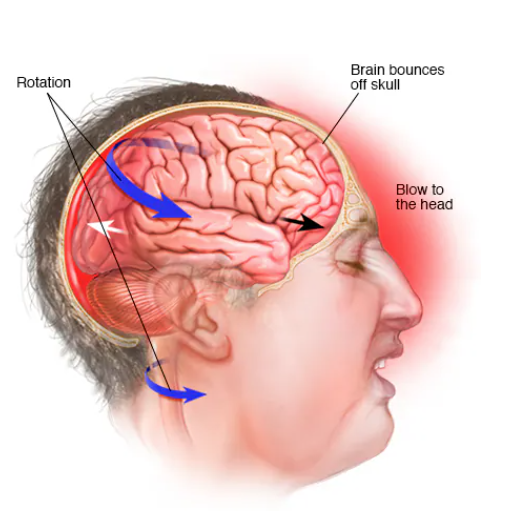
The physics is simple but brutal. When your head takes a hit, the brain (which has the consistency of soft gelatin) sloshes against the hard interior of the skull. This is governed by the classic formula:
F = ma
Where F is the force of the impact, m is the mass of the glove/fist, and a is the acceleration. Even a light snap of the head causes the brain to rotate and stretch, leading to microscopic axonal injury.
The Warning Signs
CTE currently can only be definitively diagnosed via autopsy, but the symptomatic red flags typically appear in stages:
Stage 1: Brain fog, frequent headaches, and difficulty concentrating.
Stage 2: Mood swings, bouts of depression, and “short-fuse” irritability.
Stage 3/4: Significant memory loss, executive dysfunction, and eventually, full-blown dementia.
Training Without The Trauma: The “Smart Fighter” Protocol
You don’t have to quit the sport to save your brain. You just have to stop training like it’s 1995 in a basement in Rio. Here is how to keep your skills sharp while keeping your grey matter intact:
1. The 10% Sparring Rule (Technical Sparring)
Stop “winning” gym wars. Real skill is built in Technical Sparring, where contact is kept at roughly 10-20% power. You focus on timing, entries, and defense. If you’re getting buzzed or seeing flashes of light, you aren’t training, you’re vibrating your DNA.
2. The “No-Head-Contact” Clause
If you are a hobbyist who doesn’t plan on fighting pro, ask your partners to “touch the shoulders” instead of the head during Muay Thai or boxing rounds. It preserves the footwork and head movement without the rattling.
3. Prioritize Grappling Over Striking
There is a reason why aging strikers often migrate to BJJ. While grappling has its own risks (mostly to your joints), the incidence of repetitive head trauma is significantly lower.
Note: Even in BJJ, avoid “power takedowns” where your head hits the mat. Learn to breakfall properly—it’s the most important “submission” you’ll ever learn.
4. The Headgear Myth
Important Correction: Headgear does not prevent CTE. While it prevents cuts, bruises, and cauliflower ear, it actually increases the “surface area” of your head, making it easier to hit. It also adds weight, which can increase the rotational force (Torque = r X F) on your brain stem when you get clipped. Use it for protection against cuts, but don’t treat it as a “brain shield.”
5. Invest in Recovery
Your brain needs a “flush” system.
- Sleep: This is when the glymphatic system clears metabolic waste (including Tau) from the brain.
- Omega-3s: High-dose DHA/EPA has been shown in some studies to support neuroprotection.
- The “Time-Off” Rule: If you do take a hard shot, take at least 30 days off from all contact. No exceptions.
The Bottom Line
Martial arts is a beautiful, transformative journey, but your brain is the only piece of equipment you can’t replace. By switching from toughness to technique, you can ensure that you’re still sharp enough to enjoy your black belt forty years from now.


