

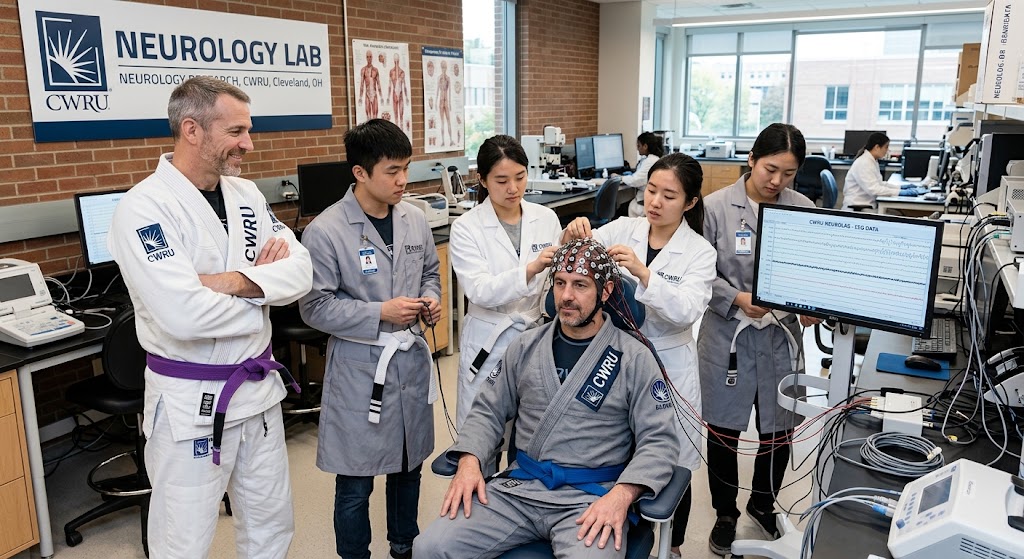
In an era defined by ubiquitous screens, hyper-connectivity, and relentless digital noise, human beings are experiencing unprecedented rates of cognitive burnout, chronic anxiety, and psychological disembodiment. Modern mental health professionals increasingly recognize that traditional talk therapy and seated mindfulness, while valuable, often struggle to fully discharge the deep-seated physiological tension accrued from modern life and trauma.
Enter Submission Grappling, a sport once viewed strictly through the lens of combat sports, now emerging as a cornerstone of somatic psychotherapy (a body-focused mental health approach) and an unprecedented analog rebellion.
By merging intense physical problem-solving, real-time bodily awareness, and high-stakes presence, grappling provides what psychiatrists now describe as an action-based, moving meditation. Far beyond simple exercise, BJJ offers a neurobiological reset button for overstressed nervous systems and traumatized minds.
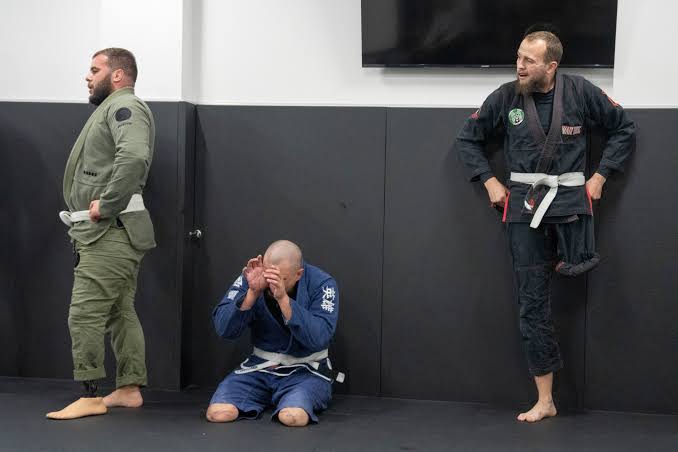
Trauma & PTSD Remission: The Empirical Case For Somatic Processing
For years, trauma researchers such as Dr. Bessel van der Kolk (The Body Keeps the Score) have emphasized that trauma does not merely live in our memories, it is encoded in the autonomic nervous system and somatic tissues. Victims of trauma often experience hyper-arousal, hyper-vigilance, and a lost sense of physical agency.
The Clinical Data: Peer-reviewed longitudinal studies published across psychiatric and sports science platforms (including Frontiers in Psychology and Military Medicine) reveal that just 40 to 60 hours of structured BJJ training leads to a 37% reduction in PTSD severity scores and a greater than 50% drop in generalized anxiety markers among veterans, military personnel, and first responders.
Why Does Grappling Work Where Other Therapies Stall?
- Controlled Exposure Therapy: In BJJ, practitioners regularly encounter stress triggers, being pinned under mount, feeling physical pressure, or navigating claustrophobic positions. In a safe, consensual academy environment, the brain learns that physical discomfort and elevated heart rates are not synonymous with danger.
- Re-establishing Agency Via The Tap: One of trauma’s core characteristics is helplessness. The tap-out mechanism in BJJ provides total autonomy, practitioners can pause or end a high-stress engagement instantly. This restores a profound sense of self-control and safety.
- Proprioceptive Grounding: Grappling forces total awareness of where one’s body is in space relative to another human being. This continuous tactile feedback reconnects disassociated individuals with their physical bodies.
The Analog Rebellion: A Cure For Digital Fatigue And Rumination
Modern digital life keeps the human brain in a state of continuous low-grade panic. Work notifications, social media algorithms, and doomscrolling keep our Default Mode Network (DMN), the brain network responsible for self-referential thought, worry, and rumination, chronically overactive.
Some mental health professionals now point to BJJ as the ultimate analog rebellion.
Inescapable Presence On The Mat
You cannot scroll your phone, check your inbox, or worry about tomorrow’s bills when a 200-pound training partner is actively attempting to pass your guard or isolate your arm. The physical reality of grappling imposes an immediate, unyielding boundary against mental abstraction.
- Zero Digital Intrusion: On the mat, there are no screens, notifications, or artificial stimuli. It is entirely analog, skin, sweat, cotton gi fabric, and gravity.
- Immediate Feedback Loops: Every action in BJJ carries an instant physical response. If you lose posture, your balance is broken, if you frame correctly, pressure is mitigated. This forces the mind into 100% presence.

The Neurobiology Of The Roll: Flow State & Transient Hypofrontality
Psychologist Mihály Csíkszentmihályi defined the flow state as an optimal state of consciousness where one becomes fully immersed in an activity, losing sense of time and self-consciousness. BJJ is arguably one of the most effective flow-state generators in existence.
What Happens To The Brain During Sparring?
During an intense roll, the brain undergoes a process known as transient hypofrontality.
- Damping the Prefrontal Cortex: The prefrontal cortex, responsible for critical inner dialogue, self-doubt, planning, and anxiety, temporarily decreases in activity.
- Entering Mushin (“No-Mind”): With the conscious critic silenced, instinct, muscle memory, and immediate sensory processing take over. The chatter of the ego dissolves into pure action.
- Neurochemical Cascade: The brain releases a potent cocktail of neurochemicals, endorphins, dopamine, serotonin, anandamide (the “bliss molecule”), and norepinephrine, which elevates mood, sharpens focus, and washes away cognitive fatigue.
This transient shift acts as a deep neurological cleanser. Practitioners walk off the mats after sparring feeling a profound sense of calm, mental clarity, and emotional neutrality.
Action-Based Moving Meditation vs. Seated Meditation
For many individuals suffering from high anxiety, ADHD, or complex PTSD, sitting quietly on a cushion focusing on the breath can be agonizing. Without an external anchor, an overstimulated nervous system often defaults to intrusive thoughts, panic, or dissociation.
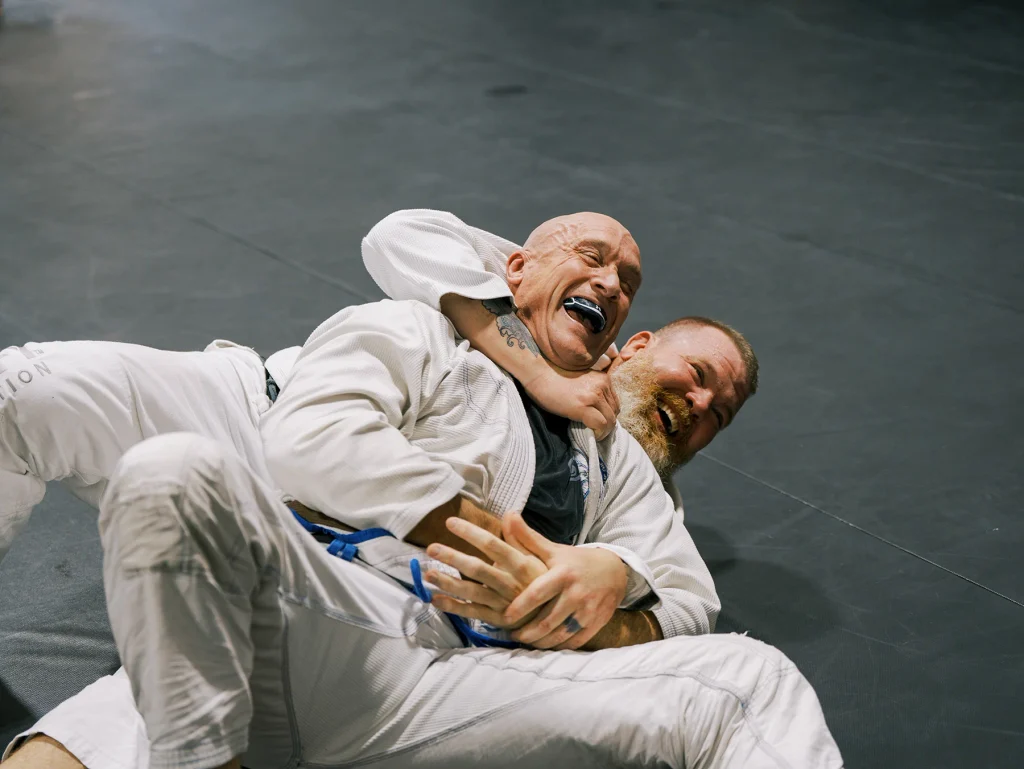
BJJ functions as an action-based, moving meditation.
Polyvagal Regulation and Vagal Tone
Polyvagal Theory, pioneered by Dr. Stephen Porges, highlights the importance of transitioning fluidly between states of activation and recovery.
- Sympathetic Mobilization: Sparring drives controlled sympathetic arousal (fight-or-flight energy, elevated heart rate, focused focus).
- Parasympathetic Down-Regulation: The post-roll period, slapping hands, catching breath, sitting with teammates, engages the ventral vagal system (safety and social engagement).
By repeatedly cycling through high physical stress and subsequent recovery, grappling builds resilience and vagal tone, equipping practitioners to better handle real-world stress outside the academy.
| Traditional Seated Meditation | BJJ Moving Meditation |
| Internal Anchor: Breath or mantra (easily lost during high stress). | External Anchor: Opponent’s weight, balance, grips, and movement. |
| Passive State: Requires quiet internal discipline. | Active State: Forced presence through immediate physical feedback. |
| Nervous System Goal: Down-regulation through stillness. | Nervous System Goal: Dynamic regulation (navigating stress & returning to calm). |
Maximizing The Therapeutic Potential Of Your Training
To harness BJJ as a therapeutic, flow-inducing practice, both individual practitioners and academy owners can adopt a few key practices.
- Cultivate A Culture of Psychological Safety: Prioritize a training environment where tapping is celebrated as a learning tool and a sign of intelligence, rather than framed as a loss.
- Focus On Flow Rolling: Incorporate light-intensity, movement-focused sparring where both partners explore transitions without maximum exertion. This maximizes time spent in the flow state without excessive central nervous system fatigue.
- Incorporate Post-Session Down-Regulation: Spend 3–5 minutes after class performing deliberate, slow nasal breathing (e.g., box breathing or extended exhales) on the mat to signal to your nervous system that the battle is over.
Reclaiming The Body And Mind On The Mats
Submission Grappling is far more than a martial art or self-defense system, it is a modern sanctuary. In a world attempting to pull our awareness into endless digital abstractions, the mat demands that we show up fully embodied, present, and grounded.
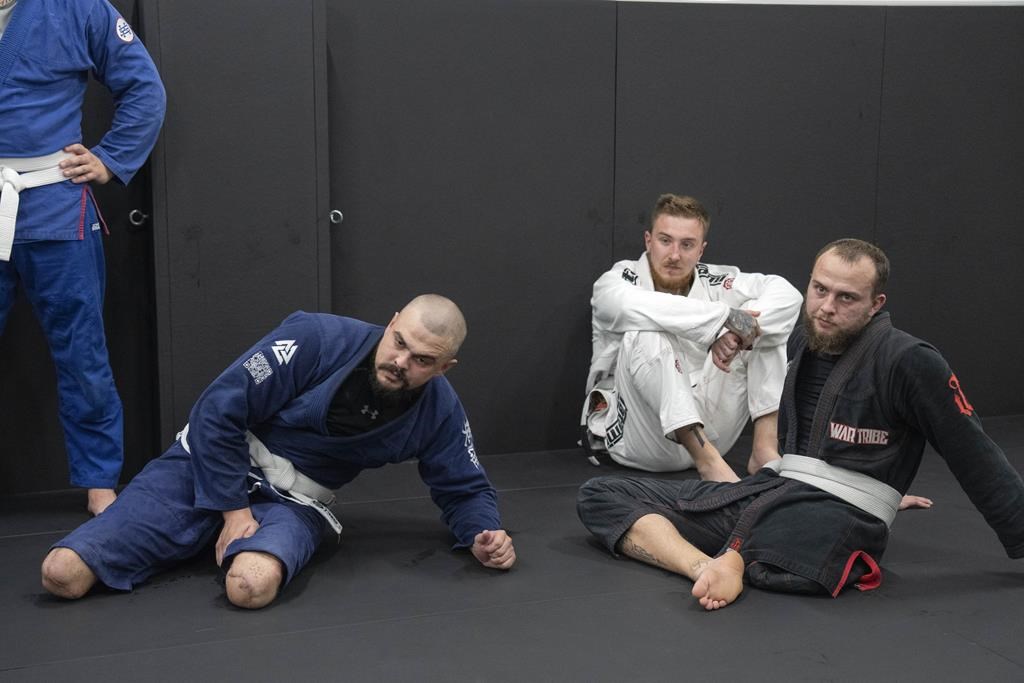
Whether relieving the heavy burden of PTSD, or offering a burnt-out professional an escape from cognitive fatigue, grappling represents an analog rebellion, a physical discipline that quiets the mind by engaging the body, restoring balance one roll at a time.


