

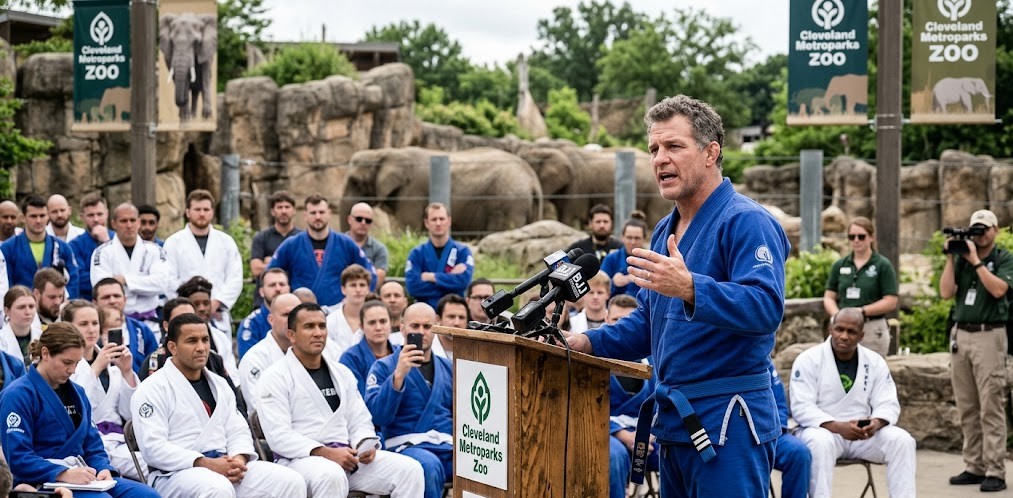
Every BJJ blue belt suffers from a specific, medically undocumented form of delusion. You’ve successfully survived the white belt meat-grinder, you finally know how to execute a crisp sweep, and suddenly you look at a stray dog or a zoo exhibit and think, “Yeah, I could probably choke that thing out.”
But let’s be real for a second, you are 36 years old. Your knees pop when you get out of bed, your warm-up takes longer than the actual sparring rounds, and you spend a significant amount of time complaining about your lower back. You are not fighting a silverback gorilla. You are not pulling guard on a grizzly bear.
However, if you found yourself trapped in an ancient Roman coliseum with a wild animal, what is the absolute largest creature you could theoretically walk away from with a victory?
We sat down, analyzed the tape, and ranked the top 6 largest wild animals that a moderately fit, 36-year-old BJJ blue belt could realistically defeat.
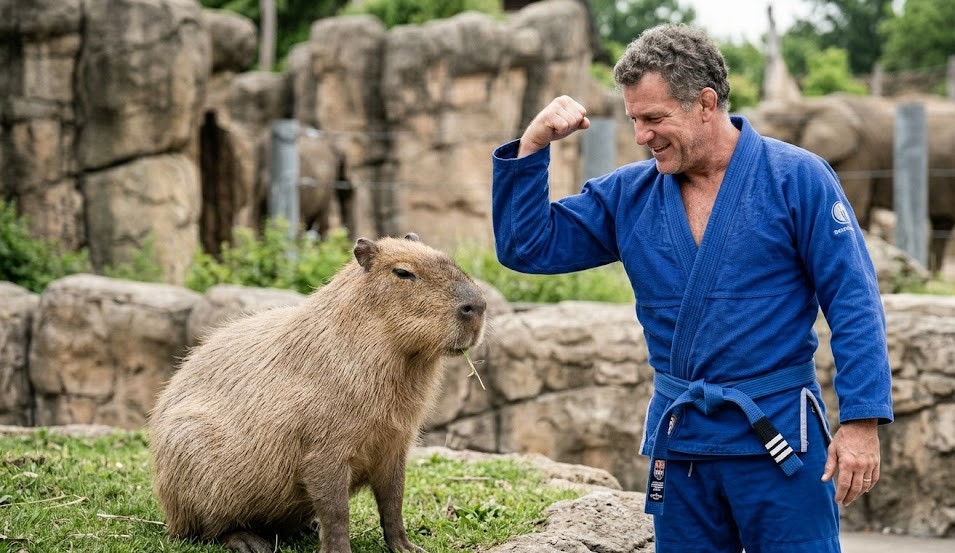
The Tale of the Tape: The Competitor
Before looking at the animal kingdom, let’s establish the baseline stats for our human representative.
| Metric | Profile / Fighter Stats |
| Age / Fitness | 36 years old, “moderately fit” (can roll 4 rounds before needing an inhaler) |
| Rank | Blue Belt (thinks he’s a lethal weapon, still gets smashed by athletic white belts) |
| Signature Move | A grinding half-guard or a suspiciously tight Ezekiel choke |
| Knee Health | Questionable at best; relies heavily on Ibuprofen |
The Rankings: From Featherweight Birds To Apex Reptiles
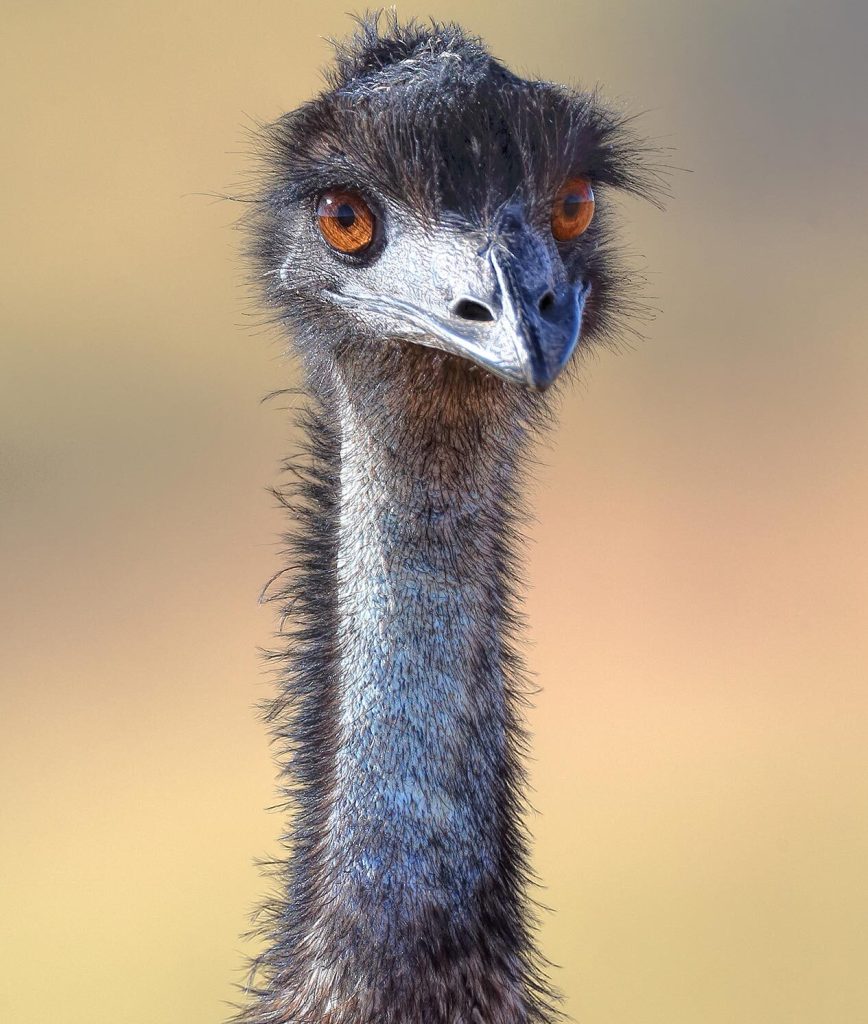
6. The Emu
- Average Weight: 80–95 lbs
- The Matchup: The emu looks intimidating. It’s tall, it has a terrifying stare, and it can run like the wind. In a stand-up fight, those legs can deliver a nasty forward kick that will completely ruin your day.
- The Path To Victory: The emu is the classic striking specialist with zero takedown defense. Do not pull guard here, getting stomped by a giant bird claw is an embarrassing way to go out. Instead, wait for it to charge, change levels, and hit a sloppy but effective single-leg takedown. Once the emu is on its back, it has absolutely no ground game. It lacks arms to frame or post. Slide right into full mount, wrap your arms around that ridiculously long neck, and secure the tap with a flawless Rear-Naked Choke (RNC).
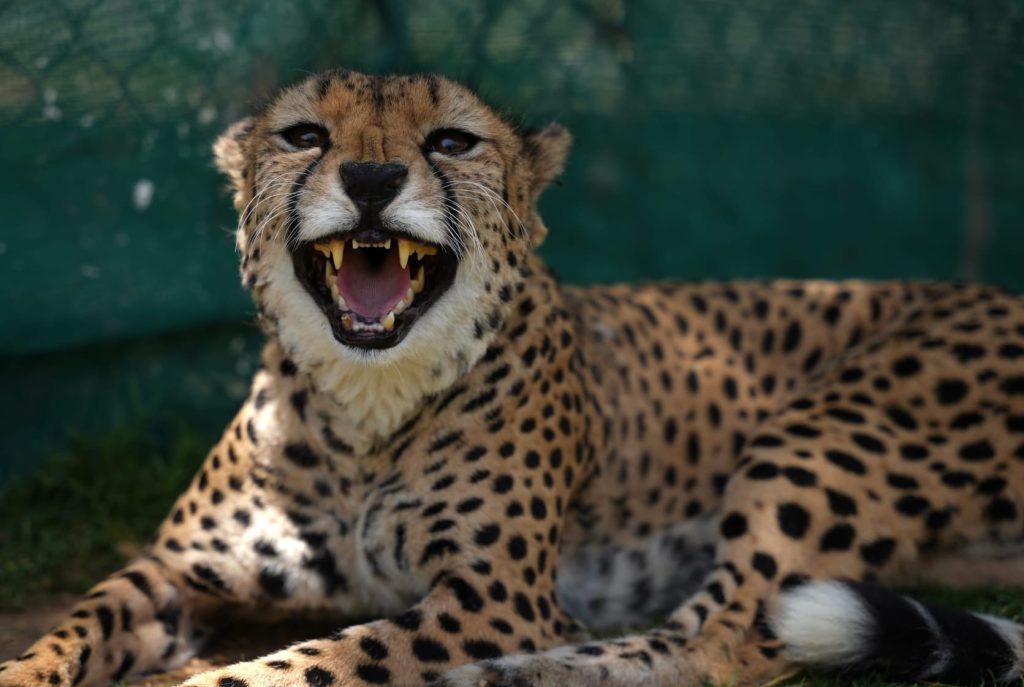
5. The Cheetah
- Average Weight: 110–130 lbs
- The Matchup: Look, your blue belt ego is probably screaming right now. “A big cat? No way!” But hear us out. A cheetah is not a lion or a leopard. It is the ultimate glass cannon of the savannah. It has lightweight, fragile bones, blunted claws built for running traction rather than shredding flesh, and a bite force that pales in comparison to other apex predators.
- The Path To Victory: Survival Is The First 15 Seconds. If a cheetah ambushes you at top speed, you’re done, but if it’s a structured face-off, the cheetah has a major flaw, zero cardio. After a brief explosion of energy, its body overheats, and its gas tank hits absolute zero. If you can weather the initial scramble, use your weight advantage to pin it. Once you secure the back, lock in a body triangle to neutralize its hips, and sink in the choke.
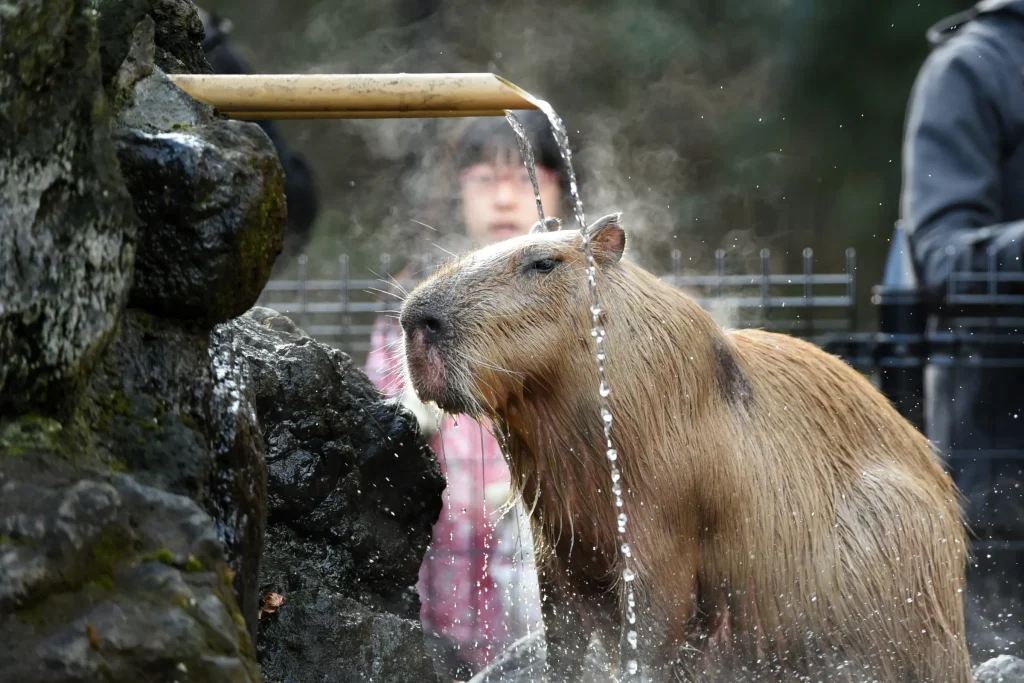
4. The Capybara
- Average Weight: 110–140 lbs
- The Matchup: The good news? It’s the world’s largest rodent, so it fits the large criteria perfectly. The bad news? It has massive incisors that can bite through heavy wood. The great news? It has the competitive drive of a sleepy stoner.
- The Path To Victory: This is a pure weight-class battle. The capybara is dense and low to the ground, making a standard takedown a bit awkward. However, because it lacks a warrior spirit, you can easily transition it into side control. The real challenge is anatomy, a capybara doesn’t really have a neck for a traditional guillotine, and its limbs are too stubby for an armbar. Your best bet is to establish heavy top pressure (knee-on-belly style) and work a slow, grinding Ezekiel choke until it gives up.
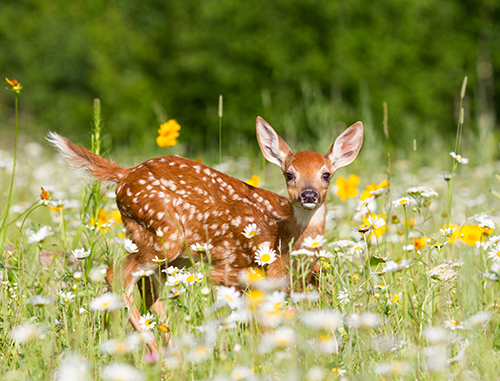
3. The White-Tailed Deer (Doe)
- Average Weight: 120–150 lbs
- The Matchup: We are explicitly choosing a doe here. If you try to grapple a buck with a full rack of antlers, you are going to end up pinned to a tree like a tragic piece of modern art. A doe is pure, unadulterated muscle and panic.
- The Path To Victory: The doe’s entire defensive strategy is flight. It does not want to fight you. If you can corner it, the scramble will be chaotic. Watch out for flailing hooves, which can easily crack a rib (and you already complain about your ribs enough after Tuesday night open mats). Your objective is to secure a front headlock. A deer’s long neck is a massive mechanical disadvantage against a trained grappler. Wrap up a tight guillotine, sit back into closed guard, and use your legs to control the torso.
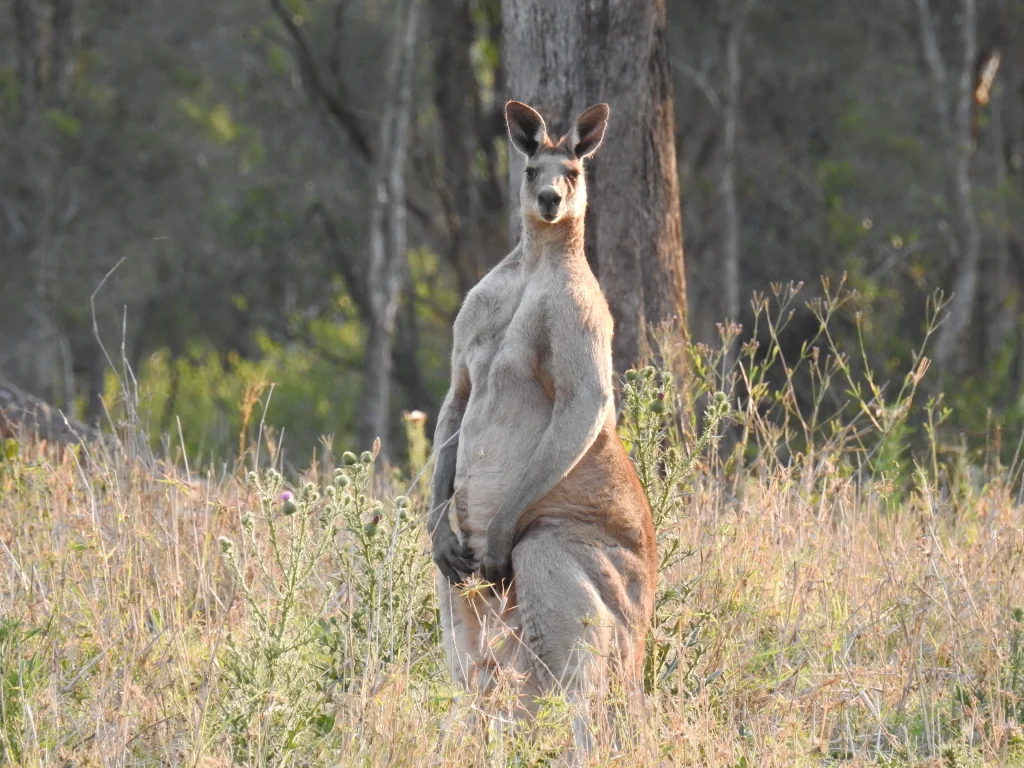
2. The Eastern Gray Kangaroo
- Average Weight: 120–145 lbs
- The Matchup: If you’ve seen videos of kangaroos, you know they look like jacked bodybuilders who specialize in dirty kickboxing. They balance on their heavy tails and launch brutal double front kicks to the liver. They want to stand and bang.
- The Path To Victory: This is a classic striker vs. grappler scenario. The kangaroo’s stance is begging to be exploited. When it leans back on its tail to kick, its base is completely locked in place. Change levels under the kick, blast through with a double-leg takedown, and dump it on the canvas. On the ground, a kangaroo is a fish out of water. Its arms are too short to frame effectively, and it doesn’t know how to retain guard. Pass to full mount, transition to the back, and finish the fight.
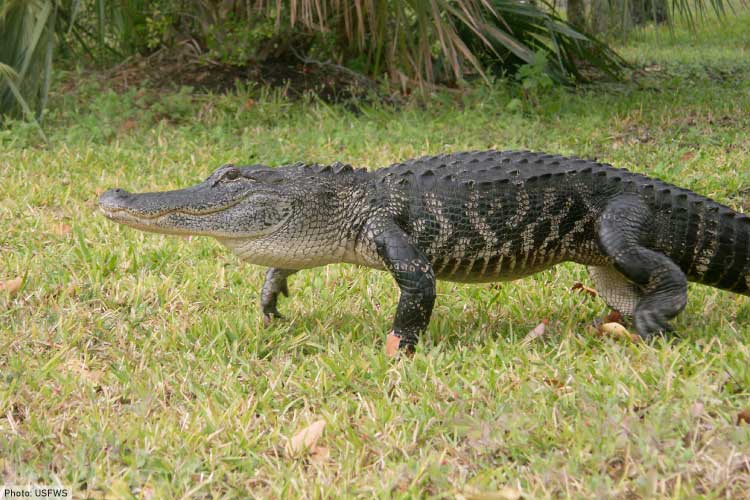
1. The American Alligator (5 to 6 Feet)
- Average Weight: 100–140 lbs
- The Matchup: Welcome to the absolute ceiling of your martial arts capabilities. To be crystal clear, if this alligator is 7 feet or longer, it will death-roll your arm off and eat it for lunch, but a 5.5-foot sub-adult alligator on dry land? You actually have the tactical advantage.
- The Path To Victory: Alligators are ancient reptiles built for short, terrifying bursts of explosive energy. They are entirely anaerobic fighters. If you can survive the first 30 seconds of death-rolling and tail-whipping, their muscles fill with lactic acid, and they become completely immobilized by exhaustion.
The Golden Rule of Reptile Grappling: Alligators have thousands of pounds of biting pressure when closing their jaws, but almost zero muscle strength when opening them.
Your entire game plan is to flank the gator, jump onto its back, and use your hands to clamp its jaws shut. Once the mouth is secure, it has no weapons left. You can’t choke it traditionally due to its lack of a mammalian carotid artery setup, but you can achieve a total positional dominance victory, holding it down until it completely gases out.
The Reality Check
While it’s fun to imagine yourself walking into the wilderness and tapping out a prehistoric apex predator, let’s remember who you are. You are a 36-year-old bluebelt. If you sit cross-legged for too long on the living room floor, your foot falls asleep.
If you encounter any of these animals in the wild, skip the jiu-jitsu, utilize your excellent 40-yard dash, and leave the grappling for the safety of the academy. You probably don’t need to be fighting any of these animals in the wild.


