

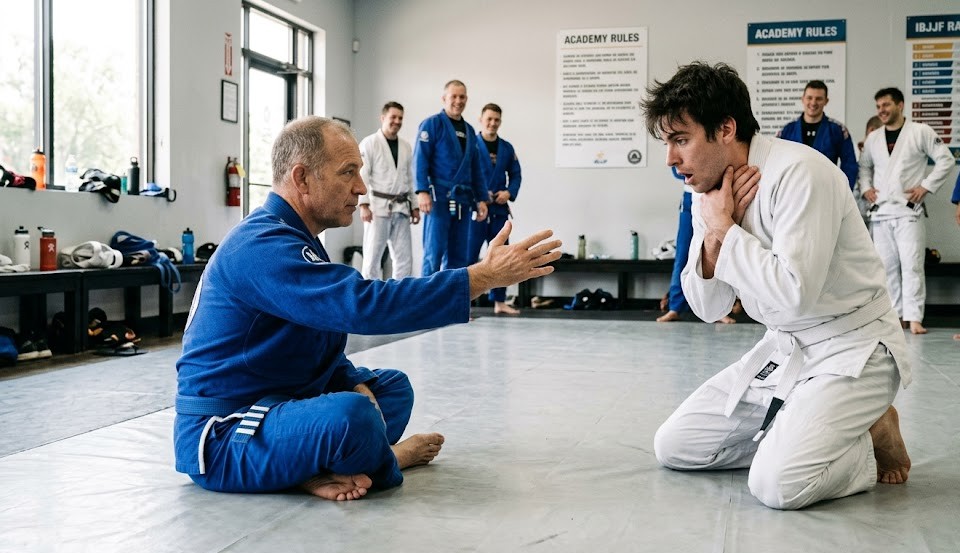
Ever wonder how that crafty purple belt swept you without looking? Or how your coach managed to counter your perfectly timed takedown while their head was completely trapped in your armpit?
It’s not magic, and it’s not just mat time. It’s a form highly developed physical intuition known as proprioception.
For BJJ practitioners and grapplers in general, proprioception is the invisible thread that connects technique to execution. Here is a breakdown of what this sixth sense is, why it dictates your success on the mats, and how you can actively train it to level up your game.
What Is Proprioception?
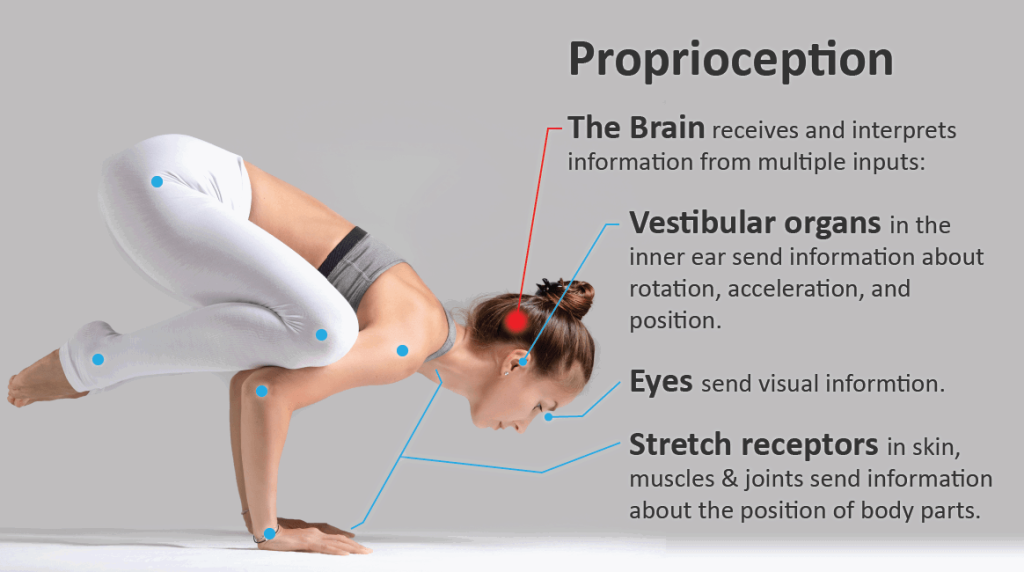
In simple terms, proprioception is your body’s ability to perceive its own position, movement, and spatial orientation without relying on sight.
Deep within your muscles, tendons, and joints are millions of tiny sensory receptors called mechanoreceptors (specifically, muscle spindles and Golgi tendon organs). These receptors act like an internal GPS, constantly firing data to your central nervous system about how much your muscles are stretching, the angle of your joints, and the amount of tension being applied.
When you close your eyes and successfully touch the tip of your nose with your index finger, that’s proprioception at work. On the mats, it’s what tells you exactly where your hips are relative to your opponent’s guard.
Why Proprioception Is The Ultimate Grappling Superpower
Jiujtsu is a chaotic, three-dimensional puzzle. Unlike sports like running or cycling, which rely on predictable, repetitive movements, BJJ forces you to adapt to an actively resisting human being. Proprioception is critical to grappling for three major reasons!
1. Navigating The Blind Spots
You spend a massive amount of time in BJJ unable to see what is actually happening. If you are stuck underneath a heavy side control, fighting out of a tight front headlock, or defending a back take, your eyes can feel practically useless. You must see with your skin, muscles, and joints. High proprioceptive awareness allows you to feel the micro-shifts in your opponent’s weight distribution, letting you anticipate their next transition before it happens.
2. Micro-Adjustments And Weight Distribution
Ever rolled with someone who feels like they weigh 500 pounds, even though they only weigh 160? That is the art of heavy pressure, and it relies entirely on proprioception. An advanced grappler feels exactly where your frames are weak and shifts their center of gravity to exploit that exact vacuum. Conversely, good proprioception allows a guard player to dynamically adjust their angles to keep an aggressive passer off-balance.
3. Injury Prevention
When you get caught in a scramble, your joints are frequently pushed to their structural limits. Grapplers with poor proprioception often don’t realize their limb is in danger until pain kicks in, which is often too late. Heightened awareness gives your brain an immediate warning signal when a joint is out of alignment, allowing you to tap or safely concede the position before an injury occurs.
Exercises to Heighten Your Proprioceptive Awareness
The good news is that proprioception is a trainable skill. Just as you can build endurance or strength, you can sharpen your nervous system’s responsiveness. Here are four practical exercises you can integrate into your training regime.
1. Blindfolded Drilling And Sparring (The Daredevil Roll)
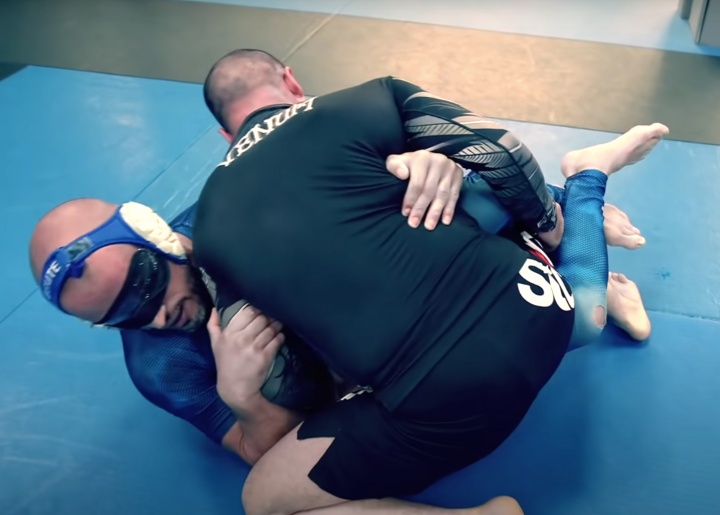
The eyes are a sensory bully, they hijack the majority your brain’s attention. By removing your vision, you force your mechanoreceptors to do all the heavy lifting.
- How to do it: During positional sparring or light training with a trusted partner, close your eyes (or use a soft sleeping mask). Start from a neutral position like closed guard. Focus entirely on the friction of their gi/rashguard, the direction of their driving force, and where your own limbs are in space.
2. Animal Movements And Ginastica Natural
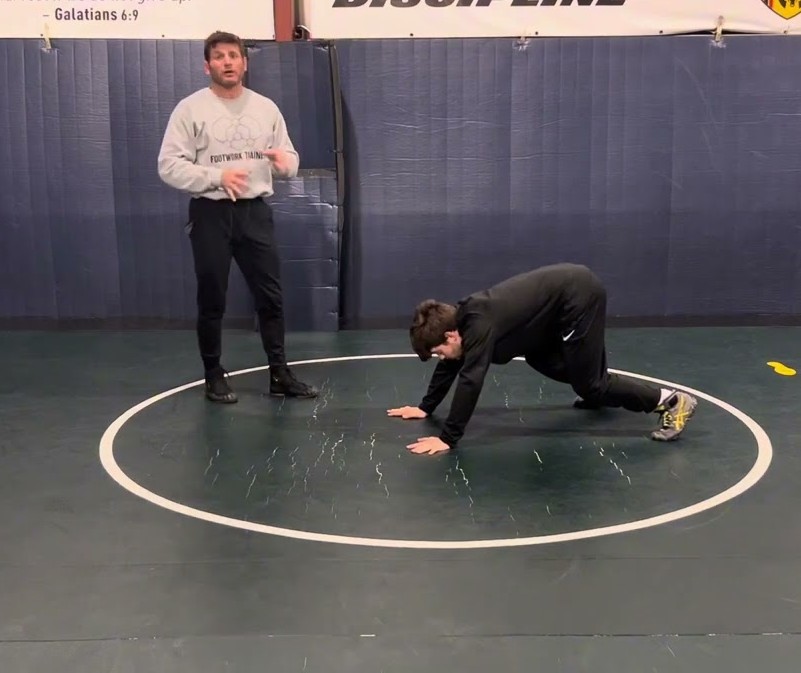
BJJ requires non-linear movement. Traditional weightlifting moves you in straight lines, but grappling requires twisting, crawling, and inversion.
- How to do it: Incorporate movements like bear crawls, crab walks, alligator crawls, and tactical sit-outs into your warm-ups. Focus on deliberate control rather than speed. For an advanced variation, try performing a slow-motion technical stand-up or a granby roll with your eyes closed.
3. Unstable Surface Balance Training
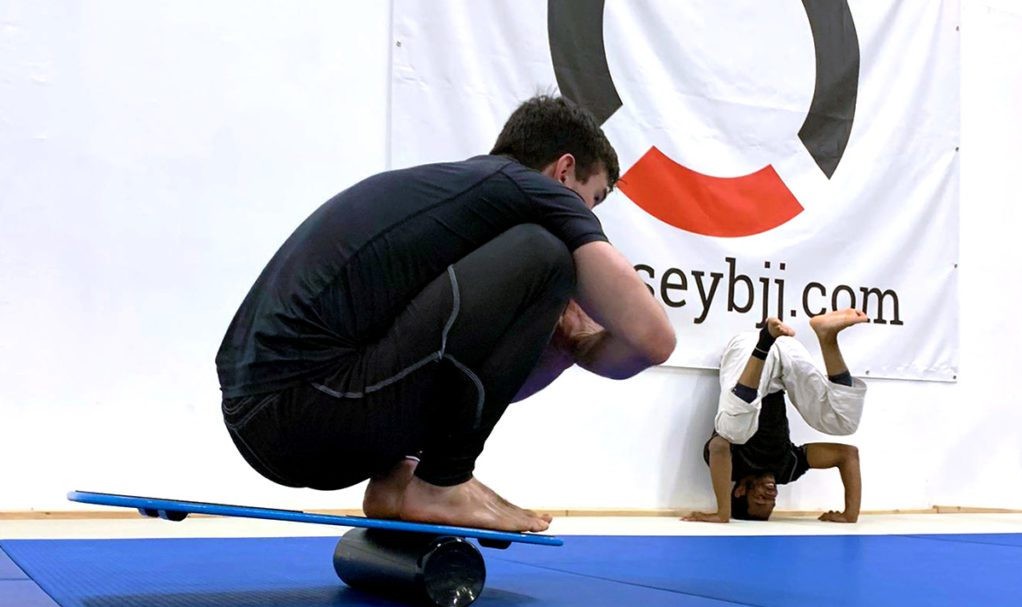
Training your nervous system to stabilize your joints on an unpredictable surface directly translates to stabilizing your base against a sweeping opponent.
- How to do it: Use a Bosu ball or a balance pad. Practice standing on one leg while performing basic movements like air squats or hip hinges. To make it BJJ-specific, practice catching a medicine ball thrown by a partner while balancing on one leg, forcing your core and ankles to make split-second, subconscious adjustments.
4. The Slo-Mo Flow Roll
Fast rolls often rely on raw athleticism, adrenaline, and explosion, which bypasses deep neuromuscular learning.
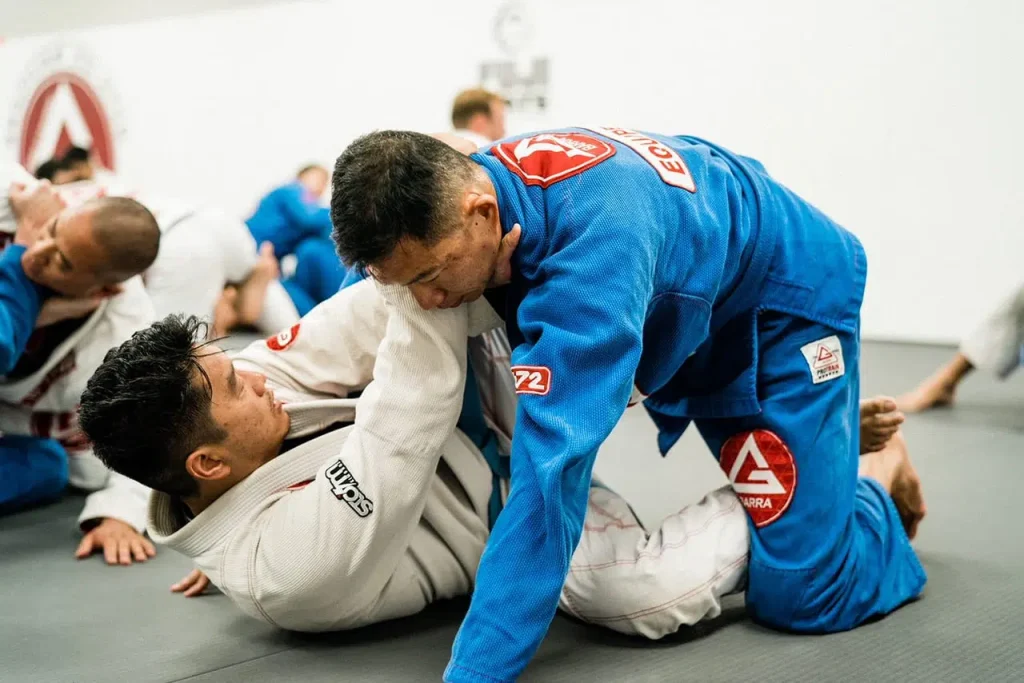
- How to do it: Commit to a 5-minute round where both you and your partner move at exactly 10% speed. No explosive movements allowed. If someone hits a sweep, it must be done through perfect leverage and weight distribution. This hyper-slow pace forces you to mindfully feel every single point of contact and structural alignment between you and your partner.
The Takeaway: The difference between a clunky, frustrating roll and a smooth, effortless performance often comes down to how well your body communicates with itself. By dedicating time to sharpening your proprioception, you stop chasing the fight and start feeling it.
| Exercise Name | How to Perform It | Primary Focus & BJJ Benefit |
| Blindfolded Drilling & Sparring (The Daredevil Roll) | Close your eyes or use a soft sleeping mask during light positional sparring with a trusted partner. Start from a neutral position like closed guard. | Sensory Shift: Shuts down visual dominance, forcing your brain to “see” using skin friction, joint angles, and changes in your opponent’s driving force. |
| Animal Movements & Ginastica Natural | Incorporate deliberate bear crawls, crab walks, alligator crawls, or solo granby rolls into your warm-ups. Prioritize control and form over speed. | Non-Linear Movement: Enhances body coordination and spatial awareness in the awkward, multi-directional planes required during intense scrambles. |
| Unstable Surface Balance Training | Practice standing on one leg performing air squats or hip hinges on a Bosu ball or balance pad. Have a partner toss you a medicine ball to up the stakes. | Dynamic Stabilization: Prepares your core and lower-body joints to make instantaneous, subconscious micro-adjustments when an opponent tries to compromise your base. |
| The Slo-Mo Flow Roll | Partner up for a 5-minute round moving at exactly 10% speed. Absolutely no explosive movements or muscle allowed; sweeps must rely purely on mechanics. | Structure & Leverage: Slows down the chaotic pace of grappling so you can mindfully feel weight distribution, frames, and structural vacuums. |


