

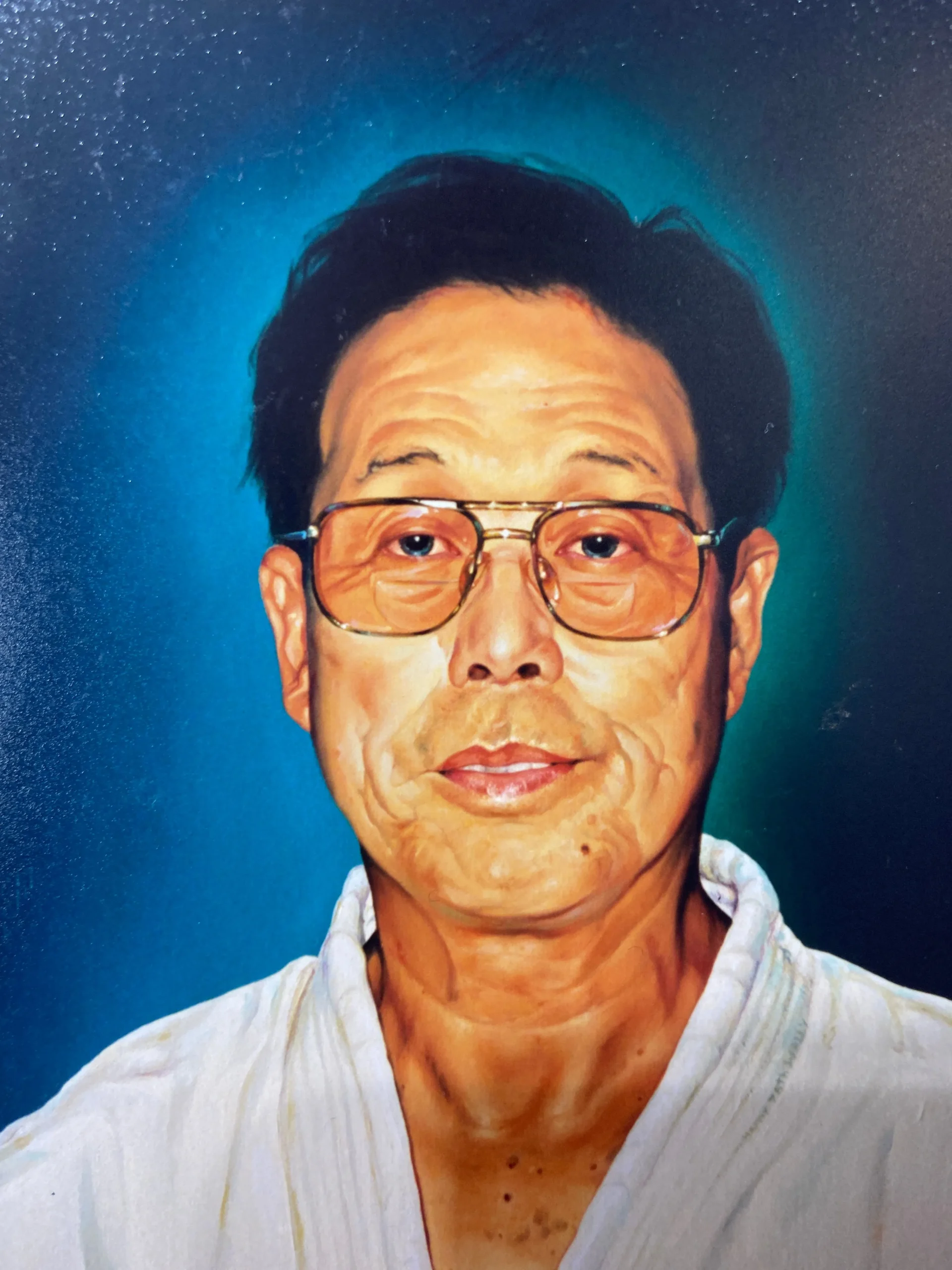
Long before the Gracie family stormed UFC 1, and decades before cross-training became a modern martial arts buzzword, a quiet revolution was brewing on the docks of Hawaii and the mats of Northern California. Its architect was a compact, sharp-witted man named Wally Jay.
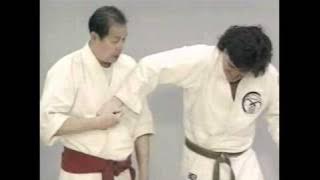
While modern BJJ practitioners often look to Rio de Janeiro or Tokyo for their roots, any serious student of the submission arts owes a massive debt to Professor Wally Jay. He didn’t just practice Jiu-Jitsu, he re-engineered it. By shrinking the battlefield down to the mechanics of the human wrist and finger joints, he created Small Circle JuJitsu, a system that fundamentally altered how martial artists understand leverage.
Early Life: The Hawaiian Melting Pot
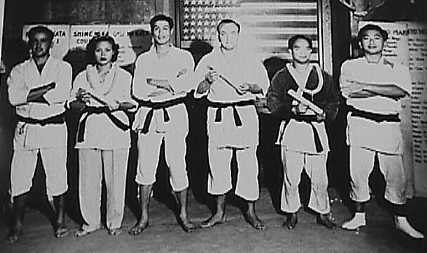
Born in Honolulu, Hawaii, in 1917, Wallace “Wally” Jay grew up in a vibrant, gritty multicultural environment. Hawaii at the time was a crucible for martial arts, where Chinese Kung Fu, Japanese JuJitsu and Judo, Filipino Kali, and Western boxing constantly collided and synthesized.
Like many legends of his era, Jay’s entry into martial arts was born out of necessity. As a smaller man navigating a tough environment, he needed an equalizer. He initially turned to boxing in his teenage years, developing a keen sense of timing and distance. However, the turning point of his life came when he stepped onto the mats to study the grappling arts.
Development As A Martial Artist: Refining The Circle
Wally Jay’s martial journey was defined by a relentless quest for efficiency. He began studying Danzan-Ryu JuJitsu under its legendary founder, Seishiro Okazaki. Danzan-Ryu was already a eclectic system, but Jay wanted more precision.
The true catalyst for what would become Small Circle JuJitsu came from Jay’s Judo training under Ken Kawachi. Kawachi was a master of using tiny, subtle variations in leverage to topple much larger opponents. He taught Jay a fundamental truth, you don’t need a massive, sweeping movement to create a devastating reaction.
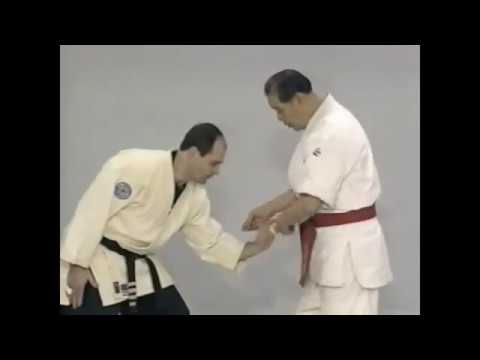
Jay took this concept and ran with it. He noticed that traditional JuJitsu often utilized large, sweeping joint locks that gave opponents time to counter or escape. Jay began experimenting with minimizing the space in his locks. By focusing on the smallest joints first, fingers and wrists, and rotating them on a tight, compact axis, he discovered he could generate agonizing pain compliance with a fraction of the effort.
This became the foundation of Small Circle JuJitsu, built on core principles such as:
- The Fulcrum and Lever: Finding the exact pivot point to maximize force.
- Continuous Pain Compliance: Never allowing the opponent a moment to recover or adjust once a lock is initiated.
- Transitional Flow: Smoothly moving from one submission to the next without losing control.
The Height of a Professional Career
By the 1950s, Wally Jay relocated to Alameda, California, where he established the Island Judo JuJitsu Club. The dojo quickly became a legendary hub for martial artists looking to sharpen their hand-to-hand skills. Jay’s reputation as a technician was unparalleled, he was twice named Coach Of The Year by the AAU (1960 and 1970) and was inducted into the Black Belt Magazine Hall of Fame multiple times.
During the 1960s and 70s, Jay’s path crossed with another martial arts icon, Bruce Lee. Lee, who was busy developing Jeet Kune Do, recognized Jay’s genius in the grappling realm. The two spent countless hours exchanging concepts. Jay taught Lee the intricacies of dynamic wrist locks and trapping, while Lee influenced Jay to keep his system fluid, adaptable, and free of rigid traditional dogma.
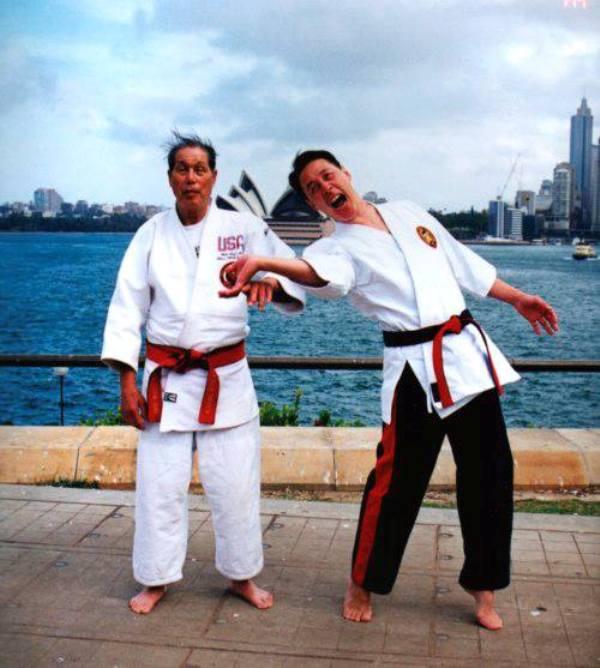
Throughout the later decades of the 20th century, Professor Jay traveled the globe, teaching sold-out seminars. Even into his 80s, the soft-spoken master could effortlessly bring hulking, 250-pound security guards to their knees with nothing more than a two-finger grip and a wry smile.
The Lasting Impact On Modern Jiujitsu and Judo
Professor Wally Jay passed away in 2011 at the age of 93, but his DNA is woven tightly into the fabric of modern grappling. If you train BJJ or Judo today, you are utilizing Wally Jay’s concepts, whether you realize it or not.
1. The Renaissance Of The Wristlock in BJJ
For years, BJJ practitioners dismissed wristlocks as cheap tricks or low-percentage moves. Today, that attitude has completely shifted. Competitors at the highest levels of the sport (such as the ADCC) use wristlocks as primary attacks and powerful sweep setups. The mechanics used to finish a modern BJJ wristlock, collapsing the space, isolating the elbow, and rotating on a micro-axis, are pure Wally Jay.
2. Grip Fighting (Kumikata) In Judo
Jay’s emphasis on finger and wrist manipulation completely changed how elite Judokas view grip fighting. Instead of just fighting for a sleeve, modern practitioners use subtle twists of the wrist to break an opponent’s structural alignment before the throw even begins.
3. The Philosophy Of Cross-Training
Perhaps Jay’s greatest gift was his open-mindedness. He actively encouraged his students to study other arts to patch the holes in their game. He demystified martial arts, stripped away the cult-like secrecy of the old schools, and focused entirely on functional application.
The Endless Circle
Wally Jay famously said, “I don’t think I’m a master. I’m just a student who didn’t give up.” For the modern BJJ practitioner grinding through tough rounds on the mats, Professor Jay serves as the ultimate reminder of what Jiu-Jitsu is supposed to be, the triumph of precise geometry over raw athleticism. The next time you find a tiny angle that forces a tap from a much larger training partner, take a moment to thank the quiet master from Hawaii who taught the world to look closer at the small circles.


