

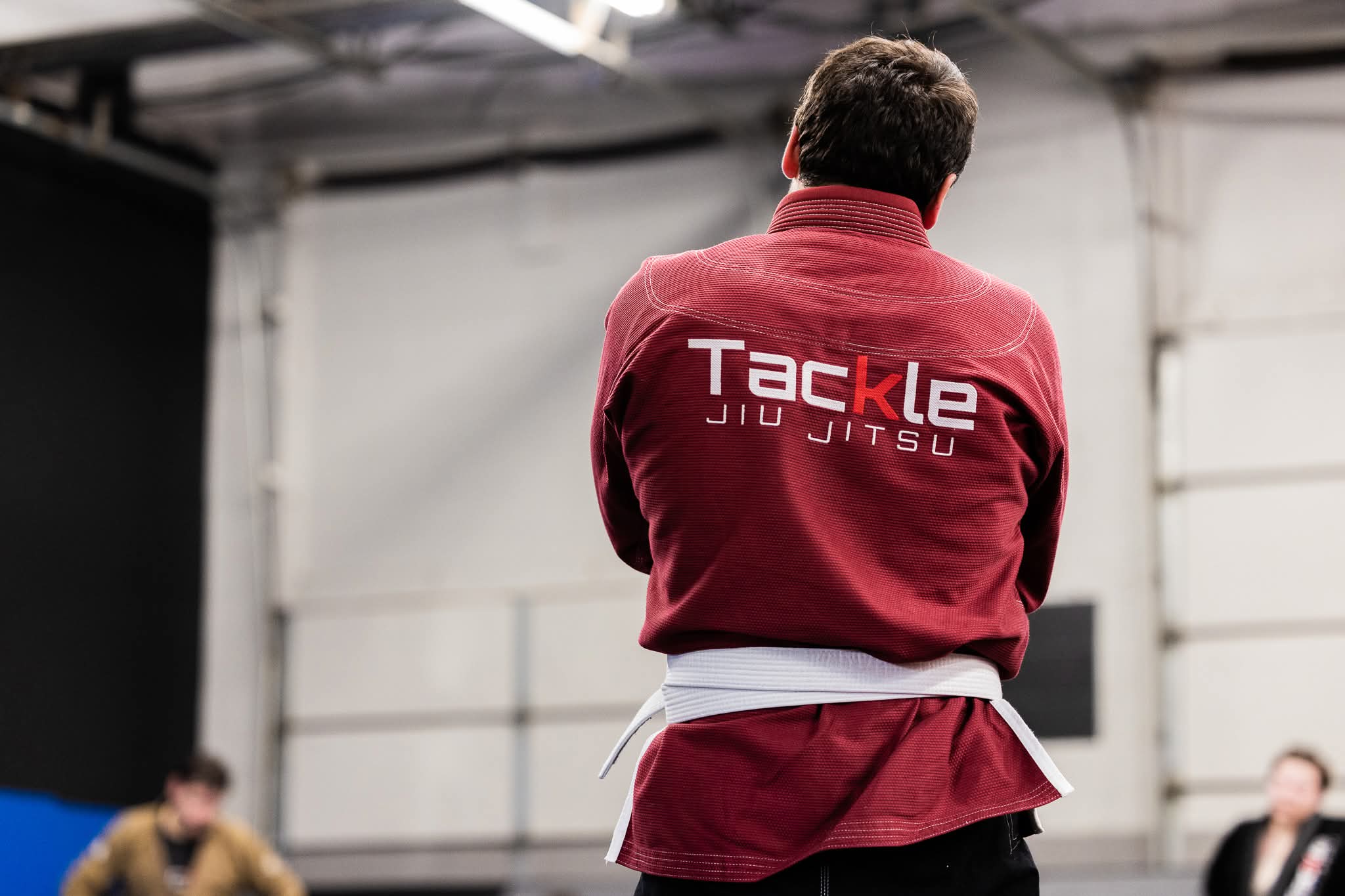
Long before BJJ became a global combat sport, its iconic uniform, then known as a keikogi (practice uniform) was forged to survive the high-impact demands of various forms of martial training.
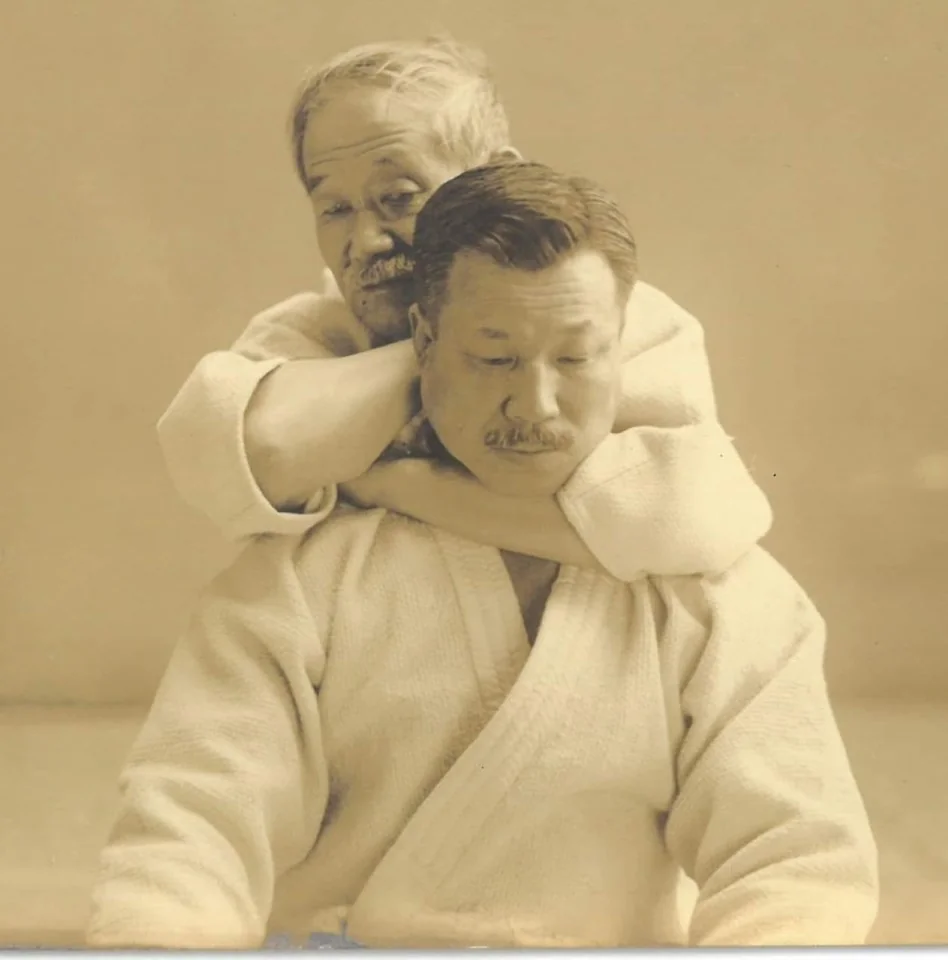
Origins Before BJJ: Jigoro Kano’s Input
In the late 19th century, traditional Japanese martial artists trained in standard everyday kimonos, which torn easily under intense grips. In 1906, Kodokan Judo founder Jigoro Kano designed the modern judogi (judo uniform). Kano introduced heavy woven cotton, reinforced knee stitching, shortened sleeves, and durable pants built specifically to withstand heavy pulling, throwing, and ground fighting.
The Brazilian Adaptation
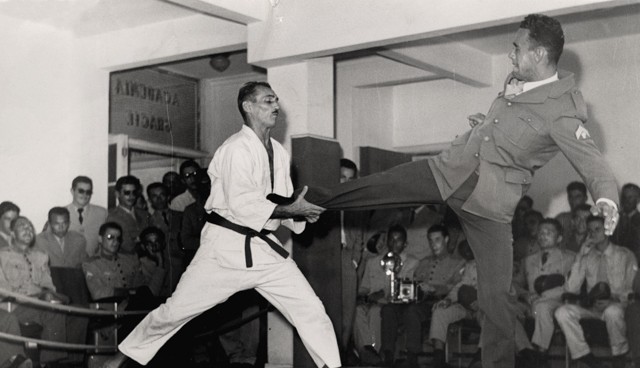
When Mitsuyo Maeda brought Judo to Belém, Brazil, in 1914, Carlos and Hélio Gracie inherited Kano’s uniform. As Gracie Jiu-Jitsu evolved into a guard-heavy, submission-focused art, the gi remained central to its mechanics, collars replaced everyday clothing holds, while sleeve controls enabled leverage against larger opponents. Over time, BJJ gis diverged from Judogis, becoming lighter, more form-fitted, and tailored for ground mobility rather than broad-standing throws.
Standardization And The Gi Checker
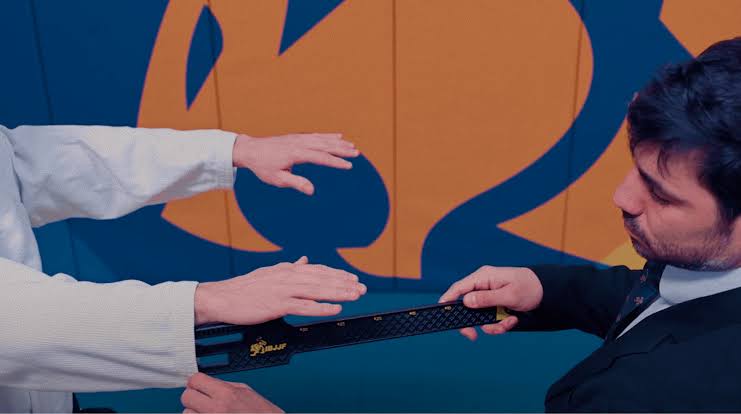
By the mid-1990s, competitive BJJ required structural regulation. Athletes had begun exploiting uniform loopholes, wearing skin-tight jackets, shortened sleeves, un-gripable thick lapels, and mismatched colors to confuse judes. To enforce fair play, the International Brazilian Jiu-Jitsu Federation (IBJJF) created standardized uniform criteria and deployed a specialized measurement tool, the Gi Checker.
Current IBJJF Uniform Standards
Color And Design Regulations
- Permissible Colors: Uniforms must be solid White, Royal Blue, or Black.
- Matching Pieces: The jacket and pants must be the exact same color. The lapel must match the jacket fabric color.
- Patches: Permitted only in designated areas (e.g., shoulders, lower lapel, upper back, lower pant legs) to ensure primary grip zones remain unobstructed.
Dimensions And Fit
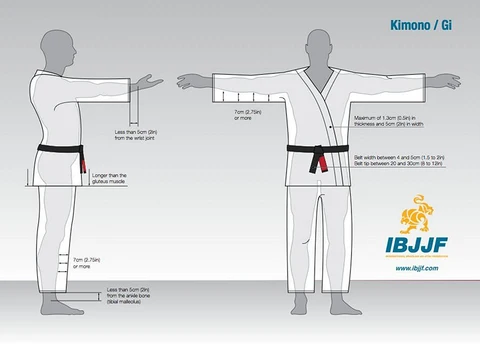
- Sleeve Extension: With arms extended forward at 90 degrees, sleeves must reach within 5 cm of the wrist bone.
- Sleeve Clearance: Minimum 7 cm width opening along the entire length of the sleeve when extended.
- Lapel Dimensions: Maximum width of 5 cm and maximum thickness of 1.3 cm.
- Jacket Length: The skirt must extend low enough to cover the buttocks when standing erect.
- Pants Fit: Must extend to within 5 cm of the ankle bone, maintaining at least a 7 cm opening width down the leg.
- Belt Standard: 4–5 cm wide, tied in a double knot with 20–30 cm tails remaining. Must feature an official rank sleeve (black bar for color belts, red for black belts).
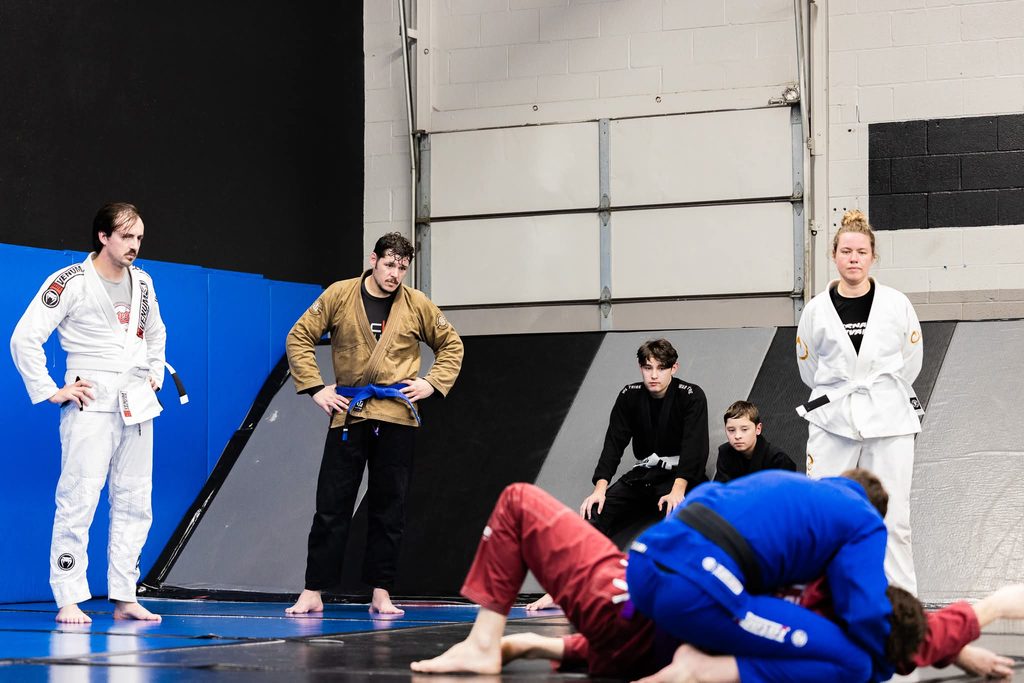
While the IBJJF maintains rigid uniform guidelines to preserve traditional standards, many independent organizations operate with far looser restrictions. Tournaments hosted by promotions such as Grappling Industries and the North American Grappling Association (NAGA) prioritize athlete participation and personal expression, enforcing minimal uniform mandates beyond basic safety and cleanliness. On these mats, competitors routinely step up in non-sanctioned colors like navy blue, olive green, gray, red, or even bold camo prints. From intricate interior kimono linings, and mismatched jacket-and-pant combinations, to custom patches covering every inch of fabric, these less restrictive rulebooks reflect Jiujitsu’s vibrant subculture, proving that while formal standardization has its place, creative freedom and individuality remain deeply rooted in the modern competition landscape.
Ultimately, the evolution of the gi mirrors the broader trajectory of BJJ itself, a constant balancing act between honoring traditional heritage and embracing modern expression. Whether an athlete steps onto the mats in a pristine, IBJJF-compliant kimono or a bold, custom-designed weave at an open tournament, the uniform remains far more than simple athletic attire. It is a functional tool of leverage, a direct link to Kano’s early judoka, and a canvas for personal identity. As the sport continues to expand globally, the gi endures as BJJ’s most iconic symbol, strained by grips, tested by time, and inextricably tied to the gentle art.


