

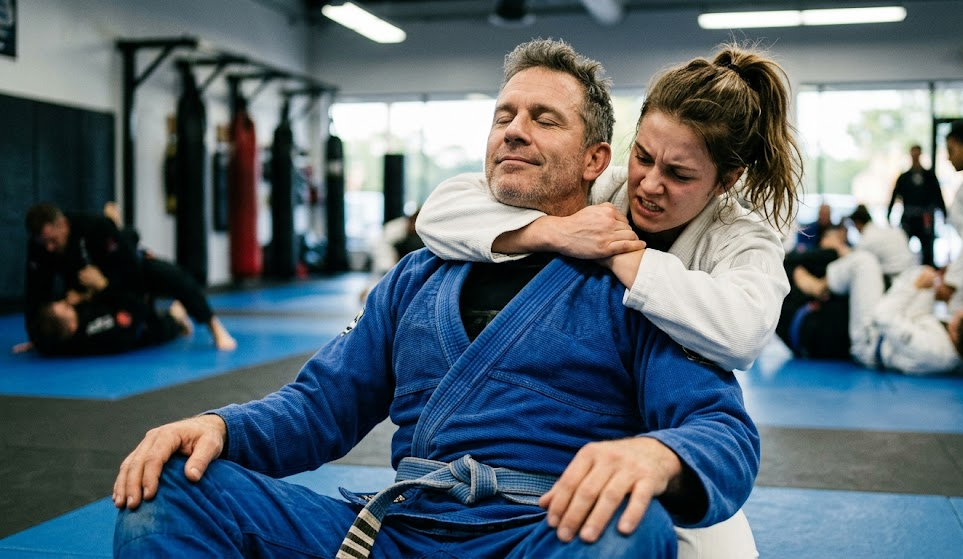
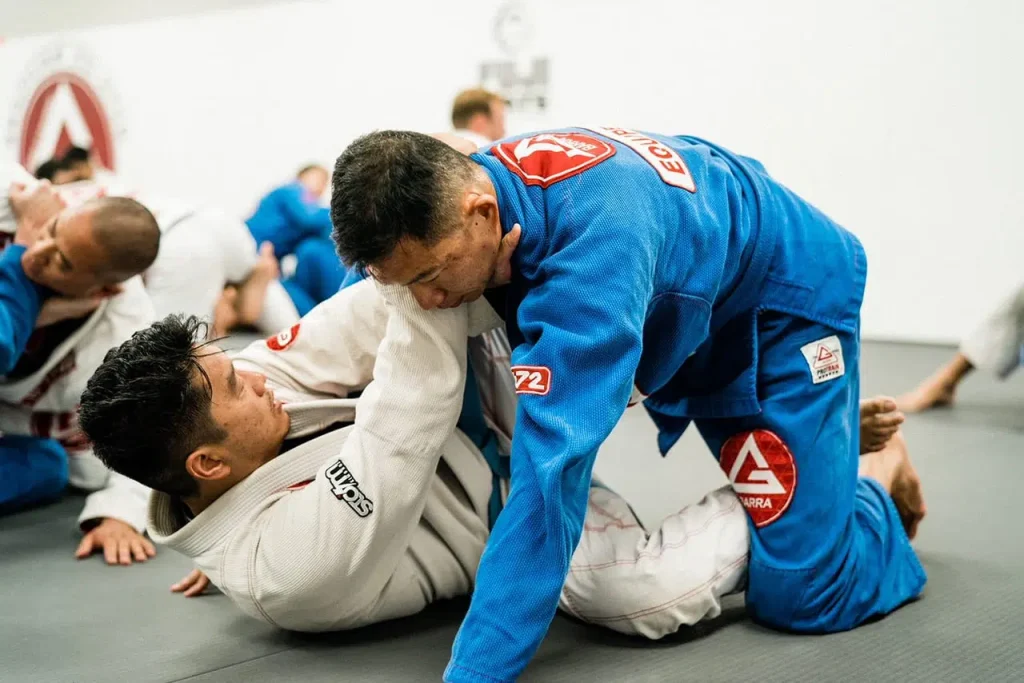
When most people think of mindfulness, they picture quiet rooms, burning incense, and sitting cross-legged in serene silence. They don’t usually picture a sweaty basement gym, heavy metal blasting over the speakers, and a 200-pound ultra-heavyweight attempting to knee-on-belly them into early retirement.
However, a very real truth exists just beyond one’s first assessment, Brazilian Jiujitsu, submission grappling, and wrestling are, by their very nature, violent forms of moving meditation.
Mindfulness is simply the practice of being fully present, aware of where we are and what we’re doing, and not overly reactive or overwhelmed by what’s happening around us. On the mats, a lack of mindfulness doesn’t just mean your mind wanders, it means you walk right into an easily avoidable triangle choke.
The Chaos Of An Unmindful Mind
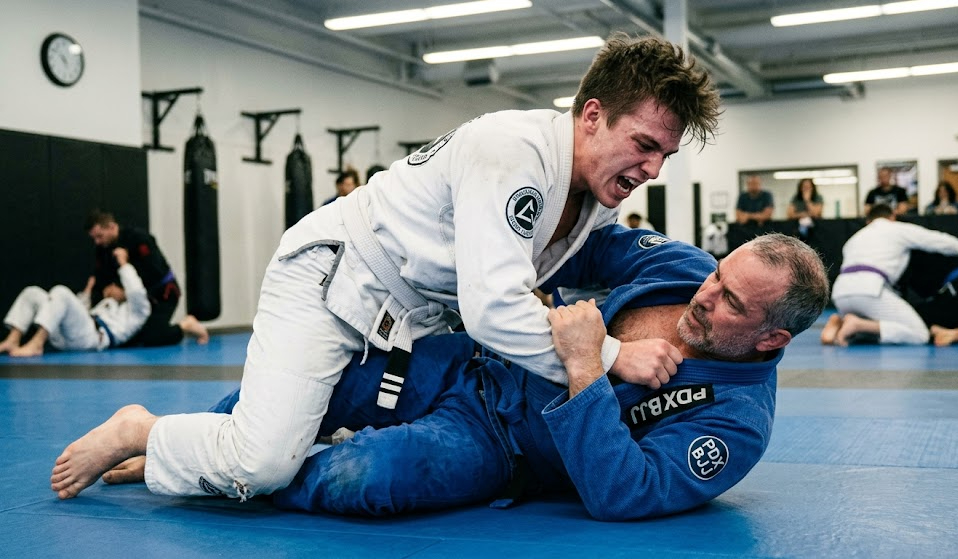
We’ve all shared at least one round with the panicked white belt, and most of us have been that person ourselves. When adrenaline spikes, the brain’s survival mechanism kicks in. Your vision narrows, your breathing turns into shallow gasps, and your technique flies out the window in favor of pure, unadulterated spazzing.
That is the antithesis of mindfulness.
When you practice mindfulness in grappling, you learn to separate the sensation of danger from your reaction to it. You stop fighting the storm and start navigating it. By bringing acute awareness to your body, your breath, and your partner’s weight distribution, you unlock the holy grail of sports psychology, the flow state.
If you want to slow the game down, reduce your performance anxiety, and stop burning through your gas tank in the first two minutes of a round, you need to train your mind just like you train your cross-face.
Three Exercises To Build Your Mindfulness On And Off The Mats
To integrate mindfulness into your Jiujitsu, you don’t need to sit on a cushion for an hour before class. You just need to change how you pay attention during your regular training. Here are three practical exercises to try during your next session.
1. The Box-Breathing Side Control Survival
The ultimate test of mindfulness isn’t when you’re winning; it’s when you are utterly miserable. This exercise is designed to be practiced during positional sparring or specific training when you are caught in a bad position (like bottom side control or mount).
- The Drill: Have your partner pass your guard and establish a heavy, uncomfortable side control. Instead of immediately exploding to escape, your sole objective for the first 30 to 60 seconds is to maintain a specific breathing pattern.
- The Focus: Implement box breathing, inhale for 3 seconds, hold for 3 seconds, exhale for 3 seconds, hold for 3 seconds.
- The Goal: Pay close attention to the panic response rising in your chest. Acknowledge it, but force your focus back to the rhythmic count of your breath. By regulating your nervous system under pressure, you’ll find that the heavy position feels much lighter, and the openings for your actual technical escapes will suddenly become visible.
2. Tactile Isolation Drilling (The Blindfold Method)
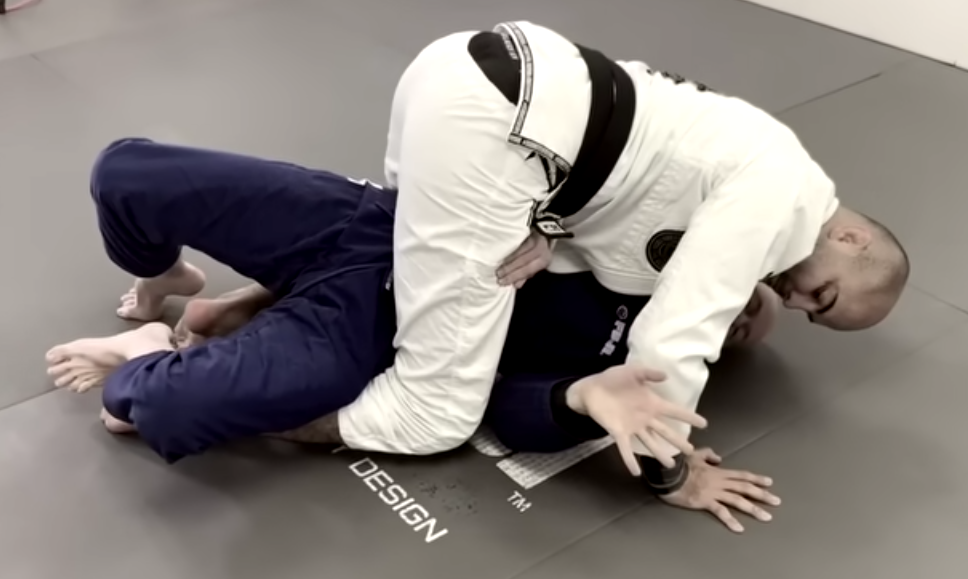
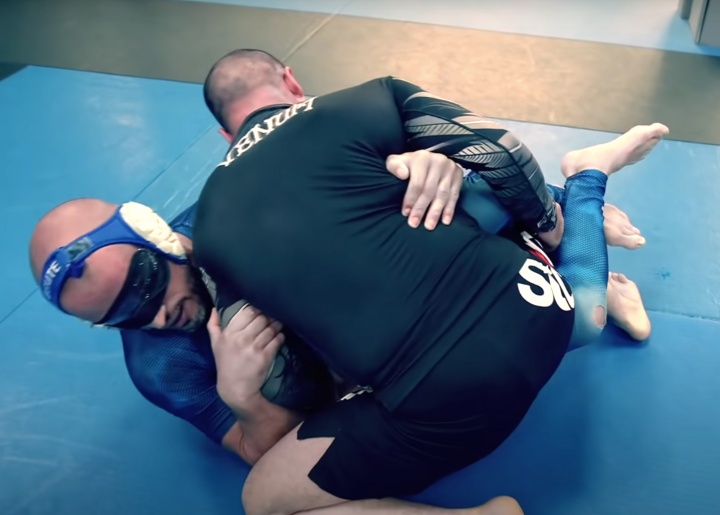
We rely incredibly heavily on our vision to grapple, which can often overwhelm the brain with visual noise and distractions. This exercise shifts your awareness entirely to your kinesthetic and tactile senses.
- The Drill: During the drilling portion of class, when practicing a technique you already relatively understand (e.g., a basic scissor sweep or a knee-slice pass), close your eyes or use a blindfold.
- The Focus: Drill the movement at 50% speed. Turn your mental spotlight entirely toward what you feel. Feel the exact texture of the gi fabric in your grips, the shift of your partner’s center of gravity, and the precise moment their weight unweights from their heels.
- The Goal: This builds a profound sense of somatic awareness. You stop looking at what’s happening and start feeling the physics of the lever systems at play.
3. The Observer Flow Round
It is incredibly easy to get caught up in the ego of winning gym rounds. When your only goal is to win, your mind flashes to the future (submitting them) or the past (frustration over a passed guard). This drill forces you into the absolute present.
- The Drill: During a standard 5-minute rolling round, strip away the objective of submitting your partner or scoring points. Instead, play a purely defensive, reactive game where your only job is to match your partner’s energy exactly.
- The Focus: Treat yourself as an objective observer of the roll. If your partner applies 30% pressure, you meet them with 30% framing. If they transition, you transition. Frame-by-frame, watch their movements without judging yourself for getting caught or passing.
- The Goal: This breaks the habit of emotional reactivity. When you remove the pressure of the outcome, you can actually see the matrix of Jiujitsu unfolding in real-time.
As Above, So Below…
Ultimately, the mat is a mirror. The way you handle a crushing cross-face or a tight submission attempt reflects exactly how you handle traffic, a stressful work deadline, or a difficult conversation.
By practicing mindfulness during the physical chess match of grappling, you aren’t just becoming a more clinical, efficient competitor. You are training your brain to remain calm, centered, and analytical when the rest of the world is chaotic. Slow down your mind, control your breath, and let the technique take care of itself.


