

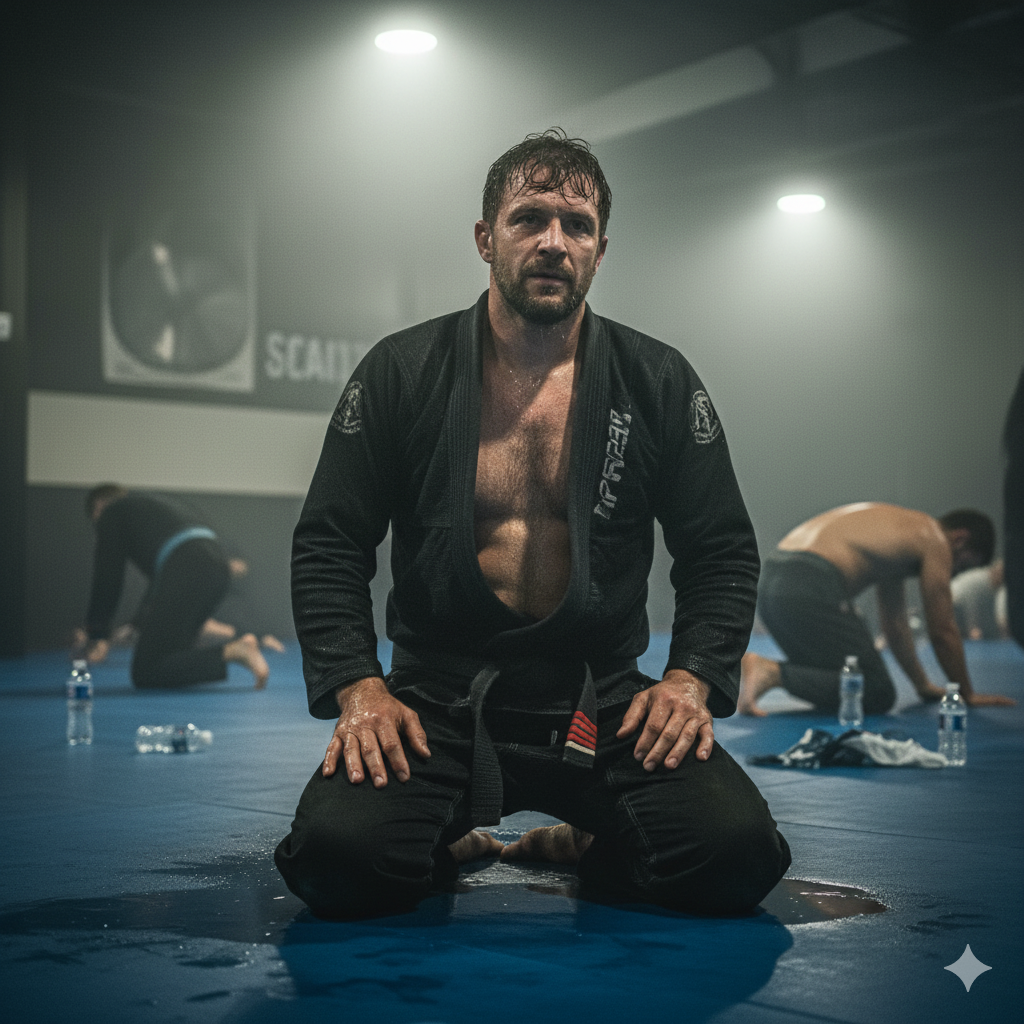
We’ve all been there. You’re drilling a new sweep, or locked in a roll with a training partner, and you notice it. They seem to be radiating heat and moisture, a human geyser of sweat, while you remain relatively dry(for now…). Or perhaps you’re the one leaving a slick puddle on the mats, apologizing profusely for the “swamp” you’ve created.
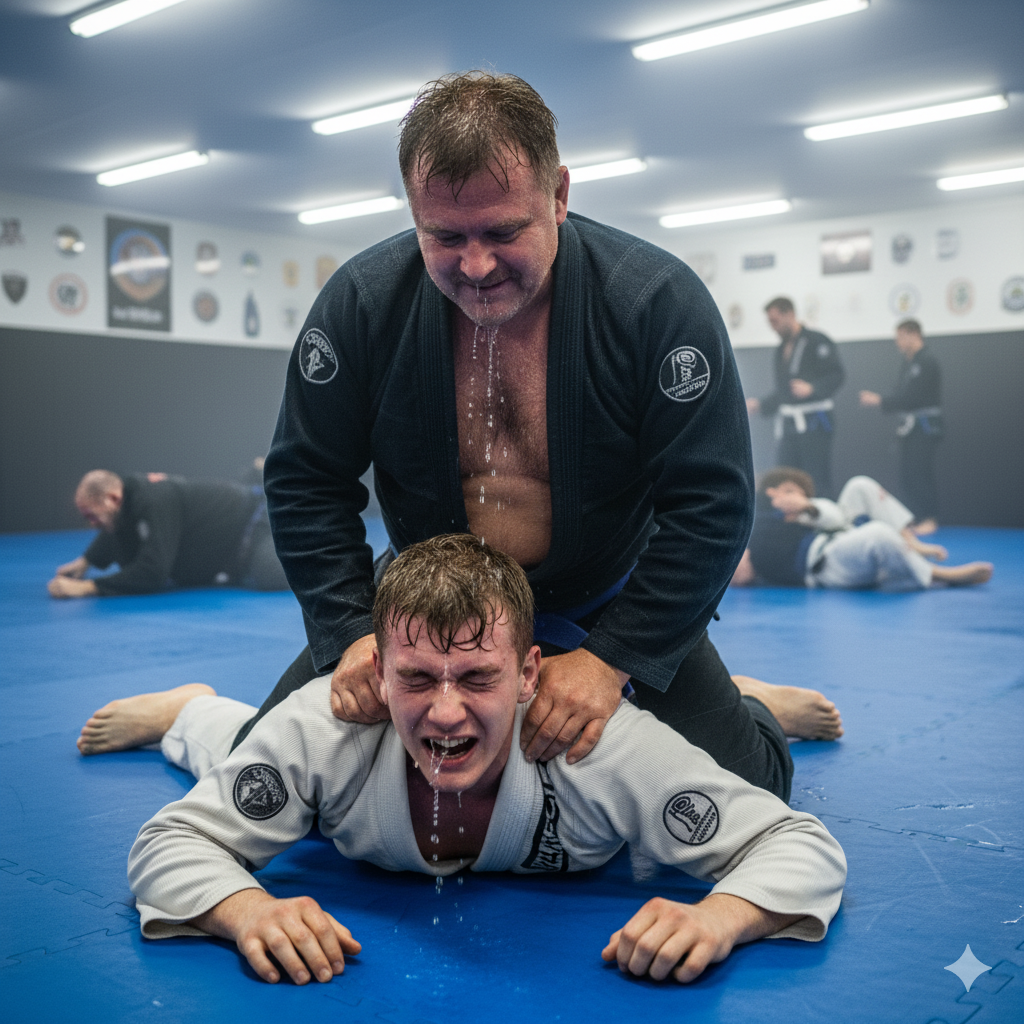
In the sport of grappling, sweat is an unavoidable reality. It’s a byproduct of exertion, a sign that you’re pushing your body and working hard. The common assumption is that if you’re sweating profusely, you’re either not in shape, or you’re pushing yourself harder than everyone else. While these can be contributing factors, the reality of thermoregulation and sweating is far more nuanced. The amount of sweat a person produces is not a simple metric of their fitness level. It’s a complex interplay of physiology, genetics, and environment.
So, why do some people sweat more than others on the mats? Let’s delve into some of the lesser-known reasons.
1. Genetics: Where It All Begins
Just like our eye color or height, the number and size of our sweat glands are largely determined by our DNA. Some individuals are simply born with a higher density of eccrine sweat glands, which are the primary glands responsible for cooling the body. The size of these glands can also vary, influencing the volume of sweat they can produce. This inherent genetic predisposition means that some people are simply built to be more efficient sweaters, regardless of their fitness level.
2. Acclimation And Training Adaptations
This is where the “in shape” argument gets a bit more complicated. While an unfit person will often sweat more due to their body’s inefficiency, a highly-trained athlete can also sweat profusely for a very different reason; their body has become incredibly good at it.
As we train, our bodies adapt. One of the key adaptations to regular exercise, especially in a heated environment like a grappling gym, is an improvement in thermoregulation. The body learns to initiate sweating earlier and at a lower core temperature. This pre-emptive cooling mechanism is a sign of a well-conditioned athlete whose body is primed to handle the demands of intense physical activity. In essence, they sweat more because their body is so good at staying cool, allowing them to maintain a higher level of performance for longer.
3. Body Composition: Surface Area And Insulation
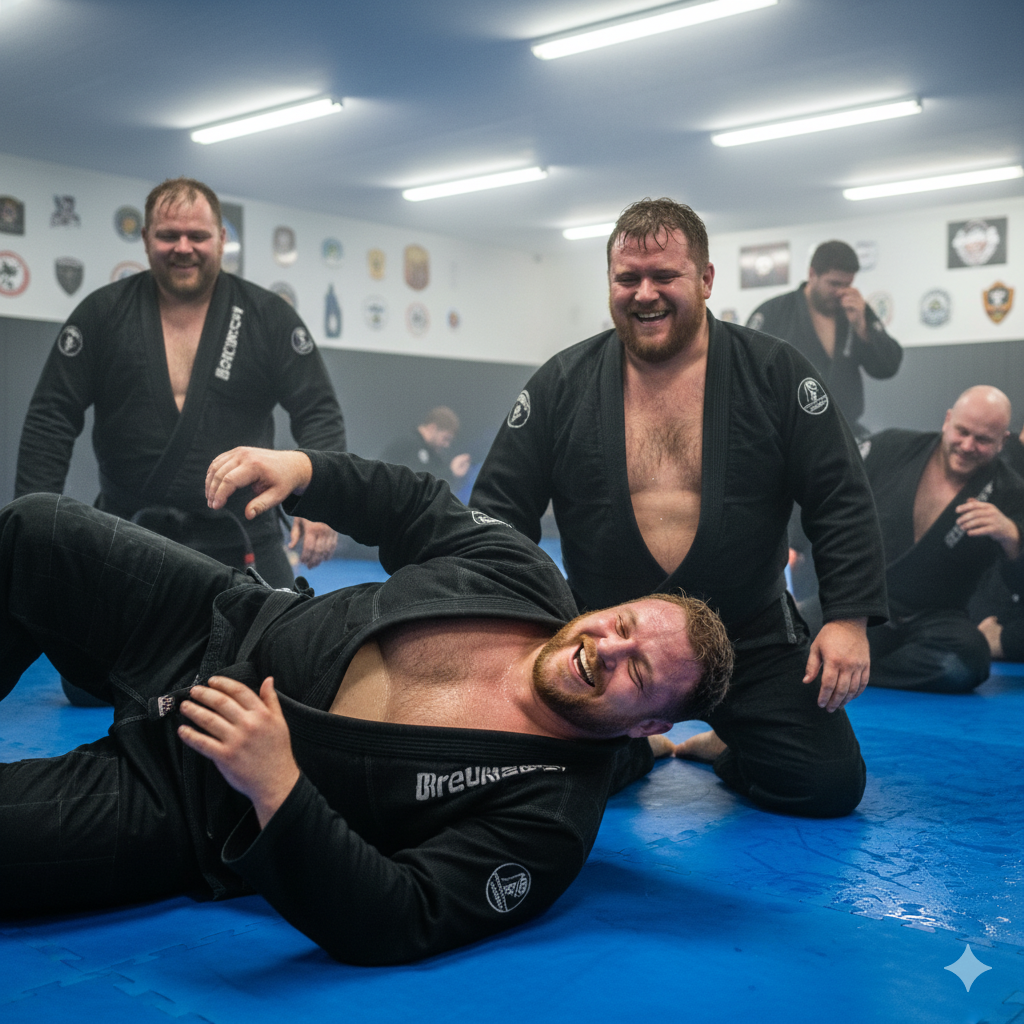
Body size and composition play a significant role in heat regulation. A larger individual has more body mass to cool down and a greater surface area to release heat from. This means they will often produce more sweat to achieve the same cooling effect as a smaller person. Similarly, individuals with a higher percentage of body fat have more insulation, which can trap heat and necessitate more sweating to cool the body.

4. Hydration And Electrolytes: The Fuel For Sweat
Your body needs to be well-hydrated to produce sweat efficiently. If you’re consistently dehydrated, your body will conserve water and produce less sweat, which is a dangerous state to be in during a strenuous BJJ session. Conversely, someone who is well-hydrated will have the resources to sweat more freely. Electrolytes, particularly sodium, also play a critical role in sweat production. An imbalance can affect the body’s ability to sweat effectively.
5. Environmental Factors: The Obvious Culprit
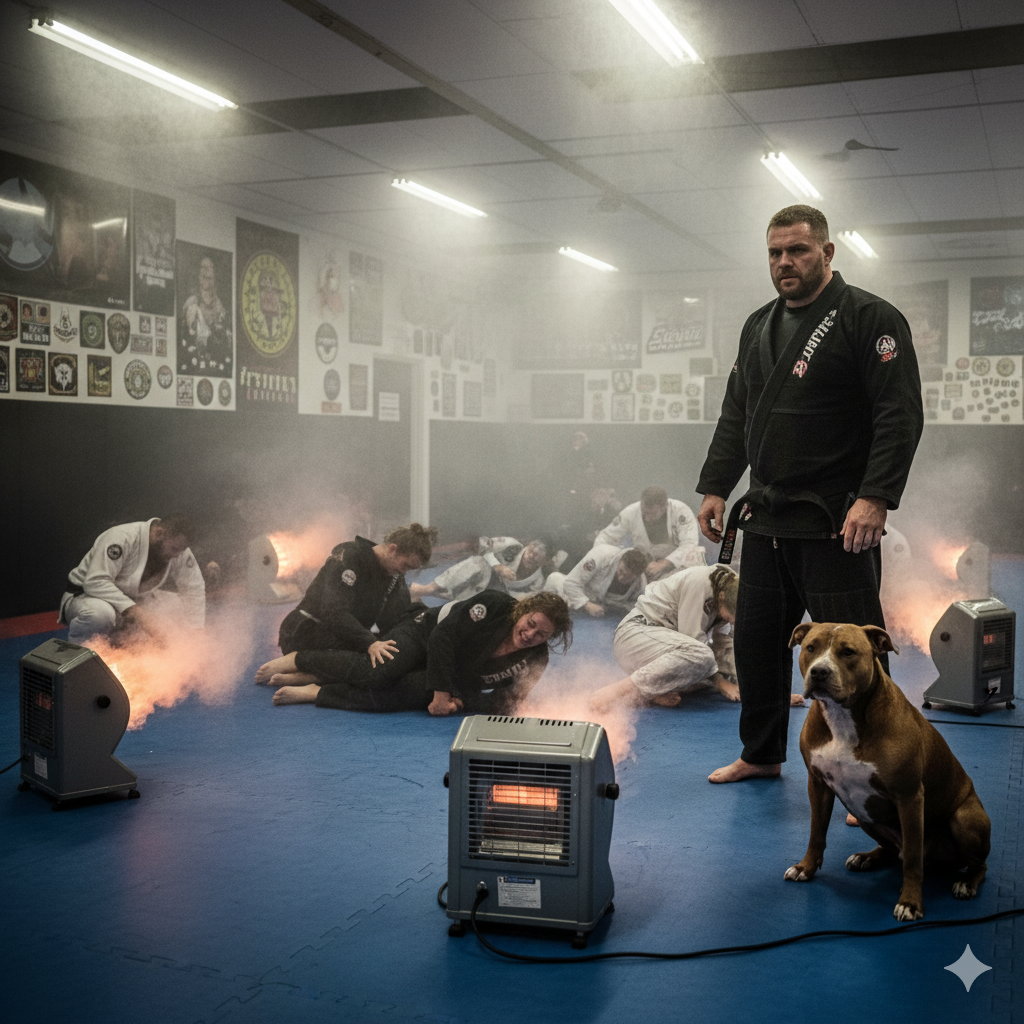
This is the most straightforward factor. The temperature and humidity of the gym, the gi you’re wearing (some weaves are less breathable than others), and even the time of day you train will all impact how much you sweat. A lunchtime roll in a humid gym will generate far more sweat than a late-night session in a well-ventilated space, regardless of the person’s fitness level.
The Takeaway For The Mat
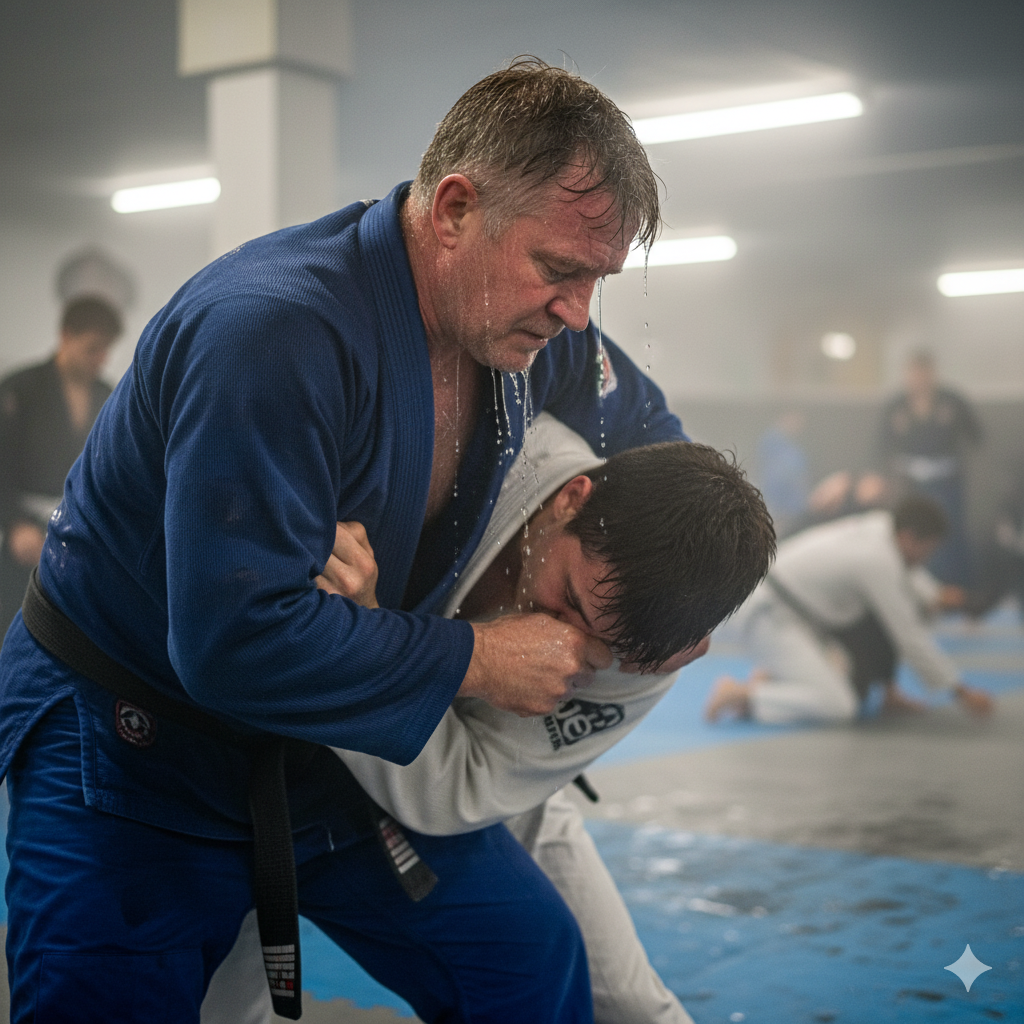
So, the next time you’re on the mats and you find yourself in a sweat-soaked roll, remember that it’s not just about who’s “in shape” and who isn’t. Your training partner might be a genetically blessed, well-acclimated, and perfectly hydrated individual whose body is simply a finely-tuned sweating machine. Or perhaps, like many of us, they’re just a little bit hot.
Instead of judging the sweat, embrace it. It’s a sign of effort, a testament to the hard work you and your training partners are putting in. After all, in the world of grappling, a little sweat is a small price to pay for the gains you make, both on and off the mats. And a good post-training shower never hurt anyone.


