

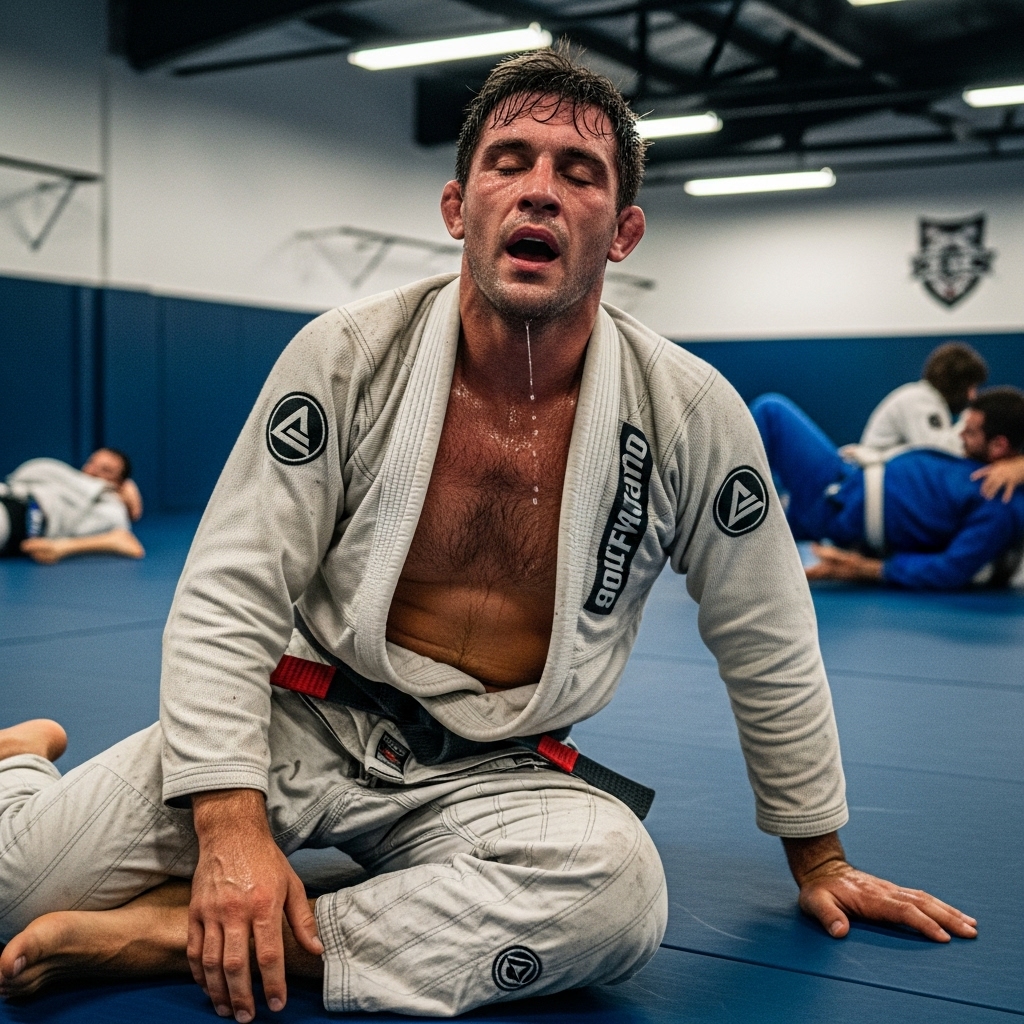
As any seasoned jiu-jitsu practitioner knows, technique and strategy are paramount. But what good are the most intricate submissions or well-timed sweeps if your lungs are burning and your heart is pounding out of your chest two minutes into a roll? Cardiovascular fitness is the unsung hero of the jiu-jitsu game, enabling you to maintain intensity, recover quickly, and ultimately, outlast your opponents.
Building a robust “gas tank” isn’t just about endless drilling; it requires a multi-faceted approach, incorporating both sport-specific training and general conditioning. Let’s explore various ways to elevate your cardiovascular fitness, both on and off the mats.
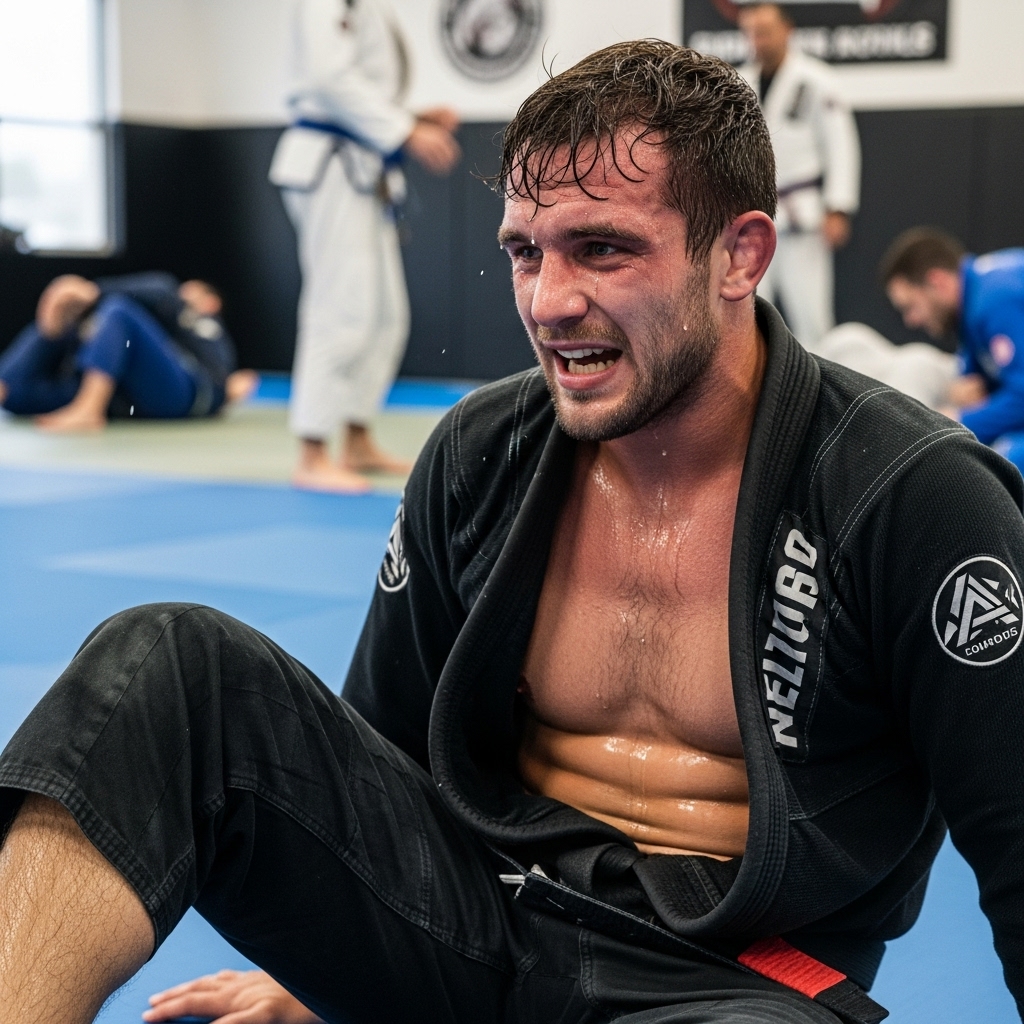
On The Mats: Maximizing Your Mat Time For Cardio Gains
Your jiujitsu training itself is a fantastic cardiovascular workout (probably the best for sport specific cardio), but with a few tweaks, you can make it even more effective for building endurance.
Focus On Continuous Motion In Live Rolls: During live rolling, actively avoid stalling. If you find yourself in a static position, actively work to improve it or escape. Even small movements add up, contributing to your overall energy expenditure and cardiovascular demand.
Embrace Flow Rolling: While positional sparring and live rolls are crucial, dedicated “flow rolling” sessions can be highly beneficial. Focus on continuous movement, smooth transitions, and linking techniques without resistance. This keeps your heart rate elevated for extended periods, mimicking the demands of a long match without the constant strain of maximal effort. Aim for 5-10 minute rounds with minimal breaks.
Positional Sparring With A Purpose: Don’t just drill a technique and reset. When engaging in positional sparring (e.g., escaping mount, passing guard), focus on maintaining a high tempo. Work to execute your escapes or passes with urgency, constantly moving and adjusting. The stop-and-go nature of jiujitsu already challenges your anaerobic system; by pushing the pace during positional sparring, you can enhance your aerobic capacity too.
The “Shark Tank” Drill: This classic jiujitsu conditioning drill is a cardio killer. One person stays in the middle and rolls with a fresh partner every 1-2 minutes. The constant fresh opponents force the person in the middle to push their limits, simulating the fatigue of a long tournament day. Rotate through the group so everyone gets a turn in the “tank.”
Drill With Intensity And Minimal Breaks: When drilling techniques, try to chain them together with less pause between repetitions. For example, if you’re drilling a sweep, follow up immediately with a pass or a submission attempt. This reduces passive recovery time and keeps your heart rate in a higher training zone.
Off The Mats: Complementary Training For A Deeper Gas Tank
While mat time is invaluable, supplementing your jiu-jitsu with off-mat conditioning can significantly boost your cardiovascular fitness and overall athleticism.
Jump Rope: A simple yet incredibly effective tool for developing footwork, coordination, and, of course, cardiovascular endurance. Vary your jump rope routine with different foot patterns and speeds.
High-Intensity Interval Training (HIIT): HIIT is incredibly effective for jiu-jitsu because it mimics the fluctuating intensity of a roll. Sprinting, burpees, jump squats, kettlebell swings, and battle ropes are all excellent choices. Example: 30 seconds of maximal effort (e.g., sprinting) followed by 30-60 seconds of active recovery (e.g., walking or light jogging). Repeat for 10-20 minutes.
Long-Duration, Low-Intensity Cardio (LISS): While HIIT builds explosive power and anaerobic capacity, LISS is crucial for developing your aerobic base. Activities like jogging, cycling, swimming, or even brisk walking for 30-60 minutes at a comfortable, conversational pace help your body become more efficient at utilizing oxygen. This is your foundation for sustained effort.
Circuit Training: Design circuits that incorporate a mix of strength and conditioning exercises with minimal rest between movements. This keeps your heart rate elevated and works multiple muscle groups. Example: Kettlebell swings, push-ups, box jumps, pull-ups, and burpees, performed consecutively with 15-30 seconds rest between exercises, and 1-2 minutes rest between circuits. Repeat 3-5 times.
Sport-Specific Cross-Training: Activities that challenge similar movement patterns and muscle groups to jiu-jitsu can be highly beneficial. Wrestling/Judo Drills: If available, participating in no-gi wrestling or judo drills can simulate the intense, explosive nature of takedowns and scrambles, significantly improving your anaerobic conditioning. Swimming: A full-body workout that’s low-impact and excellent for cardiovascular health. The controlled breathing can also help with breath management during rolls. Rowing: Engages both upper and lower body and provides a great full-body cardio workout.

Key Considerations For Optimal Cardio Development:
Warm-up And Cool-down: Always start with a dynamic warm-up and finish with a cool-down and stretching to prevent injuries and aid recovery.
Consistency Is King: Regularity trumps sporadic, intense sessions. Aim for 3-5 dedicated cardio sessions per week, in addition to your jiu-jitsu training.
Listen To Your Body: Don’t overtrain. Incorporate rest and recovery days to allow your body to adapt and rebuild.
Proper Nutrition And Hydration: Fueling your body with quality nutrients and staying well-hydrated are essential for optimal performance and recovery.
By strategically integrating these on- and off-mat training methods, you’ll not only develop a formidable gas tank but also enhance your overall resilience and performance on the jiujitsu mats. A strong heart and lungs are your secret weapons, allowing you to roll longer, harder, and ultimately, smarter, bringing your jiujitsu to the next level. Now go forth and breathe fire into your rolls!


