

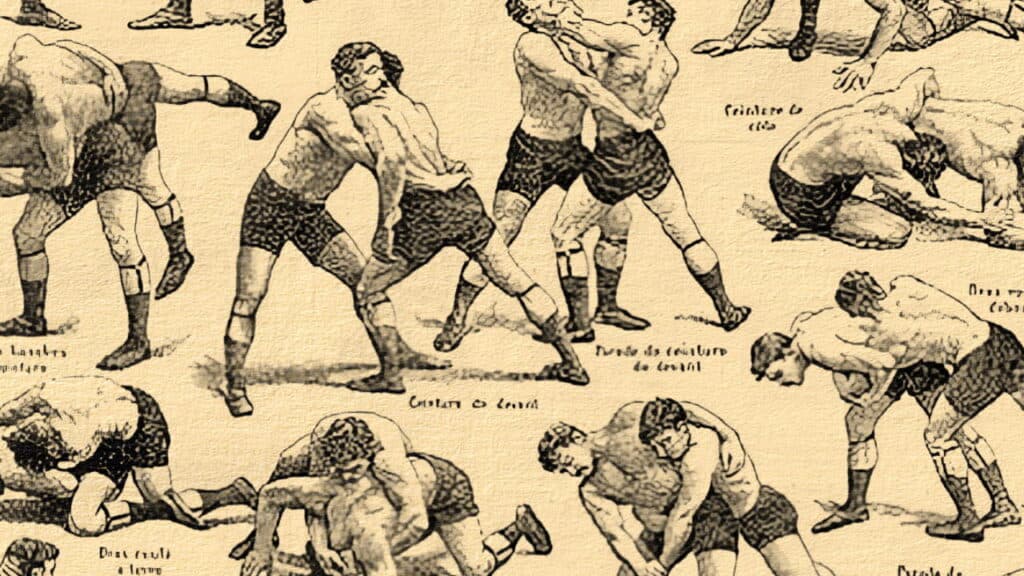
High-level NoGi submission grappling has evolved beyond traditional Brazilian Jiujitsu guard work into a unified submission wrestling meta. As rulesets at events like ADCC, WNO, and the Craig Jones Invitational (CJI) reward wrestling control, aggressive leg attacks, and heavy top pressure, grapplers are increasingly looking backward to move forward.
Much of what makes modern NoGi grappling so dynamic traces its roots straight back to the carnival pits of Lancashire, England, and North American Catch-As-Catch-Can (CACC) wrestling.
Here are six iconic moves originating from Catch Wrestling that have become indispensable weapons in modern elite submission grappling.
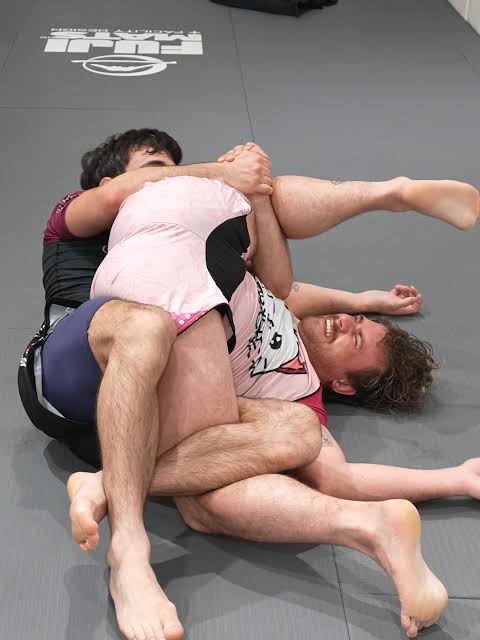
6. The Banana Split / Spladle (The Electric Chair)
Known in Catch and Folkstyle wrestling as the Banana Split or Spladle, this technique uses hyper-extending groin pressure, hip isolation, and spinal alignment to force an opponent into a vulnerable split position.
In Catch, it was used to pull off highlight-reel pins against aggressive single-leg wrestlers. In BJJ, it was famously adapted by Eddie Bravo into the Electric Chair, a sweeping and submission system built off the lockdown half guard.
- Modern Grappling Application: The Banana Split mechanics allow bottom players to disrupt heavy top pressure, execute high-amplitude sweeps against larger opponents, and finish with a groin-tearing submission or transition straight to the back.
5. The Calf Slicer (Compression Locks)
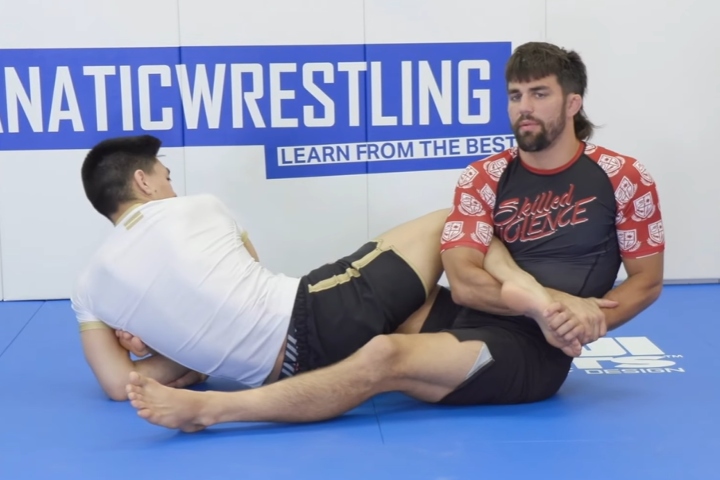
Catch Wrestling earned its reputation through pain compliance, using bone-on-muscle pressure to force a tap. Compression locks, specifically the Calf Slicer (or calf crush), were staple entries in the CACC catch kit.
By inserting a lever (the shin or forearm) behind the knee joint and pulling the levered limb closed, the attack creates intense muscular compression and bone separation at the knee joint.
- Modern Grappling Application: As leg lock defense evolved to counter heel hooks, the calf slicer re-emerged as a primary alternative. Grapplers frequently utilize it from the Crab Ride, the Truck, or during scrambled leg entanglements when an opponent rotates out of a primary knee bar or heel hook attempt.
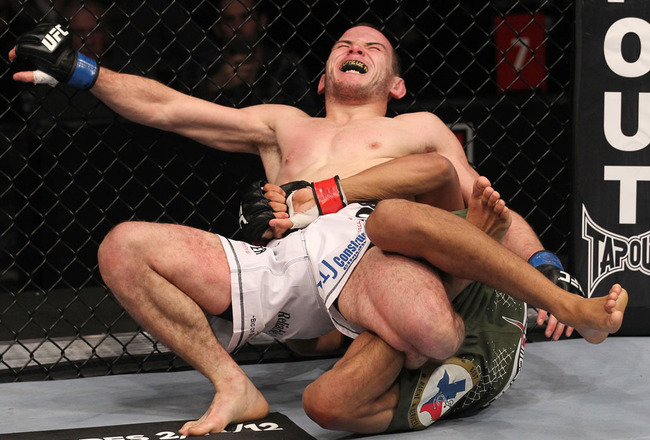
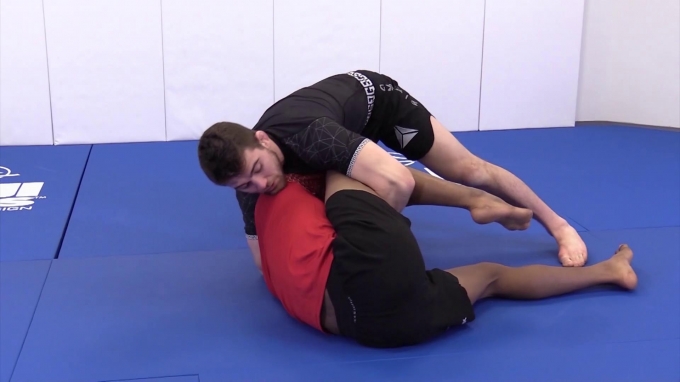
4. The Cradle (Far Side & Near Side)
Historically dismissed by pure BJJ purists as a “wrestler’s move” that left the passer vulnerable to sweeps, the Cradle has undergone a massive resurgence in elite NoGi competition.
In Catch and Folkstyle wrestling, the cradle is used to bind an opponent’s head to their knee, immobilizing their spine and pinning their shoulders.
- Modern Grappling Application: Top-tier NoGi athletes have turned the far-side and near-side cradles into premier guard-passing weapons. By compressing the spine and folding the opponent’s hips, the cradle completely shuts down guard retention, kills inversion, and opens up immediate pathways to back takes, front headlocks, or mounted pin positions.
3. The Toe Hold
For decades, traditional Gi Jiujitsu looked down on leg attacks as cheap or lower-tier techniques. Catch Wrestling, by contrast, treated every limb as fair game.
The Toe Hold was one of the original leg attacks perfected by Catch practitioners to force rapid tap outs or uncomfortable pins. The rotational torque placed on the ankle and knee lateral ligaments came directly out of the CACC catch-all philosophy.
- Modern Grappling Application: Modern leg-lock systems rely heavily on the toe hold. It serves as a primary counter-attack during leg entanglement battles (such as 50/50 or Ashi Garami), a finish when an opponent hides their heel from a heel hook, and a high-percentage attack against turtled opponents.
2. The Catch Guillotine (The Twister)
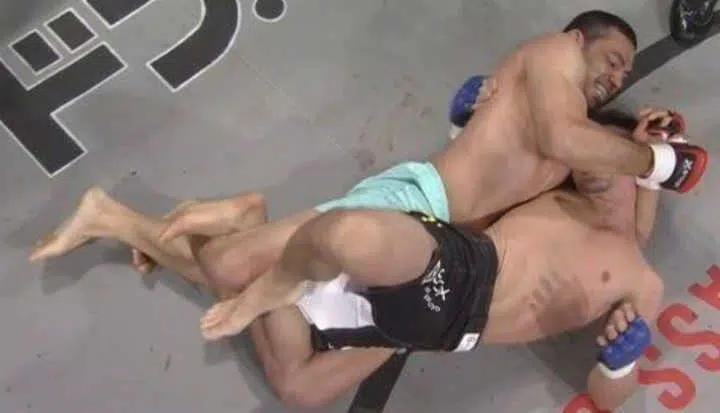
Long before 10th Planet Jiu-Jitsu popularized The Twister, Catch wrestlers were executing a terrifying spinal crank known as the Wrestler’s Guillotine (not to be confused with the front headlock choke).
In CACC and folkstyle wrestling, this move was primarily used to force an opponent’s shoulders to the mat for a pin by contorting their spine and neck. Eddie Bravo adapted the maneuver from high school wrestling, integrating it into BJJ via the Truck position.
- Modern Grappling Application: The Twister is now a legal and lethal submission in many professional NoGi divisions. It acts as both a brutal spinal crank/shoulder lock and a high-percentage back-take threat when an opponent stalls in half guard or turtled positions.
1. The Double Wrist Lock (The Kimura)
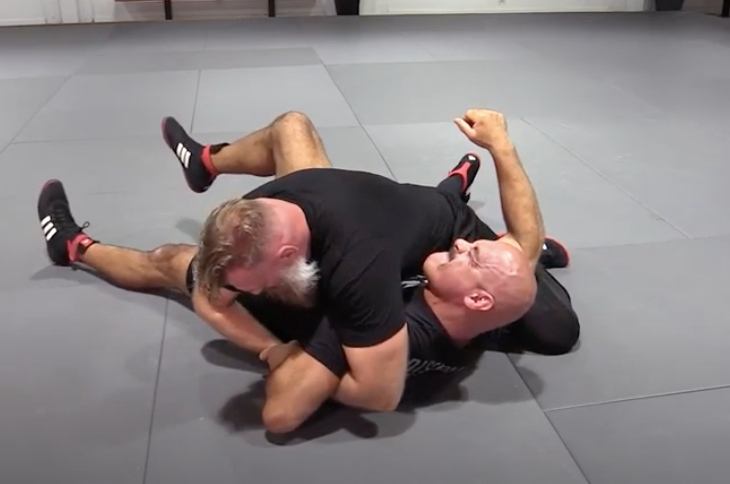
While every BJJ practitioner knows this upper-body joint lock as the Kimura, so named after legendary Japanese judoka Masahiko Kimura after he broke Hélio Gracie’s arm with it in 1951, the technique was a cornerstone of Catch Wrestling decades earlier.
Known in CACC as the Double Wrist Lock, the submission was documented and refined by wrestling legends like Martin Farmer Burns and Frank Gotch in the early 1900s, later becoming a staple of Snake Pit trainers like Billy Robinson.
- Modern Grappling Application: Beyond its use as a direct submission, the Double Wrist Lock has evolved into the Kimura Trap System. Modern grapplers use the figure-four grip as a powerful positional hub to pass guard, execute re-counters from bottom positions, take the back, or transition smoothly into armbars and leg locks.
The modern era of submission grappling has effectively erased the ideological borders between BJJ and Catch Wrestling. As rulesets continue to favor activity, scrambles, and complete submission threat profiles, the brutal efficiency of Catch Wrestling’s heritage remains one of the greatest cheat codes in NoGi combat.


