

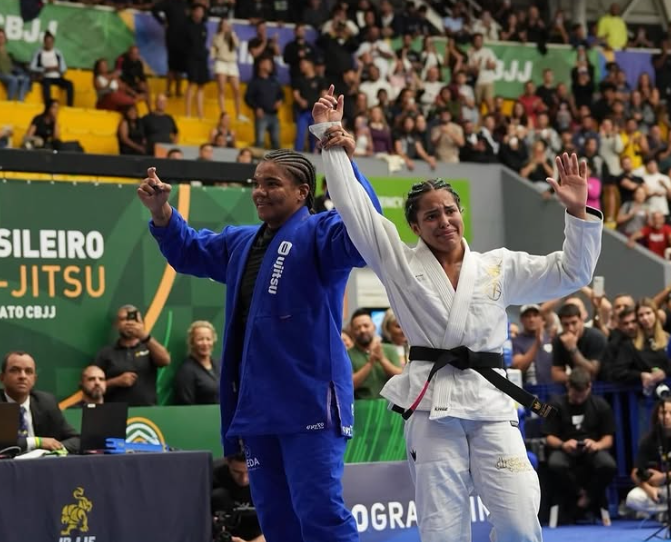
he 2026 IBJJF Brazilian National Championship — better known simply as the Brasileiro — delivered exactly what a major gi tournament should: chaos, breakout performances, elite names doing elite things, and a few brackets that got turned upside down.
Held from April 24 to May 3 in São Paulo, the tournament brought together some of the best gi competitors in the world across every belt level, but the black belt divisions gave fans the biggest fireworks. The event featured major wins from established stars like Gabrieli Pessanha, Tainan Dalpra, Mayssa Bastos, Andy Murasaki, Yara Soares, Gutemberg Pereira, Meyram Maquine, and Erich Munis, while also giving room for a few unexpected champions to steal the spotlight.
The Lightweights Brought the Drama Early
The lighter men’s divisions gave the tournament some of its biggest shockwaves.
At roosterweight, Italo Almeida stormed to gold, taking the top spot in a division that rarely gives anyone an easy path. At light-featherweight, Rerisson Gabriel delivered one of the tournament’s standout runs, beating elite opposition and finishing ahead of names like Diego “Pato” Oliveira, Junior Righetti, and Shoya Ishiguro.
Those two results immediately gave the Brasileiro a little upset energy. This was not just a parade for the already-crowned kings. This was a tournament where the door got kicked open.
Meyram, Murasaki, and Tainan Keep the Standard High
Not every bracket was about surprise. Some were about elite athletes doing exactly what they were expected to do — and still making it look special.
Meyram Maquine took gold at featherweight, reminding everyone why his name continues to carry so much weight in the gi scene. At lightweight, Andy Murasaki came through with gold, adding another major title to an already serious résumé. Then at middleweight, Tainan Dalpra did Tainan Dalpra things, winning another major title and continuing to look like one of the cleanest technicians in the sport.
There is something almost unfair about watching Dalpra in a bracket when he is locked in. The pace is calm, the pressure is surgical, and suddenly his opponent is losing a match they never quite got to start.
The Munis Family Had a Massive Weekend
The Munis brothers were everywhere.
Alex Munis won the medium-heavyweight division, standing on top of the podium after a tough field that included Gabriel Galvao, Lucas Gualberto, and Rui Neto. Erich Munis added another major feather to his cap by winning the men’s absolute division, beating Gabriel Ribeiro in the final.
But Erich’s weekend also came with a twist. In the super-heavyweight final, he was defeated by his own teammate, Vinicius Liberati, who became one of the biggest upset champions of the event. Liberati’s win added another layer of intrigue to an already stacked men’s field and proved that even the most successful athletes in the room were not safe from a bracket shakeup.
Gutemberg and Leonardo Ferreira Win Big in the Heavy Divisions
The heavier men’s divisions were packed with danger, and the results showed how deep the field really was.
Leonardo Ferreira took gold at heavyweight, finishing ahead of Rider Zuchi, Davi Vetoraci, and Fellipe Andrew. At ultra-heavyweight, Gutemberg Pereira rose to the top, defeating a field that included Pedro Alex, Gabriel Ribeiro, and Seif-Eddine Houmine.
Heavyweight gi jiu-jitsu at this level is a different animal. Every grip exchange feels like a car accident waiting to happen, and every sweep attempt carries the weight of a small building. Ferreira and Gutemberg survived that chaos and came out with gold.
Gabrieli Pessanha Is Still the Final Boss
On the women’s side, the headline is once again impossible to ignore: Gabrieli Pessanha won double gold.
Pessanha captured the super-heavyweight title and then won the absolute division, defeating Sarah Galvao in the absolute final. Galvao had already won the lightweight division, making that absolute final one of the most compelling matchups of the tournament.
At this point, Pessanha’s dominance is not just impressive — it is historic. Every time the field seems to be closing the gap, she answers by leaving with two gold medals. She is not just winning tournaments. She is defining the era.
Mayssa Bastos, Yara Soares, and Elisabeth Clay Deliver
The women’s black belt divisions also saw several big names handle business.
Mayssa Bastos won roosterweight, continuing her reign as one of the most consistent and technically sharp competitors in the sport. Yara Soares took heavyweight gold, while Elisabeth Clay won middleweight. Maria Vicentini captured medium-heavyweight gold, adding her name to a loaded list of champions from the weekend.
The depth of the women’s divisions continues to grow, and Brasileiro 2026 showed that the top of the sport is no longer just a handful of obvious names. There are threats everywhere.
The Funegra Sisters Make It a Family Affair
One of the coolest stories from the tournament came from the lighter women’s divisions.
Ashlee Funegra won gold at light-featherweight, while Mia Funegra won gold at featherweight. Two sisters. Two divisions. Two Brazilian National titles.
That is the kind of storyline that makes a tournament feel bigger than brackets and medals. It is a family taking over two podiums at one of the most important gi events on the calendar.
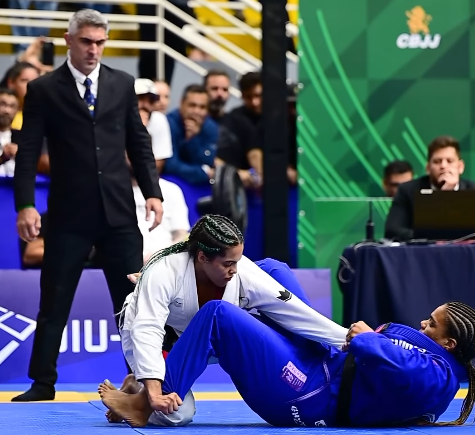
Full Black Belt Results
Men’s Black Belt Champions
Roosterweight: Italo Almeida
Light-Featherweight: Rerisson Gabriel
Featherweight: Meyram Maquine
Lightweight: Andy Murasaki
Middleweight: Tainan Dalpra
Medium-Heavyweight: Alex Munis
Heavyweight: Leonardo Ferreira
Super-Heavyweight: Vinicius Liberati
Ultra-Heavyweight: Gutemberg Pereira
Absolute: Erich Munis
Women’s Black Belt Champions
Roosterweight: Mayssa Bastos
Light-Featherweight: Ashlee Funegra
Featherweight: Mia Funegra
Lightweight: Sarah Galvao
Middleweight: Elisabeth Clay
Medium-Heavyweight: Maria Vicentini
Heavyweight: Yara Soares
Super-Heavyweight: Gabrieli Pessanha
Absolute: Gabrieli Pessanha
Brasileiro 2026 had a little bit of everything.
There were dominant champions, breakout runs, sibling gold medals, teammate finals, absolute division drama, and another reminder that Gabrieli Pessanha remains one of the most unstoppable forces in modern jiu-jitsu.
For the established stars, this was a chance to reinforce their place at the top. For the new champions, it was a warning shot. And for everyone watching, it was another reminder that the Brazilian Nationals still matter — not just as a title, but as one of the sport’s most brutal proving grounds.


