

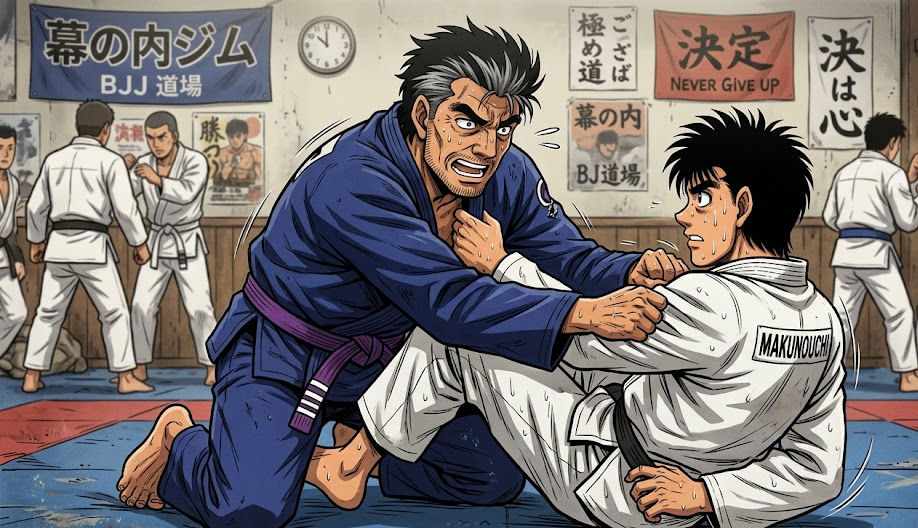
For over three decades, George Morikawa’s legendary boxing series Hajime no Ippo (Fighting Spirit) has done something few fictional sports stories achieve, it has earned the absolute respect of real-world combat sports practitioners. This isn’t an accident. Morikawa isn’t just an artist drawing from his imagination, he actually owns and operates the JB Sports Gym in Tokyo, routinely working corners and training real professional fighters.
Because the series is deeply rooted in the authentic sweet science, its arcs offer masterclasses in sports psychology, tactics, and physical preparation. Whether you step into a boxing ring, a kickboxing ring, or an MMA cage, the journey of Makunouchi Ippo holds profound takeaways for anyone who fights for a living, or anyone who just fights to improve.
Here are the top 6 lessons and major takeaways from Hajime no Ippo, ranked by their impact on real-world martial arts.
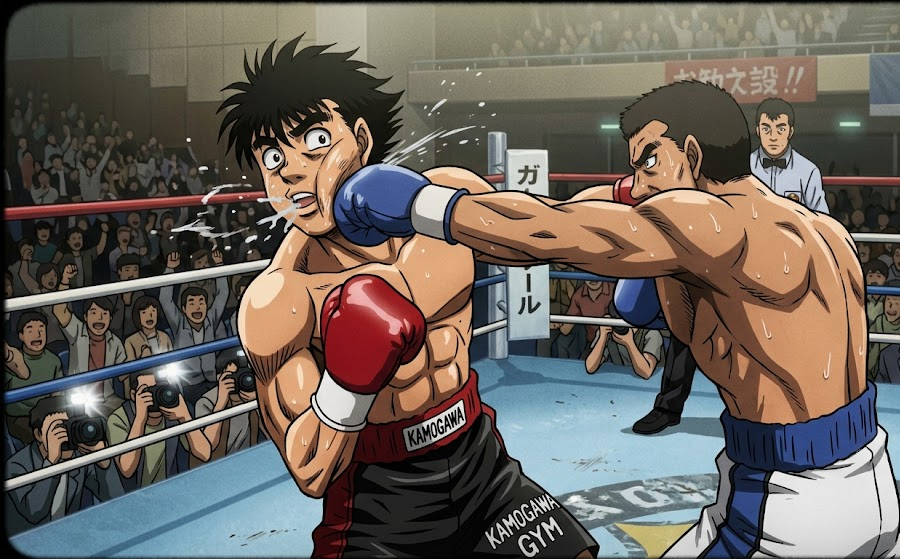
6. The Danger Of The Signature Move Trap
The Anime Context: The Dempsey Roll Dilemma
For a massive portion of the series, Ippo’s bread and butter is the Dempsey Roll, a real-life technique popularized by Jack Dempsey involving aggressive, figure-eight weaving to unleash devastating hooks. However, as Ippo climbs the ranks, opponents like Sanada and Sawamura figure out the rhythm. They time the blind spots, develop lethal counters, and leave Ippo severely damaged.
The Real-World Lesson
In modern combat sports, film study is ubiquitous. Over-reliance on a singular signature move or predictable combination is a death sentence. We see this constantly in boxing, kickboxing, and MMA.
- A kickboxer who always throws a naked low kick gets timed with a counter cross.
- An MMA fighter who spams the same overhand right gets ducked and shot on for a double-leg takedown.
The Takeaway: Having a weapon you excel at is great, but the moment it becomes your entire identity, elite competition will deconstruct it. Your signature move should be the exclamation point at the end of a sentence, not the whole paragraph.
5. The Invisible, (sometimes) Brutal War Of Weight Management
The Anime Context: Takamura’s Purgatory
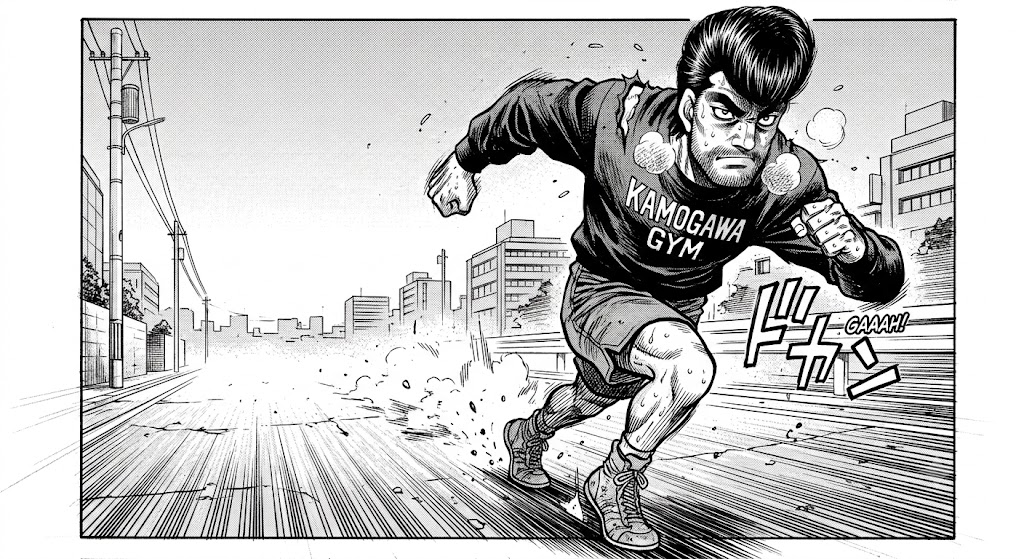
While Hajime no Ippo features incredible fights, one of its most harrowing arcs doesn’t even take place in the ring. It’s Mamoru Takamura’s agonizing weight cut before his world title fight against Bryan Hawk. Morikawa illustrates the literal hell of extreme dehydration, shivering in saunas, chewing on ice cubes just for a drop of moisture, and the terrifying psychological toll that drains a fighter’s soul long before the opening bell.
The Real-World Lesson
Weight cutting is arguably the most dangerous aspect of modern combat sports. It underscores a harsh reality, the fight before the fight dictates what happens under the lights. Fighters often ruin months of hard training by mismanaging their diet or rushing a drastic dehydration cut in the final 48 hours.
- A bad weight cut severely depletes brain fluid, massively increasing the risk of knockouts and long-term trauma, while completely erasing a fighter’s conditioning.
The Takeaway: Professionalism out of the ring is just as vital as skill inside it. Science-based, disciplined weight management is a prerequisite for longevity in martial arts.
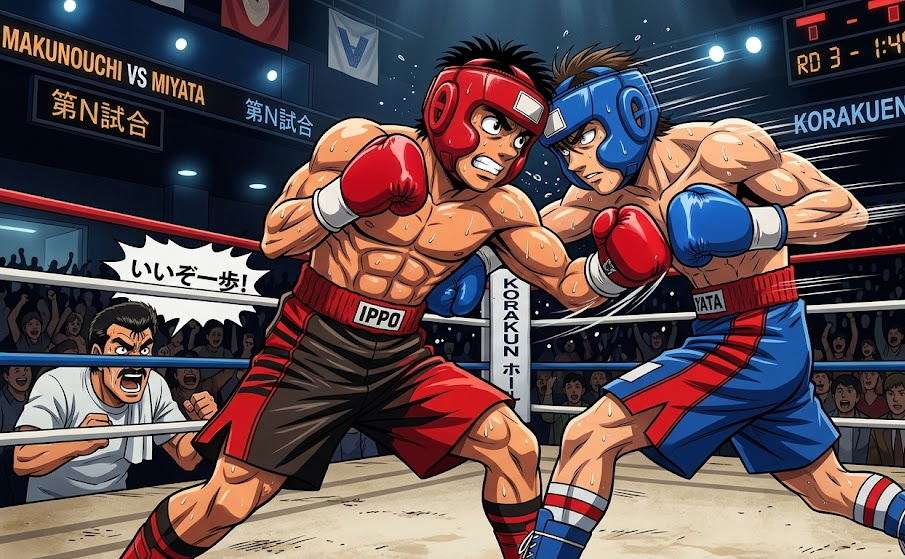
4. Styles Make Fights And Rigidness Kills
The Anime Context: In-Fighters vs. Out-Boxers
The series masterfully explores stylistic matchups. We watch traditional “In-fighters” (like Ippo and Sendo), who rely on devastating pressure and body work, clash violently with elegant “Out-boxers” (like Miyata and Hayami), who utilize footwork, speed, and counters. However, the fighters who truly dominate, like Volg Zangief or the legendary Ricardo Martinez, are those who can seamlessly blend both.
The Real-World Lesson
If you only know how to fight one way, you have a hard ceiling.
- If you are a pure pressure fighter in kickboxing but don’t know how to cut off the ring against a lateral mover, you will spend 3 to 5 rounds chasing air and eating jabs.
- If you are a pure counter-striker who panics when an opponent refuses to lead, the fight turns into a tactical stalemate that you might lose on activity alone.
The Takeaway: You must develop the tactical IQ to pivot mid-fight. Adaptability beats rigid perfection every single time.
3. The Sacred, Unspoken Corner-Fighter Bond
The Anime Context: “Obey The Coach”
The heartbeat of the entire series is the relationship between Ippo and Coach Kamogawa. When Ippo is blinded by blood, concussed, and drowning in panic, he doesn’t rely on his own eyes, he relies on Kamogawa’s voice. The coach provides the macro-strategy while the fighter executes under fire, built entirely on a foundation of absolute, unquestioning trust.
The Real-World Lesson
A fighter’s corner can literally save their life or cost them a career. We see it all the time in modern events.
- Fighters who ignore their corner’s instructions out of ego and end up getting caught in the exact trap they were warned about.
- Toxic corners that offer empty praise (“You’re doing great, baby!”) instead of actionable, tactical adjustments, leaving their athlete to drown.
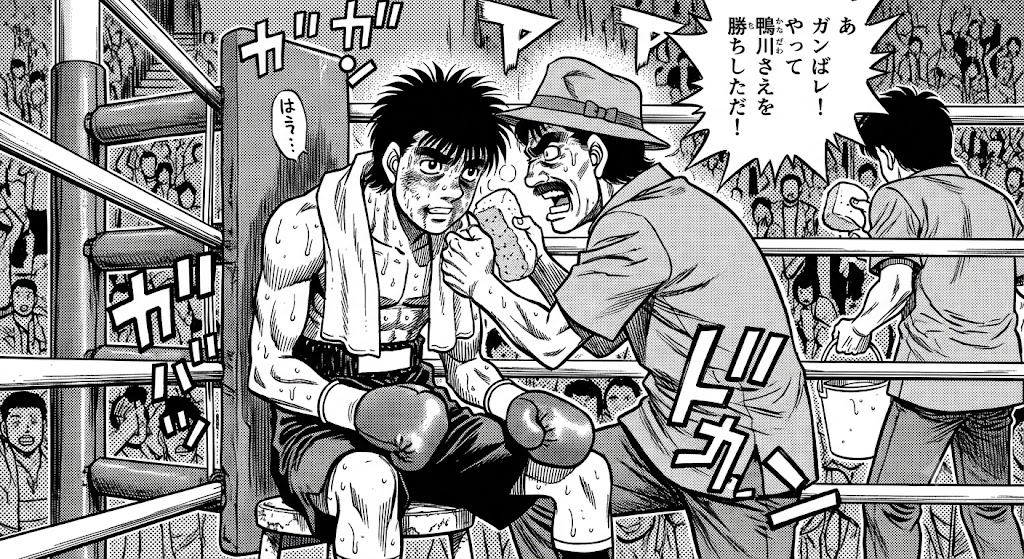
The Takeaway: When you are in the eye of the storm, your adrenaline handles the micro-movements, but your corner must handle the macro-strategy. Choose a coach you would trust with your life, and when they speak between rounds, put your ego aside and listen.
2. Fundamentals Over Flash: “He Who Rules The Left Rules The World”
The Anime Context: Thousands Of Jabs
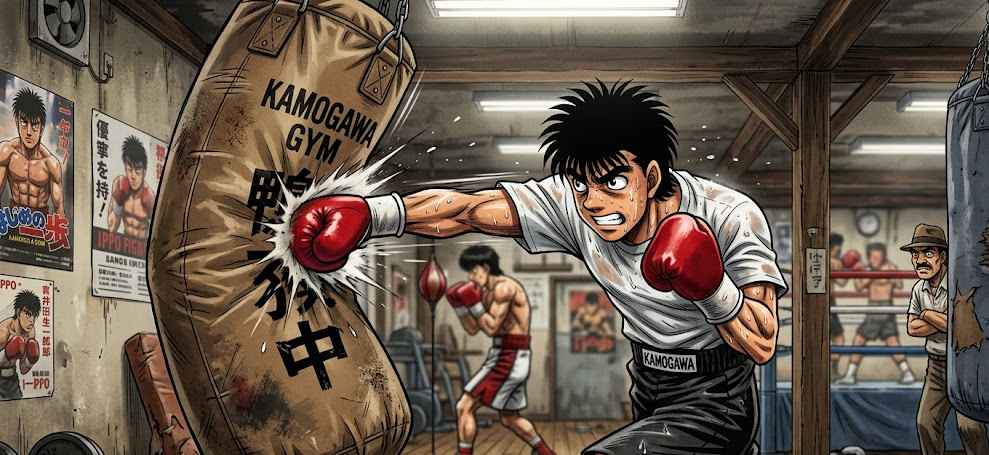
When Ippo first enters the Kamogawa Gym, he wants to learn flashy, knockout punches. Instead, the coach forces him to spend months shadow boxing, hitting the heavy bag with basic punches, and mastering the fundamental jab. The iconic phrase “He who rules the left rules the world” is hammered into the reader’s head.
The Real-World Lesson
Look at the greatest combat sports athletes across any discipline, Canelo Alvarez, Georges St-Pierre, or Israel Adesanya. Their highlights might feature spectacular knockouts, but their dominance is built entirely on world-class fundamentals.
- The jab is the ultimate tool, it measures distance, blinds the opponent, disrupts their rhythm, and sets up the power shots.
- Without fundamental footwork and defense, fancy spinning kicks or flashy shoulder-rolls are just high-risk gambles.
The Takeaway: Flash sells tickets, but fundamentals win championships and protect your chin. Never let your pursuit of advanced techniques cause you to neglect the basics.
1. The Meaning Of True Strength: Resilience And The Fighting Spirit
The Anime Context: Crossing the Line
The overarching question of the entire narrative is Ippo asking, “What does it mean to be strong?” As the series progresses (especially into the later manga chapters), it becomes clear that strength isn’t about being an untouchable, flawless god. It’s about the mental resilience to face defeat, overcome physical limitations, and possess the psychological grit to cross the line into the domain of monsters where giving up simply isn’t an option.
The Real-World Lesson
At the elite level of boxing, kickboxing, or MMA, everyone can punch, everyone can kick, and everyone is in peak physical condition. Physical attributes flatten out at the top. What separates a good fighter from a legendary champion is entirely mental.
- Can you stick to the game plan when you’ve just been dropped in the first round?
- Can you keep your composure when your nose is broken, you’re exhausted, and you still have two rounds left?
- Do you have the discipline to return to the gym and fix your flaws after a devastating knockout loss?
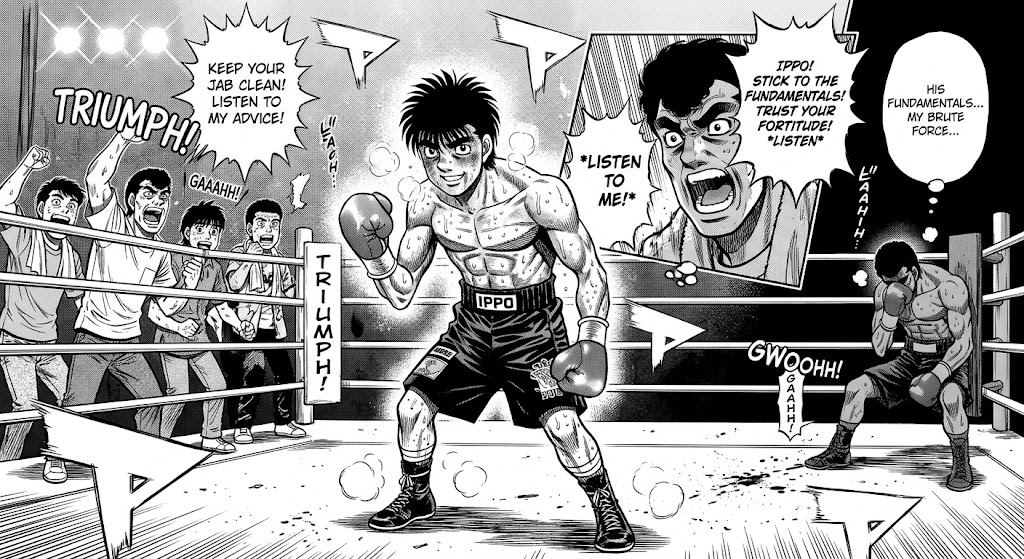
The Takeaway: Combat sports are a physical manifestation of mental fortitude. Your mind is your primary weapon, your body is just the delivery system. True strength is the ability to endure, adapt, and keep moving forward when everything inside you begs you to quit.


