

The Gritty Ancestor: Unearthing Catch Wrestling’s Enduring Legacy in Submission Grappling
In the ever-evolving world of BJJ and the broader landscape of submission grappling, new techniques, positions, and philosophies emerge constantly. Yet, beneath the surface of modern innovation, a powerful and sometimes overlooked current flows – the raw, relentless spirit of Catch Wrestling. Often whispered about as the “grandfather of submission arts,” Catch-As-Catch-Can Wrestling(also known as Scientific Wrestling, or just Catch Wrestling) holds a unique and vital place in the history and ongoing development of grappling. To truly understand where we are, we must look back to the gritty origins of this uncompromising combat sport.
The Inception of Catch Wrestling
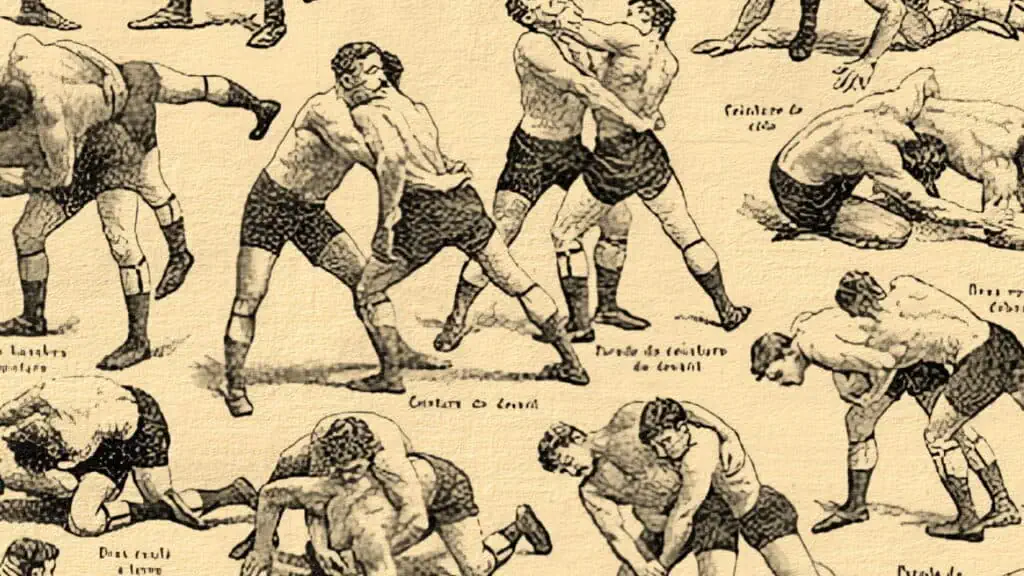
The story of Catch Wrestling begins not on sun-drenched beaches or dojos, but in the smoky industrial towns of 19th-century Britain, particularly in Lancashire. Here, miners, factory workers, and farmers sought a brutal yet effective form of recreation and self-defense. They needed a style that was practical, immediately applicable, and didn’t shy away from pain or aggression. Unlike the more codified and gentlemanly styles of wrestling emerging elsewhere, Catch Wrestling was designed for direct confrontation.
Matches were often contested on hard ground, in public houses, or at fairs. The rules were minimal, emphasizing the goal: to “catch” any part of the opponent’s body and force a submission or pin. The term “catch-as-catch-can” itself perfectly encapsulated this philosophy – seize whatever opportunity presented itself. Joint locks, chokes, neck cranks, and brutal holds were all fair game. This unyielding pragmatism fostered a culture of innovation, where grapplers continuously sought the most efficient and destructive methods to subdue their opponents.
A History of Dominance and Influence
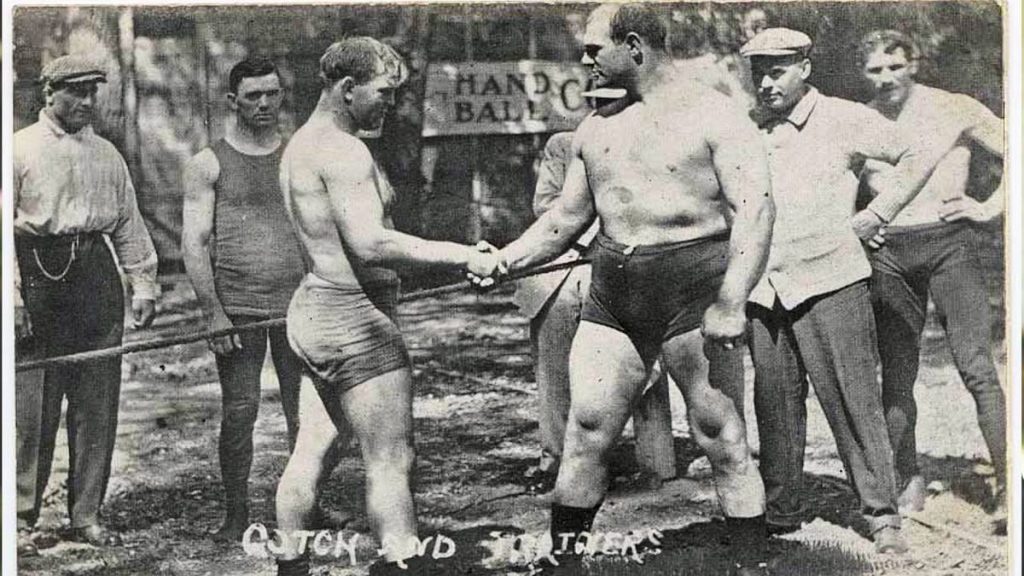
As the British Empire expanded, so too did Catch Wrestling. It found fertile ground in America, where it was embraced by showmen, professional wrestlers, and strongmen of the late 19th and early 20th centuries. Figures like Frank Gotch, Tom Jenkins, and the legendary Billy Riley of the Snake Pit in Wigan became synonymous with Catch, dominating the nascent professional wrestling circuits. These men were legitimate toughs, capable of submitting or pinning anyone put in front of them.
The influence of Catch Wrestling spread globally, touching down in Japan where it heavily influenced the development of shoot wrestling and later, mixed martial arts. Its emphasis on takedowns, control, and brutal submissions made it a formidable art. However, with the rise of fixed professional wrestling entertainment in the mid-20th century, the legitimate competitive aspect of Catch began to wane in the public eye. While it continued to be practiced in smaller, dedicated circles, its mainstream prominence faded.
Catch Wrestling’s Significance in Modern Submission Grappling
Fast forward to the 21st century, and we’ve witnessed a remarkable resurgence of interest in Catch Wrestling. This renewed appreciation is largely fueled by the demands of modern submission grappling and MMA. As practitioners delve deeper into effective techniques, they inevitably stumble upon the pragmatic wisdom embedded in Catch.
Here’s where its significance truly shines:
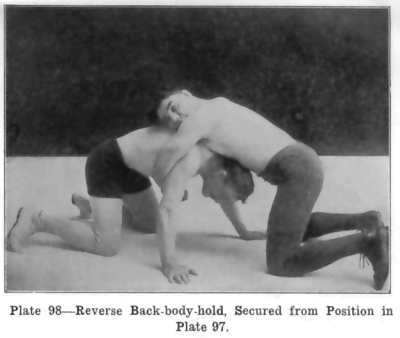
- Takedowns And Top Control: Catch Wrestling always prioritized getting the opponent to the mat and keeping them there. Its arsenal of takedowns, rides, and pinning combinations are highly effective in modern nogi grappling. The aggressive chaining of takedowns to submissions, a hallmark of Catch, is a powerful offensive strategy.
- “Pin To Win” Mentality (Translated To Control): While modern submission grappling often focuses solely on submissions, the Catch “pin to win” ethos translates directly into strong top control and positional dominance. A good Catch wrestler doesn’t just pass guard; they break posture, flatten opponents, and make them miserable, setting up opportunities for submissions.
- Submission Variety And Finishing Instinct: Catch Wrestling is notorious for its brutal and effective submission holds. Leg locks, particularly heel hooks and toe holds, were integral long before they became mainstream in BJJ. Neck cranks, short chokes, and deep arm locks are all part of the Catch repertoire, fostering a relentless finishing instinct.
- No-Gi Prowess: Developed without the reliance on a gi, Catch Wrestling is inherently a no-gi art. This makes its techniques and strategies perfectly suited for the rapidly growing no-gi submission grappling scene, where grip fighting differs significantly from gi-based grappling.
- Aggression And Scramble-Proofing: Catch instills a unique brand of aggression and a relentless pursuit of the finish. It teaches grapplers to capitalize on every opening, to never concede position, and to scramble intelligently out of bad spots. This cultivates a resilient and offensive mindset that is invaluable in competitive grappling.

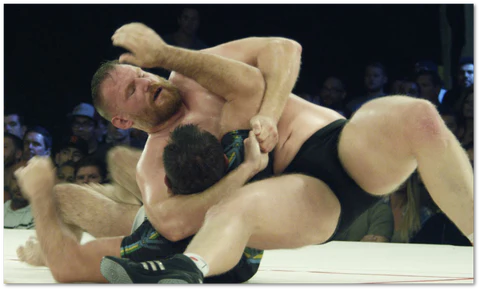
Bridging the Gap
The integration of Catch Wrestling into modern submission grappling is becoming increasingly evident. Many top grapplers and coaches are actively studying and incorporating Catch principles and techniques and here’s why:
“Submission Hunter” Mindset: The very idea of constantly looking for the “catch” – the submission – is fundamental to both arts, and Catch provides a direct, no-nonsense path to achieving it.
Leg Lock Game: The explosion of leg lock specialists owes a debt to Catch Wrestling, which championed these attacks for over a century.
Wrestling For Grappling: More BJJ practitioners are cross-training in folkstyle and freestyle wrestling, often rediscovering the Catch-inspired takedowns and top pressure that are incredibly effective in a submission context.
Positional Aggression: The Catch emphasis on breaking posture, maintaining heavy top control, and constantly seeking the finish is influencing a more aggressive approach in BJJ, moving away from passive guard play.
While BJJ remains the primary fixture of submission grappling, the influence of Catch Wrestling is undeniable and growing. It represents a rugged, uncompromising ancestor whose wisdom continues to resonate in the modern era. By understanding its inception, history, and enduring techniques, grapplers can tap into a rich vein of knowledge, adding a layer of raw power and relentless finishing instinct to their game. The gritty ancestor is not just a relic of the past, it is a vital, living force shaping the future of submission grappling for years to come!


