

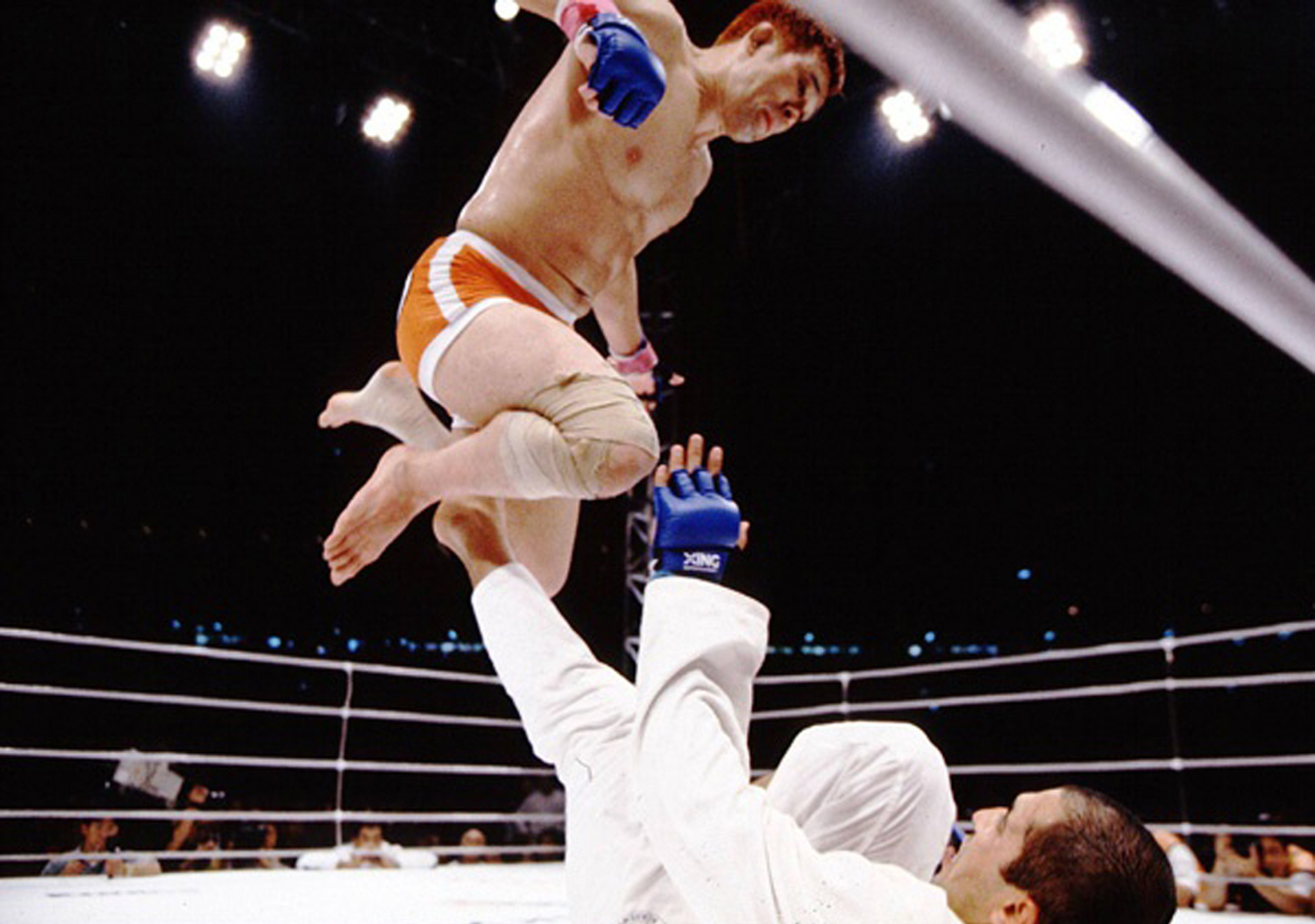
In the often-brutal world of combat sports, certain names transcend the confines of the ring or cage, becoming synonymous with an era, a style, or an indomitable spirit. One such name is Kazushi Sakuraba, the Japanese legend whose eccentric personality, fearless approach, and revolutionary grappling redefined what was possible in mixed martial arts. From his humble beginnings, to his iconic “Gracie Hunter” moniker, Sakuraba’s journey is a testament to skill, courage, and an unwavering love for the fight.
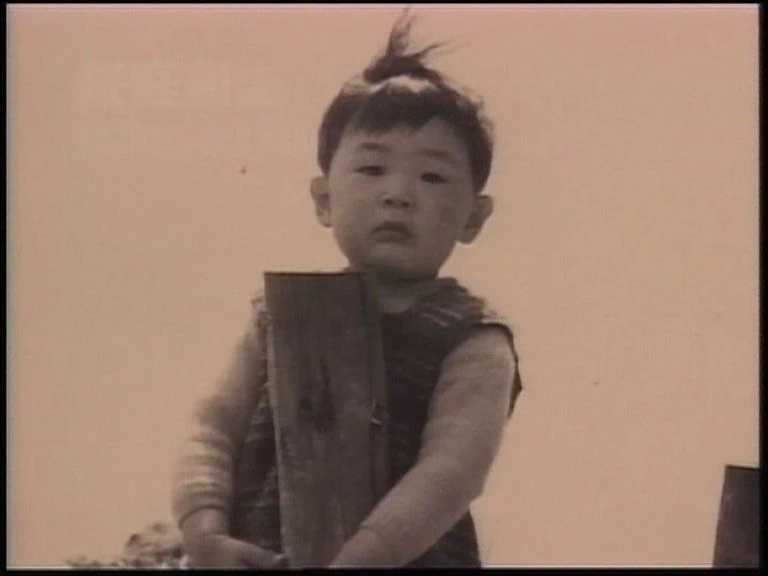
Born in Tagajō, Miyagi, Japan, in 1969, Kazushi Sakuraba’s early life didn’t immediately point towards a future as an MMA icon. His athletic prowess first manifested in amateur wrestling, a discipline he excelled in through high school and at Chuo University. This foundation in competitive wrestling would become the bedrock of his unique fighting style, emphasizing takedowns, control, and submissions. While his peers might have dreamed of Olympic gold, Sakuraba’s path would lead him to a different kind of combat, one where he would face opponents from vastly different martial arts backgrounds.
Following his collegiate wrestling career, Sakuraba transitioned into professional wrestling, joining the legendary Union of Wrestling Forces International (UWFI) promotion. It was here, in the world of worked fights and intricate storylines, that Sakuraba began to hone his performance skills and develop the theatrical flair that would later captivate MMA audiences. However, UWFI emphasized realistic grappling and submission techniques, providing Sakuraba with invaluable experience in applying his wrestling in a more combat-oriented setting. This blend of legitimate grappling and showmanship would prove crucial to his future success.
The Rise Of A Martial Arts Maverick
Sakuraba’s entry into the then-still-emerging world of mixed martial arts was not through a grand, advertised debut, but rather a last-minute replacement in the inaugural UFC Japan tournament in 1997. He won the tournament, submitting Marcus Silveira twice (the first fight was controversially stopped). This victory, while significant, was merely a prelude to the legendary run that would define his career.
His true ascendancy began in PRIDE Fighting Championships, where he became one of the promotion’s biggest stars. Sakuraba, often significantly undersized, embraced a philosophy of taking on any challenger, regardless of their reputation or size. He faced formidable opponents like Vitor Belfort, Quinton “Rampage” Jackson, and Wanderlei Silva, demonstrating a willingness to stand and trade as well as engage in intricate ground battles.
What truly cemented Sakuraba’s legendary status, however, was his series of fights against members of the Gracie family, the pioneers of Brazilian Jiu-Jitsu and founders of the UFC.
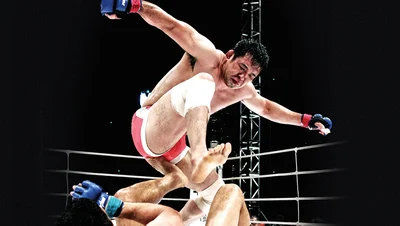
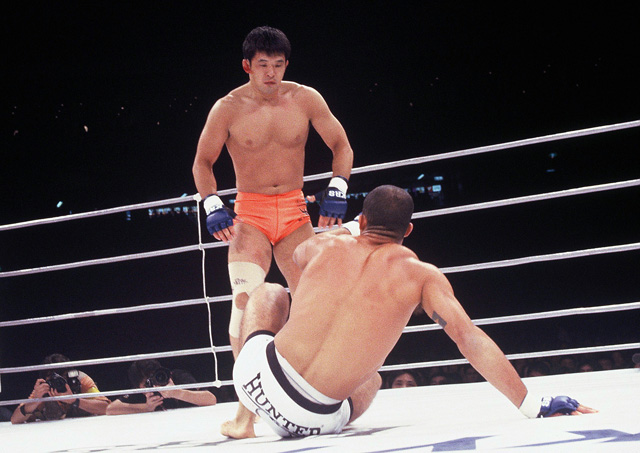
The “Gracie Hunter” And His Impact On MMA
The Gracie family had, for years, propagated the belief that Brazilian Jiu-Jitsu was the ultimate martial art, capable of defeating any other discipline. Sakuraba, with his wrestling background and unconventional submission game, became the first fighter to consistently challenge and defeat members of the legendary family in an MMA setting.
His first major victory came against Royler Gracie at Pride 8 in 1999, where he submitted the BJJ black belt with a Kimura (known in Japan as a “Sakuraba Lock”). This was a seismic event in MMA, shattering the aura of invincibility surrounding the Gracies. He followed this up with even more significant victories:
Royce Gracie (Pride Grand Prix 2000 Finals, 2000): In perhaps his most iconic fight, a grueling 90-minute war, Sakuraba defeated Royce via TKO after Royce’s corner threw in the towel. This monumental win not only solidified his “Gracie Hunter” moniker but also proved that a well-rounded approach, combining wrestling, striking, and unique submission techniques, could overcome even the most revered jiu-jitsu practitioners.
Renzo Gracie (Pride 10, 2000): Sakuraba broke Renzo’s arm with another Kimura, leading to a stoppage.
Ryan Gracie (Pride 12, 2000): A dominant unanimous decision victory.
These victories were not just personal triumphs for Sakuraba; they had a profound impact on the evolution of MMA!
Japanese MMA Icon: Sakuraba became the face of PRIDE FC and a national hero in Japan. His fights drew massive television ratings and sold-out arenas, propelling MMA into the mainstream consciousness of his home country.
Challenged Dogma: Sakuraba’s success against the Gracies forced the martial arts world to re-evaluate the idea of a “superior” martial art. It highlighted the importance of cross-training and a diverse skill set in MMA.
Popularized Submissions: While BJJ had introduced submissions to the mainstream, Sakuraba’s inventive and often painful submission attempts, coupled with his willingness to engage on the ground, further popularized the technical aspects of grappling in MMA. His creative use of holds like the “Sakuraba lock” inspired a generation of grapplers.
Entertainment Value: Beyond his skills, Sakuraba’s persona was captivating. His theatrical entrances, willingness to experiment with techniques in the middle of a fight, and never-say-die attitude made him a must-watch fighter. He proved that high-level competition could also be incredibly entertaining.
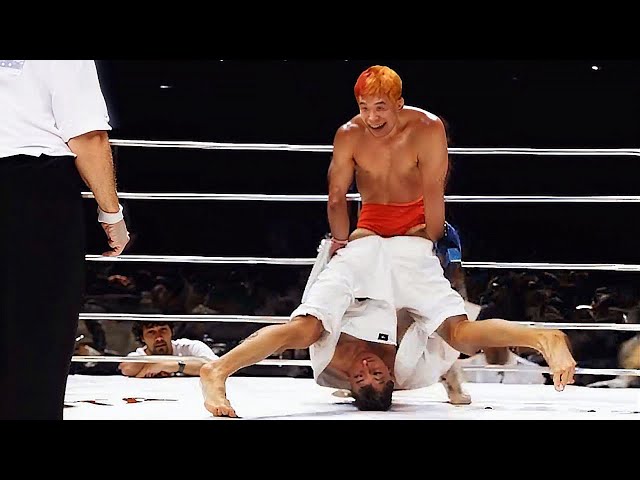

Lasting Legacy In Martial Arts
Even as his physical prime faded and the sport continued to evolve, Sakuraba’s legacy endured. He continued to fight well into his 40s, a testament to his passion for combat, albeit with diminishing results. His impact, however, extends far beyond his win-loss record.
Kazushi Sakuraba is remembered in combat sports as many things, including but not limited to…
A Pioneer Of Modern Grappling: His inventive submission game and ability to counter traditional BJJ techniques influenced countless fighters and coaches. He showed that grappling was not just about position, but about continuous attack and creativity.
The Original Innovator: He was one of the first true “mixed martial artists” who seamlessly blended wrestling, striking, and submission grappling in a way that few had before. He wasn’t just a grappler who learned to strike; he was a complete fighter whose style was greater than the sum of its parts.
The Fearless Underdog: His willingness to face anyone, often against larger and more decorated opponents, endeared him to fans worldwide. He embodied the spirit of a true warrior, never backing down from a challenge.
The Showman With Substance: Sakuraba proved that it was possible to be both an elite competitor and a captivating entertainer. His personality made his fights an event.
Today, elements of Sakuraba’s style can be seen in fighters across various weight classes. The emphasis on pressure grappling, unorthodox submissions, and a well-rounded attack can all trace roots back to the “Gracie Hunter.” He remains a revered figure in martial arts circles, a symbol of a bygone era of MMA when styles truly clashed, and a hero who dared to challenge the established order.
Kazushi Sakuraba didn’t just participate in the evolution of MMA; he was a driving force behind it. His fights were not just contests; they were lessons in courage, innovation, and the enduring spirit of a true martial artist. His legacy is not just etched in the record books, but in the very fabric of mixed martial arts itself.


