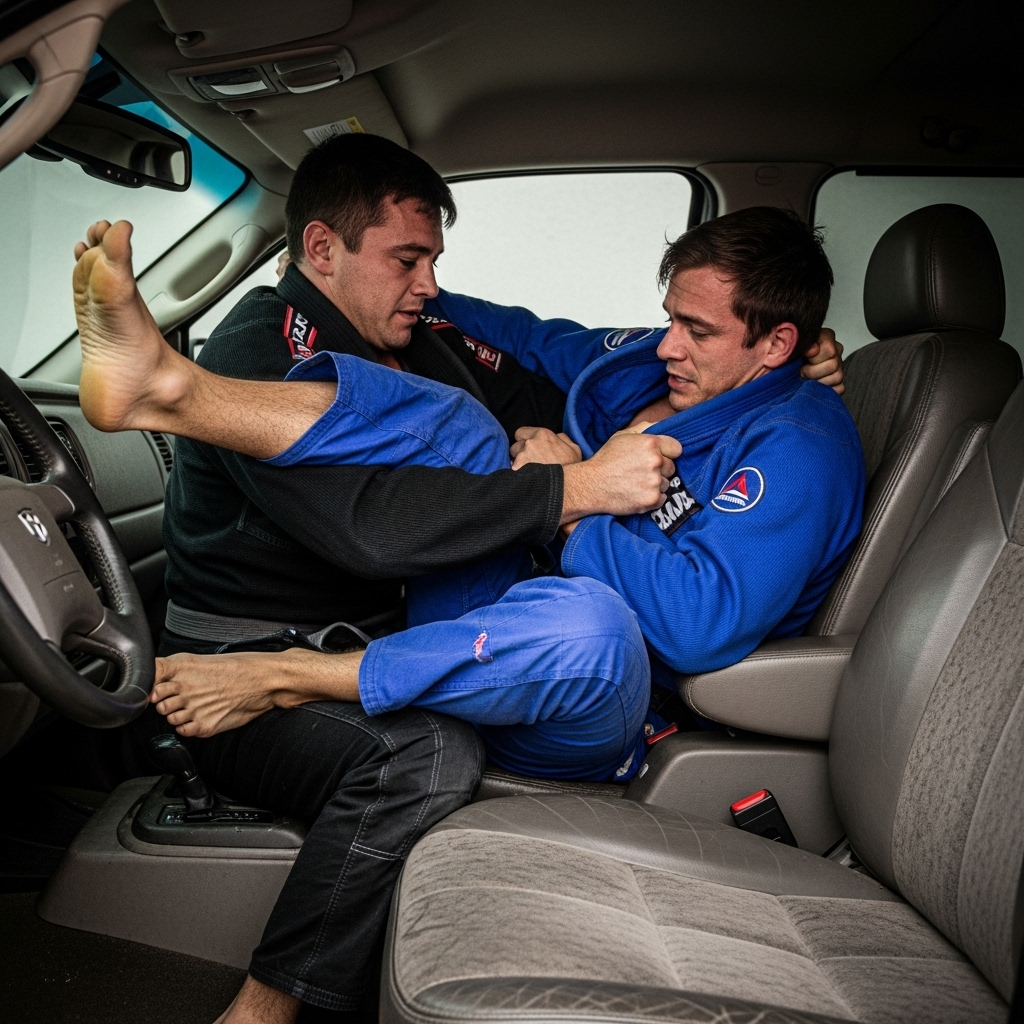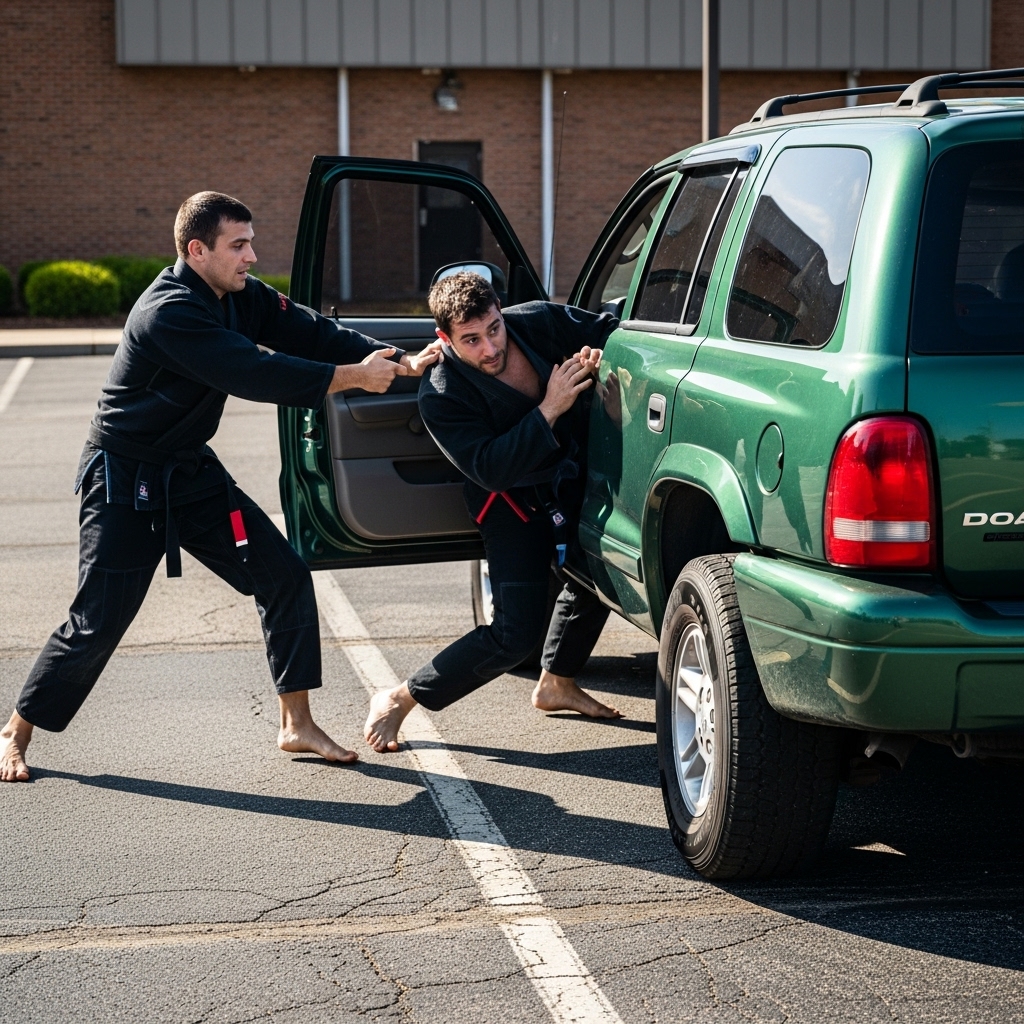
The world of grappling is no stranger to unique challenges and adaptations. From beach rolls to escalator grappling, practitioners are always finding new ways to test their skills. But perhaps one of the most head-scratching, and surprisingly popular, innovations to emerge recently is “Carjitsu.” What started as a humorous concept has evolved into a legitimate, albeit niche, sub-discipline with its own set of rules and a surprisingly deep tactical component.
So, what exactly is Carjitsu, and how does one even begin to grapple inside a Dodge Durango? Let’s break it down.
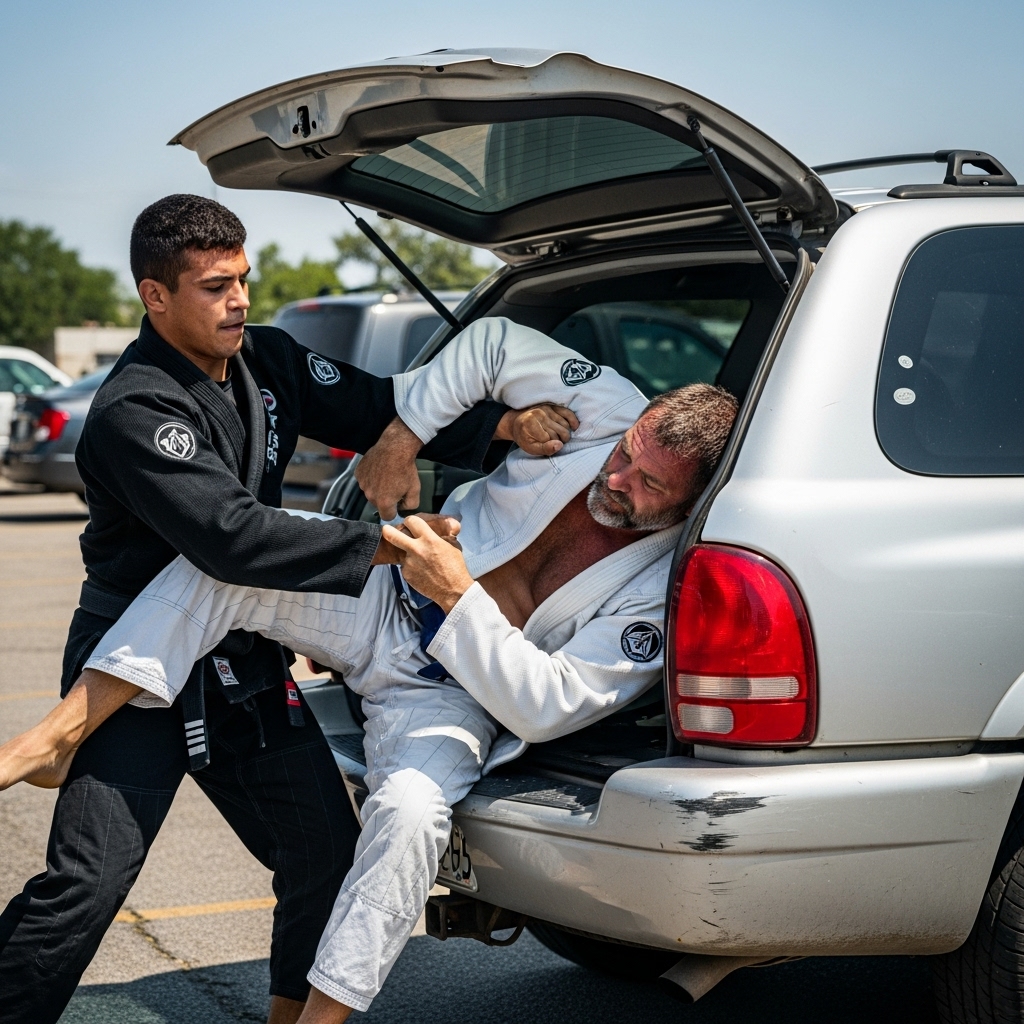
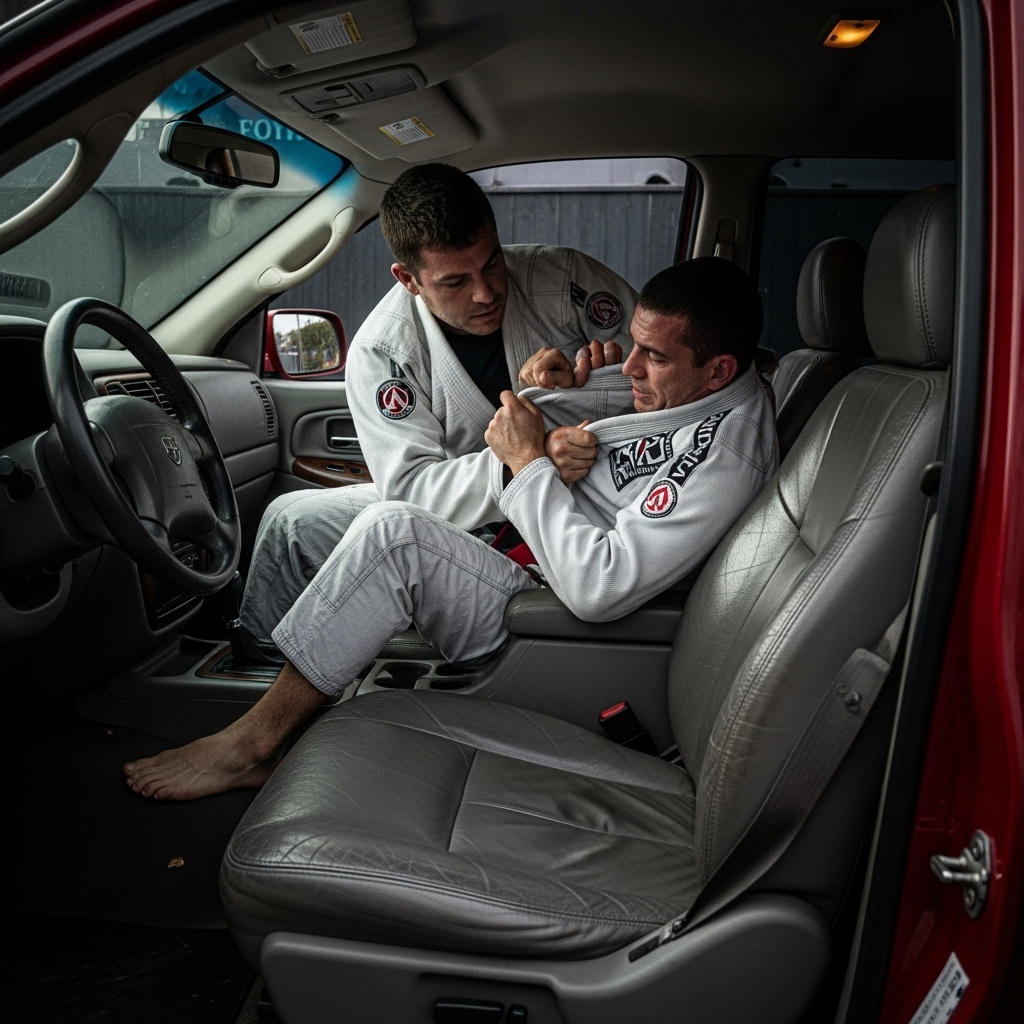
The Genesis of Carjitsu
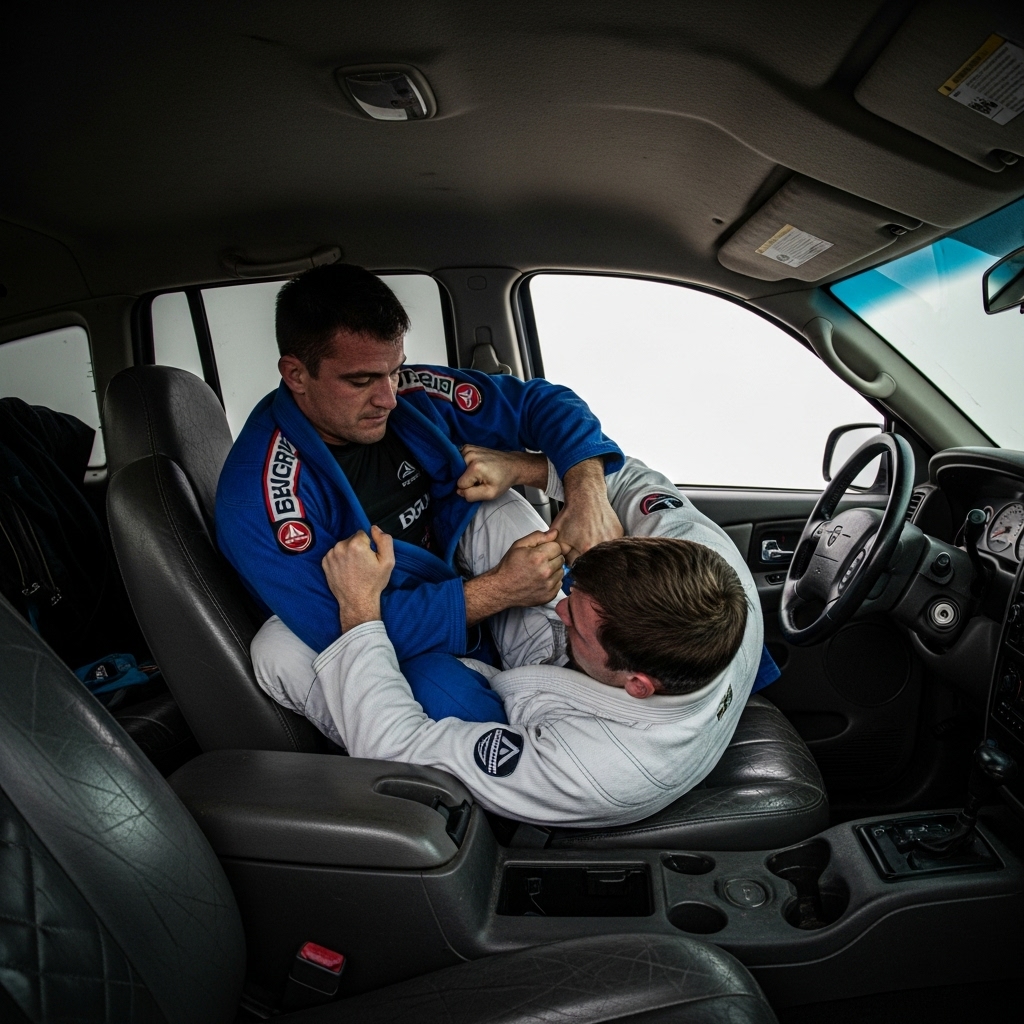
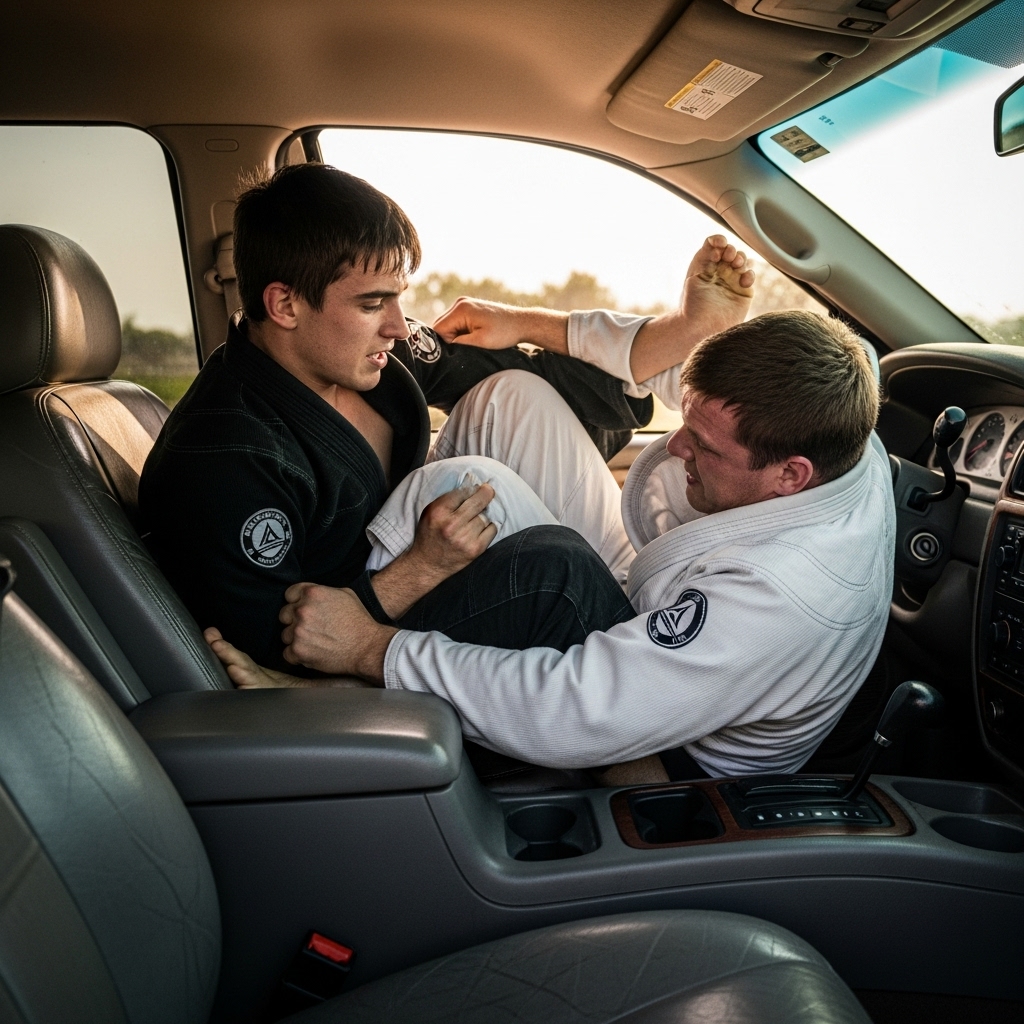
Carjitsu, as the name suggests, is Jiu-Jitsu practiced within the confines of a car. The idea initially gained traction through viral videos showcasing grapplers attempting submissions in cramped vehicle interiors. What started as a comedic endeavor quickly revealed an interesting truth: the limited space, awkward angles, and numerous obstacles within a car presented a completely unique set of grappling problems. It’s a testament to the adaptability of BJJ that what seemed absurd on the surface could actually offer a novel training ground.
The Core Concept: Adapting to Extreme Constraints
At its heart, Carjitsu is about extreme constraint. Unlike a wide-open mat, a car offers very little room for traditional movement, sprawling, or sweeping. This forces practitioners to rethink their entire approach to grappling.
Key Conceptual Shifts Include:
Submission Focus: Positional control as we know it on the mats is often fleeting. The goal quickly becomes securing a submission from compromised or unconventional positions.
Reliance On Upper Body And Clinch Work: With legroom severely limited, takedowns become almost impossible in the traditional sense. The focus shifts heavily to upper body control, pummeling, and clinching for dominant positions.
Leveraging The Environment: The car’s interior isn’t just a hindrance; it’s also a tool. Headrests, dashboards, steering wheels, and even seatbelts can be used for leverage, submissions, or to create openings.
Precision And Economy Of Motion: Big, powerful movements are out. Carjitsu demands precision, small adjustments, and an acute awareness of your opponent’s body within the tight space. Every inch matters.
The Tactical Nuances Of Carjitsu
Carjitsu offers a fascinating array of tactical considerations:
Chokes And Armlocks Reign Supreme: With limited leg movement, upper body submissions become the primary focus. Rear-naked chokes, guillotine chokes, arm-triangles, and various armlocks are highly effective.
The Headrest Game: Headrests become crucial for leverage, chokes, and even as platforms for securing submissions.
Seatbelt Applications: While removed for grappling, the very presence of seatbelts can influence movement and create opportunities or obstacles. Some playful variations even incorporate them into the grappling.
Dashboard Dynamics: The dashboard can be used to trap limbs, provide base, or as an anchor for submissions.
Leveraging The Center Console: This often-overlooked area becomes a significant barrier or an opportunity for unique controls and submissions.
The “Seat Slide” Principle: Utilizing the ability of seats to slide forward and backward can create unexpected angles and openings.
Is Carjitsu Here To Stay?
While it may never reach the mainstream popularity of traditional BJJ, Carjitsu has carved out a unique and entertaining niche. It’s more than just a novelty; it’s a legitimate test of adaptability, spatial awareness, and precision in grappling. For those looking to challenge their understanding of Jiu-Jitsu in the most unconventional of environments, Carjitsu offers a surprisingly rich and rewarding experience.