


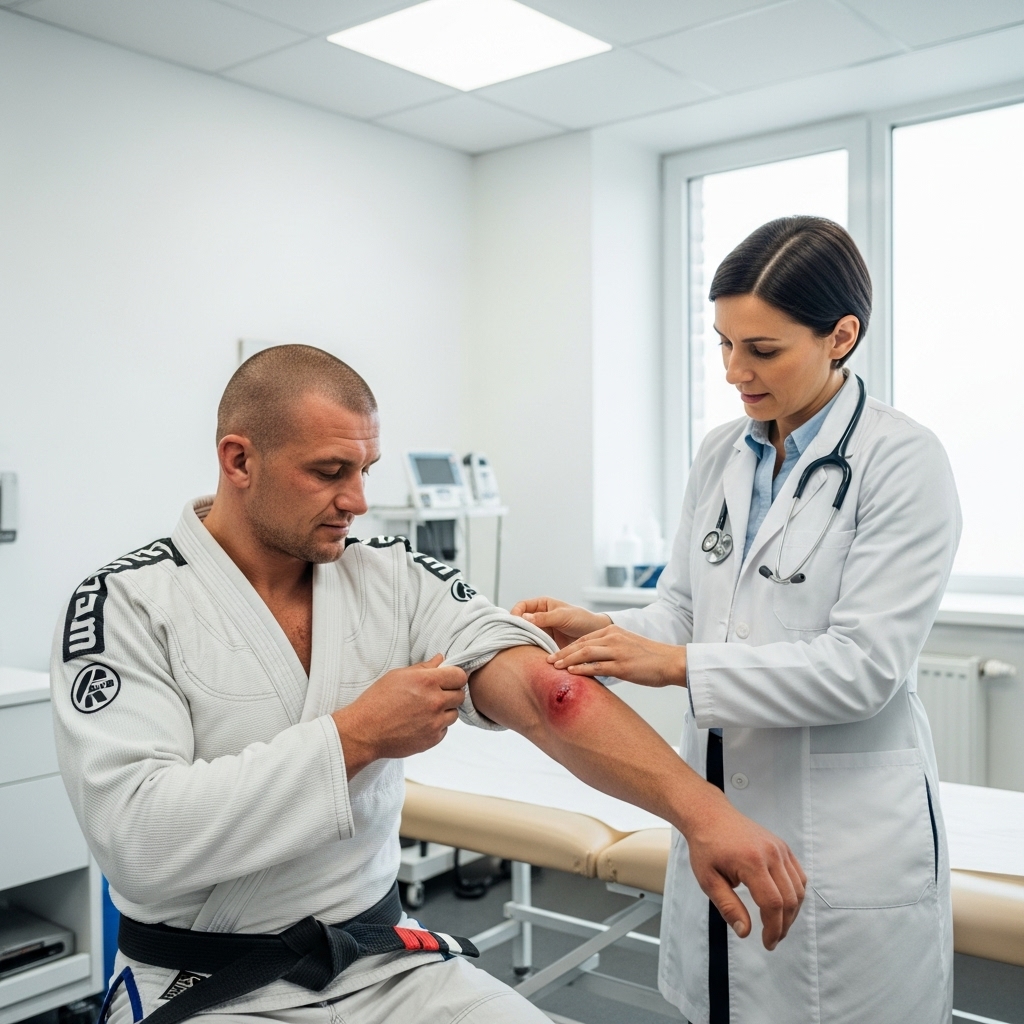
Jiu-jitsu, the “gentle art,” is a beautiful dance of leverage and technique. It’s also a sport of incredibly close contact, sweat, and sometimes, unfortunate exchanges of microorganisms. While we often focus on perfecting our armbars and sweeps, understanding and preventing skin infections is just as crucial for consistent mat time and overall health.
Let’s face it, mats, gis, and training partners can all become vectors for unwelcome guests. Knowing what to look for, how these infections spread, and how to treat them is your best defense.

The Unwanted Guests: Common Skin Infections in Grappling
Here are some of the usual suspects that can interrupt your training:
Ringworm (Tinea Corporis): Despite its name, there’s no worm involved! This is a fungal infection that presents as a red, itchy, scaly rash, often in a ring shape with clearer skin in the center and it’s highly contagious.
Staphylococcus Aureus (Staph) And MRSA: Staph bacteria are commonly found on the skin and in the nose. When they enter the body through cuts or scrapes, they can cause infections ranging from boils and impetigo (crusty sores) to more serious conditions like cellulitis. MRSA (Methicillin-resistant Staphylococcus aureus) is a type of staph that is resistant to many common antibiotics, making it harder to treat and potentially more dangerous.
Impetigo: This is a bacterial infection (often staph or strep) that causes red sores, typically on the face, neck, and hands. These sores can rupture and develop a honey-colored crust.
Herpes Gladiatorum (Mat Herpes): Caused by the Herpes Simplex Virus Type 1 (HSV-1), this viral infection manifests as clusters of small, painful blisters, often on the face, neck, or trunk. It’s highly contagious and can recur.
Molluscum Contagiosum: A viral skin infection that causes small, firm, dome-shaped, flesh-colored bumps with a dimple in the center. While generally harmless, they are contagious and can persist for months.
The Probable Causes: How Do These Things Spread?
The nature of jiu-jitsu makes it a prime breeding ground for skin infections. The most probable causes include:
Skin-to-Skin Contact: This is the big one. During rolling, drilling, and even casual contact, bacteria, fungi, and viruses can easily transfer from one person to another.
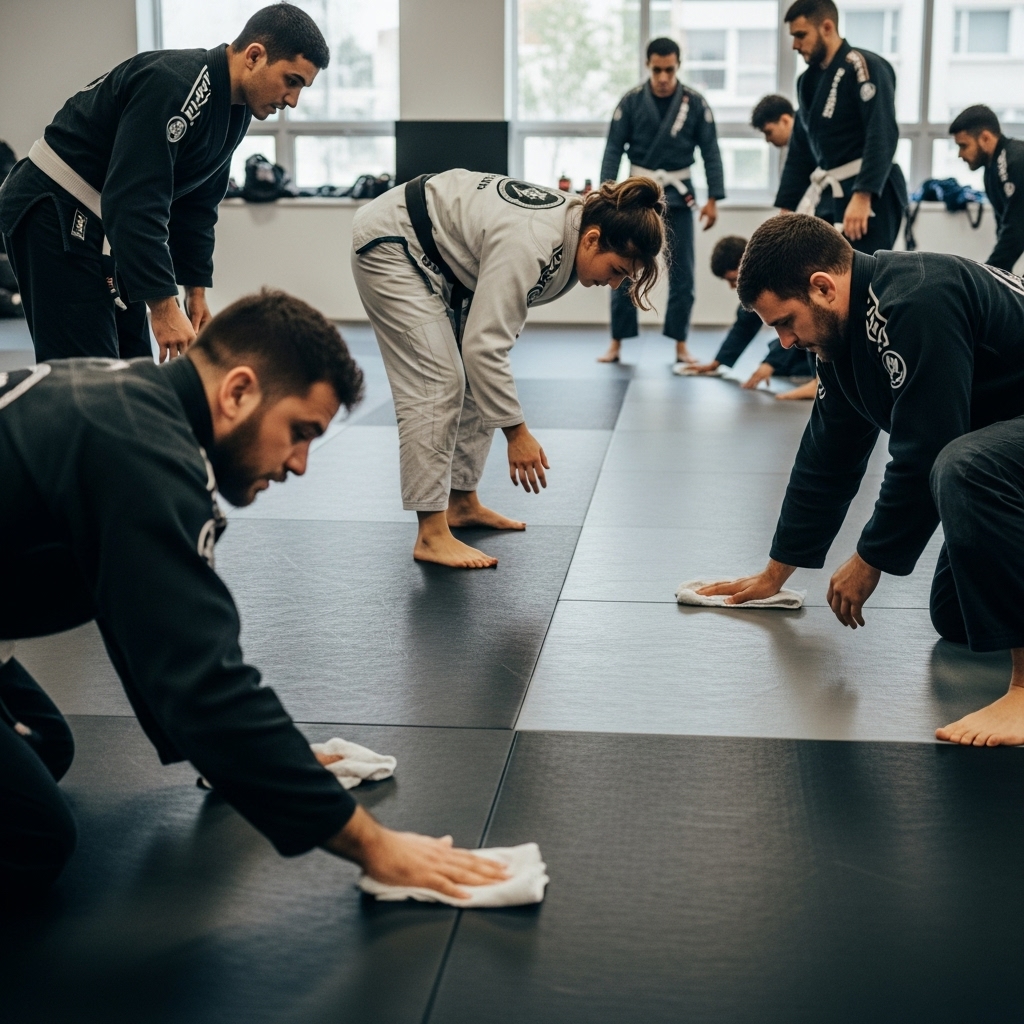
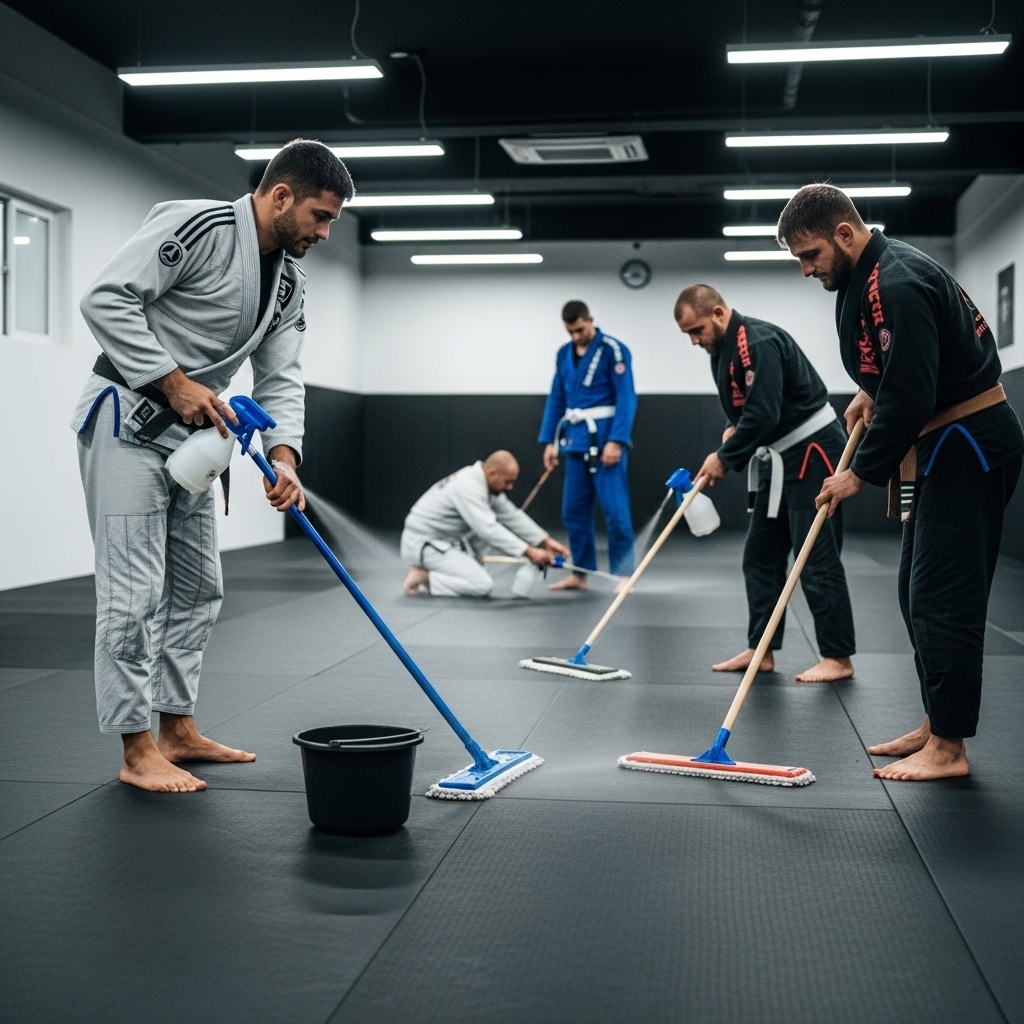
Shared Mats: Uncleaned or improperly cleaned mats are a major culprit. While most academies are diligent about mat hygiene, a single missed spot can harbor pathogens.
Unwashed Gis And Apparel: Your gi, rash guard, and spats absorb sweat, skin cells, and whatever else might be lurking on the mat. Re-wearing unwashed gear is a direct invitation for infections to set up shop.
Open Wounds And Abrasions: Even tiny cuts, scrapes, or mat burns act as entry points for bacteria and fungi.
Poor Personal Hygiene: Not showering immediately after training, failing to wash hands, or not cleaning under fingernails can all contribute to the spread.
Sharing Personal Items: Towels, water bottles, nail clippers, and even razors can spread infections if shared.
Compromised Immune System: Stress, lack of sleep, and poor nutrition can weaken your immune system, making you more susceptible to infections.
Common Methods Of Treatment: What To Do When You’re Infected
The golden rule for any suspected skin infection is: SEE A DOCTOR. Self-diagnosis can be dangerous, and early, accurate treatment is key to preventing complications and getting you back on the mat faster.
That said, here are common treatment approaches:
Antifungals (For Ringworm):
Topical Creams: Over-the-counter options like clotrimazole or miconazole are often effective for mild cases. Prescription-strength creams may be necessary for more stubborn infections.
Oral Medications: For widespread or persistent ringworm, a doctor may prescribe oral antifungals.
Antibiotics (For Staph, MRSA, Impetigo):
Topical Ointments: For localized bacterial infections, a doctor might prescribe topical antibiotics like mupirocin.
Oral Antibiotics: Oral antibiotics are typically needed for more severe or widespread bacterial infections. It is crucial to finish the entire course of antibiotics, even if symptoms improve, to prevent antibiotic resistance.
MRSA Specific Treatment: If MRSA is suspected or confirmed, your doctor will choose specific antibiotics effective against resistant strains.
Antivirals (For Herpes Gladiatorum):
Oral Antivirals: Medications like acyclovir, valacyclovir, or famciclovir can help shorten the duration and severity of outbreaks. They can also be used suppressively to reduce the frequency of outbreaks.
Cryotherapy And Chemical Removal (For Molluscum Contagiosum): Often, these resolve on their own, but a dermatologist can remove them through cryotherapy (freezing), curettage (scraping), or topical treatments, especially if they are spreading or bothersome.
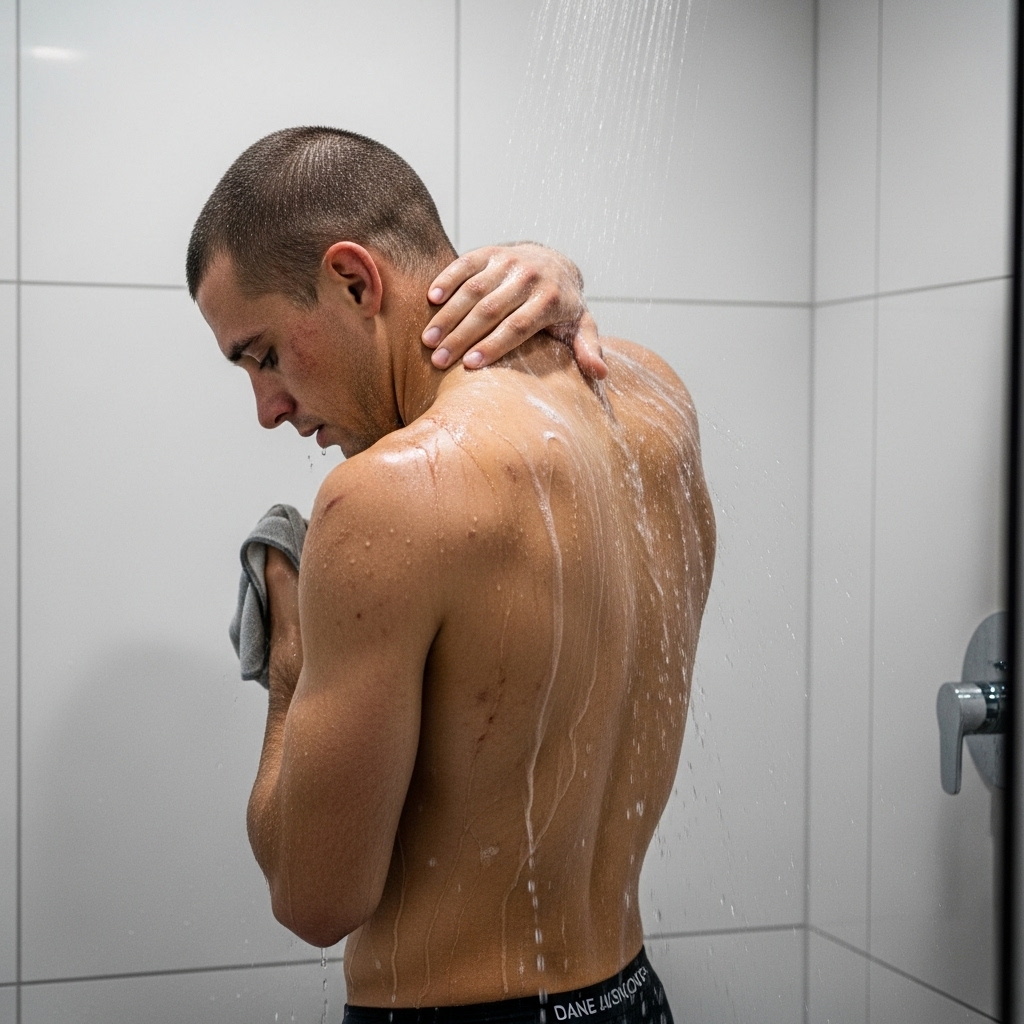
While treatments are available, preventing these infections in the first place is paramount:
Shower Immediately After Training: This is non-negotiable. Use soap and thoroughly wash your entire body.
Wash Your Gi And All Training Gear After Every Use: No exceptions. Hot water and detergent are your friends.
Inspect Your Skin Regularly: Check yourself for any suspicious rashes, cuts, or bumps before and after training.
Cover All Open Wounds: Even small cuts should be thoroughly cleaned and covered with a breathable bandage before stepping onto the mat.
Don’t Share Personal Items: Keep your own towels, water bottles, and hygiene products.
Clean Under Your Fingernails and Toenails: Keep them trimmed short.
Communicate And Be Responsible: If you suspect you have an infection, stay off the mats! Inform your academy owner/coach. This protects yourself and your training partners.
Academy Hygiene: Support and choose academies with rigorous mat cleaning protocols.
Skin infections are a frustrating reality in jiu-jitsu, but they don’t have to be a recurring nightmare. By practicing diligent hygiene, being aware of the signs, and seeking prompt medical attention, you can keep yourself healthy and keep rolling safely. Your training partners (and your skin) will thank you.


