


The UFC has officially decided that regular cage fighting wasn’t enough. Now they want your berimbolos, buggy chokes, and aggressively forced half guard exchanges too.
According to an announcement tied to the continued expansion of UFC BJJ, the promotion is launching the new UFC BJJ Opens, a tournament-style competition aimed at bringing more grapplers into the UFC’s rapidly growing submission grappling ecosystem. The move represents another major step in the company’s attempt to turn jiu jitsu into a mainstream spectator sport under the UFC banner.
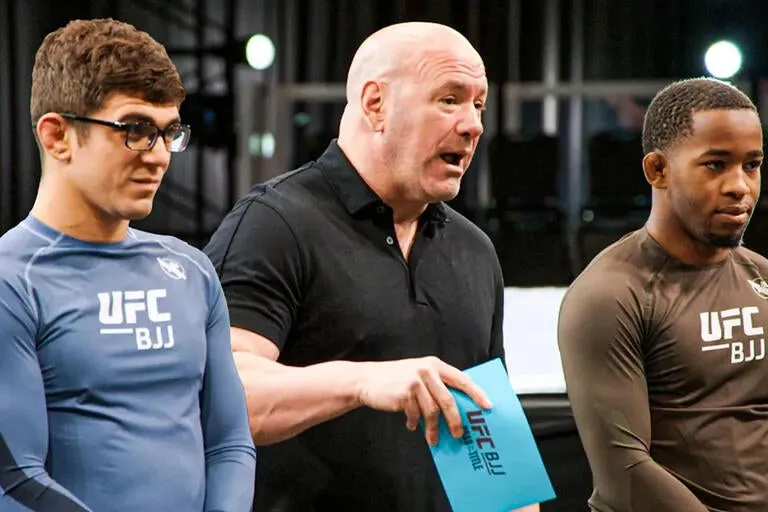
The UFC first launched its dedicated grappling initiative in 2025 with the debut of UFC Brazilian Jiu-Jitsu and the “Road to the Title” reality series featuring names like Mikey Musumeci and Rerisson Gabriel as coaches. Since then, the promotion has steadily built out a full grappling roster, championship structure, and recurring live events inside the UFC Apex.
The new UFC BJJ Opens appear designed to function as a large-scale entry point for competitors looking to fight under the UFC grappling umbrella. Think IBJJF Open meets UFC branding machine. Which, depending on who you ask, is either the future of grappling or the beginning of a world where every white belt now walks into class demanding walkout music and a “fight purse.”
The timing makes sense. UFC BJJ has already begun attracting major names from across the grappling world, including ADCC veterans, IBJJF champions, and even former MMA stars transitioning back into submission grappling. Recent events have featured competitors such as William Tackett, Keith Krikorian, Ffion Davies, and Nick Rodriguez, while former UFC title challenger Gilbert Burns recently signed with the promotion after retiring from MMA competition.
From a business standpoint, the Opens are a logical extension of what the UFC has already been building: a developmental pipeline, more frequent content, and a broader talent pool that keeps the brand constantly circulating through the grappling community. It also gives ambitious competitors a direct path toward UFC BJJ events without needing years of social media hype, invitationals, or a podcast appearance where they explain why heel hooks are “actually more technical than people think.”
Of course, the bigger question is whether UFC can truly crack the code on making grappling consistently entertaining for casual audiences. The promotion has experimented with a more MMA-inspired ruleset, including rounds, judges, and a 10-point must system designed to reward aggression and submission attempts.
So far, the strategy appears to be working better than many expected. UFC BJJ events have pulled respectable attention online, and the company continues doubling down instead of quietly abandoning the project after six months like countless grappling startups before it.
Now comes the hard part: convincing thousands of local competitors that they’re one tournament run away from becoming the next face of UFC grappling.
Expect a lot more rash guards. And probably significantly more cauliflower ear.


