

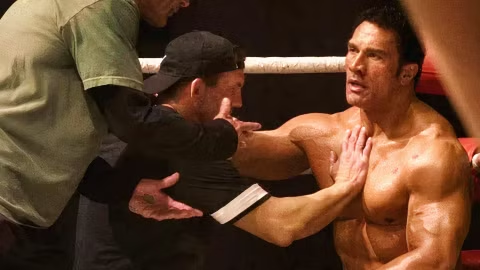
In the glossy, ESPN-televised era of modern mixed martial arts, it is easy to forget the untamed wilderness of the late 1990s. It was an era defined by stylistic purists colliding in rings and cages with minimal rules, where physical specimens rose to almost mythical status. Among those titans, few cast a shadow as imposing, or as complicated as Mark Kerr.
Known as “The Smashing Machine,” Kerr was the prototype for the modern heavyweight juggernaut, a wrestler of elite pedigree who didn’t just defeat his opponents, he ran through them like industrial equipment. Yet, his story remains one of the sport’s most poignant cautionary tales, a narrative loop of immense glory and devastating personal darkness.
Today, a new generation is learning about Kerr’s complicated legacy, brought into sharp focus by Hollywood’s A-list. But to understand the man, we must look back to the mats where he was forged.
The Collegiate Colossus
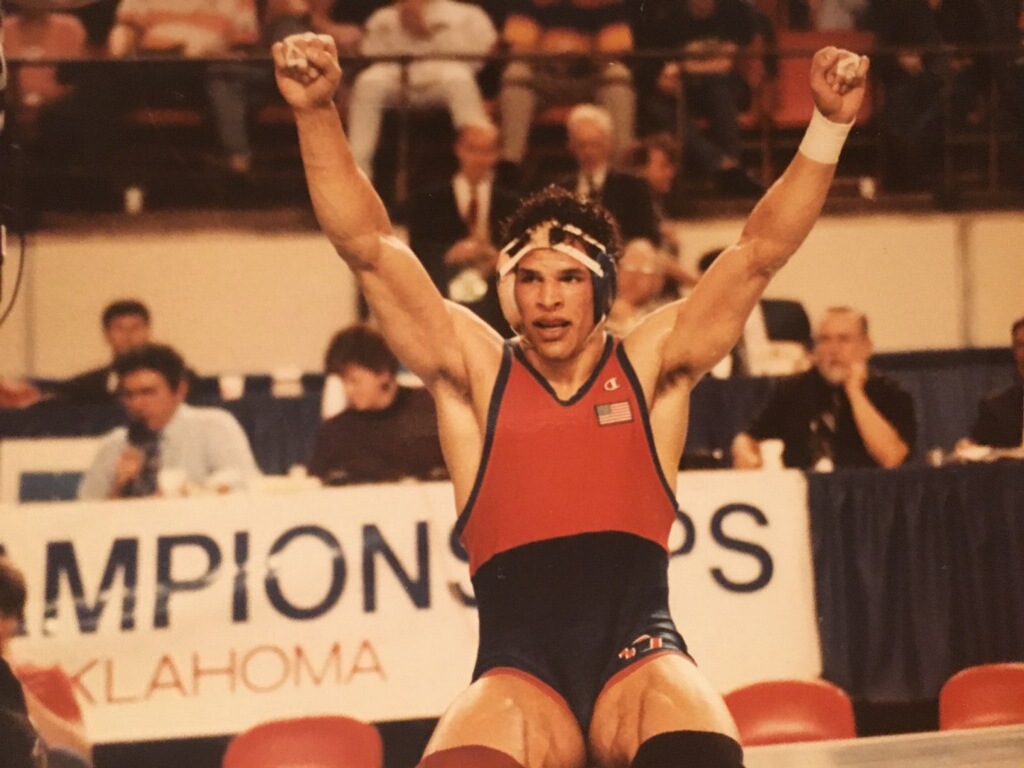
Before the bright lights of Tokyo or the octagons of America, Mark Kerr was a wrestling phenomenon. A Division I NCAA champion at Syracuse University in 1992, Kerr possessed a blend of technical prowess and frightening raw strength that was rare even at the elite collegiate level.
When Kerr transitioned to what was then called “No Holds Barred” (NHB) fighting in 1997, the sport was still figuring itself out. Brazilian Jiujitsu practitioners were largely baffling strikers. Wrestlers were learning how to punch. Kerr arrived as a fully formed engine of destruction. He entered the UFC during its tournament era, winning back-to-back heavyweight tournaments at UFC 14 and 15 with terrifying ease. His strategy was simple but unstoppable, secure a takedown, pin the opponent to the canvas, and unleash a barrage of strikes and headbutts (which were legal at the time) until the referee showed mercy.
The PRIDE Of An Era
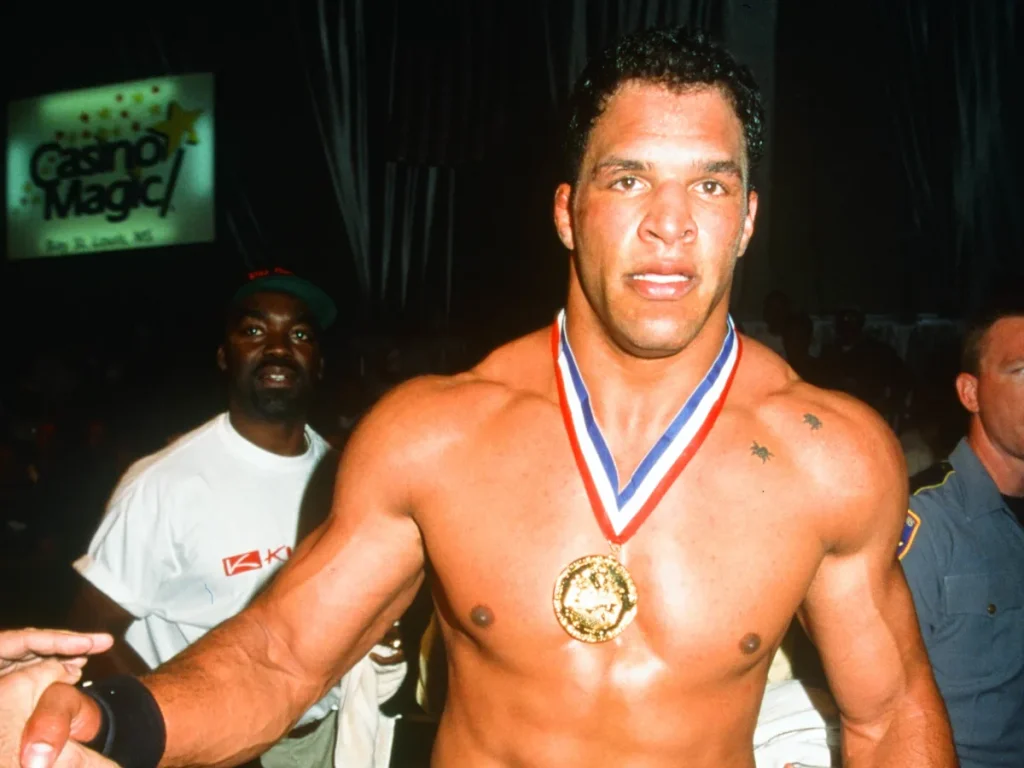
While his UFC run was impressive, Kerr’s true legend was carved in the rings of Japan. Joining PRIDE FC during its nascent golden age, Kerr became a superstar.
In the late 90s, Kerr was perhaps the most feared man on the planet. Standing 6’1″ and weighing a ripped 255 pounds, he was a physical anomaly. During a time when heavyweight fights were often sloppy brawls, Kerr brought Olympic-level athleticism and a suffocating top game. His early PRIDE run saw him dismantle quality opposition, often looking bored while doing so. He wasn’t just winning, he was serving as the evolutionary blueprint for future champions like Cain Velasquez or Brock Lesnar, wrestlers who learned to utilize their base for devastating ground-and-pound.
For a brief window, Mark Kerr was invincible. But the armor of “The Smashing Machine” had cracks that the public couldn’t see.
The Shadow Of The Ring
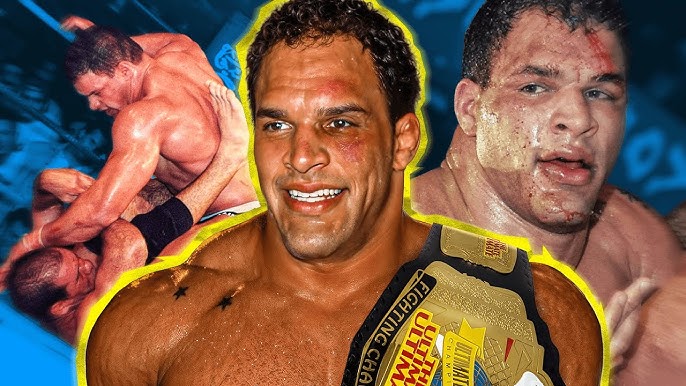
The life of a prizefighter in the NHB era was brutal. There were few regulatory bodies, medical oversight was scant, and the culture encouraged fighting through catastrophic injuries. To maintain his superhuman physique and numb the chronic pain of training and combat, Kerr turned to painkillers.
What started as a necessity for survival spiraled into a crippling addiction to opiates and injectables. His fall from grace was as rapid as his ascent. His invincible aura shattered in 2000 with a loss to Kazuyuki Fujita in the PRIDE Grand Prix, his stamina sapped by substance abuse and a body fighting itself.
The depths of Kerr’s struggle were famously chronicled in the seminal 2002 HBO documentary, The Smashing Machine. It remains perhaps the most raw, unfiltered look at the human cost of professional fighting ever committed to film. It stripped away the superhero facade, showing Kerr not as an unstoppable force, but as a vulnerable man sobbing in hotel rooms, navigating toxic relationships, and battling demons far scarier than anyone across the ring.
Hollywood Resurrection
For years, Kerr existed on the periphery of the sport, a “what if” story whispered among hardcore fans. However, his harrowing, cinematic life story has finally received the mainstream dramatization many felt it deserved.
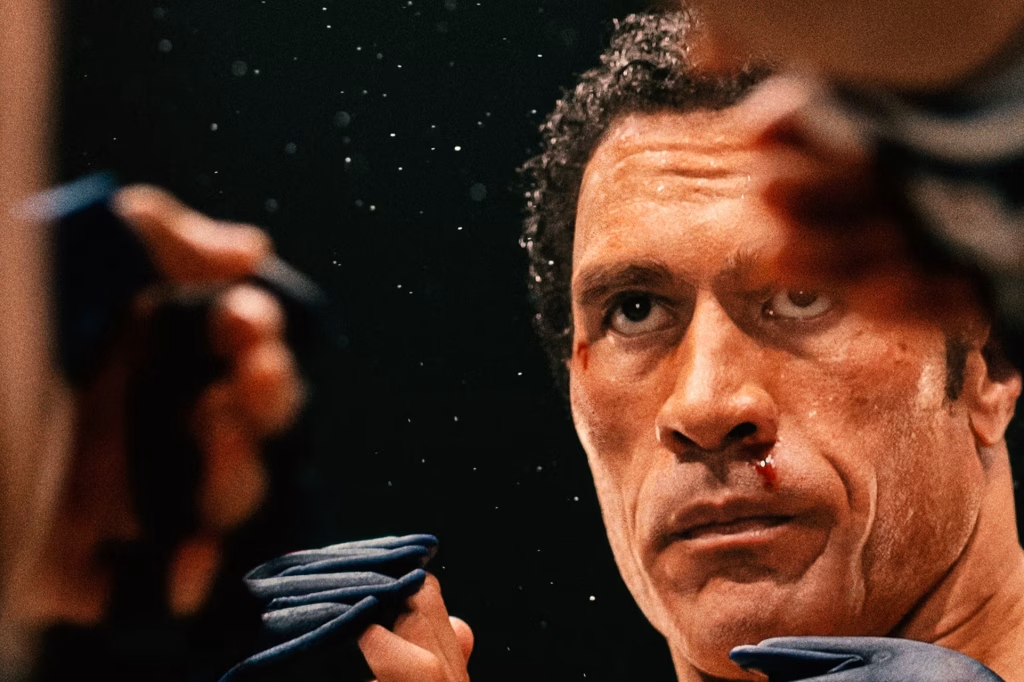
The recently released biopic, bringing Kerr’s life to the big screen, has thrust the former champion back into the cultural conversation. The film has been a massive critical success, praised for its unflinching portrayal of the addiction that nearly claimed Kerr’s life. The movie’s impact was solidified just this week when Dwayne “The Rock” Johnson, who underwent a startling physical transformation to portray the troubled fighter, received a Golden Globe nomination for Best Actor in a Motion Picture (Drama).
Johnson, a longtime admirer of Kerr and a fellow man of the canvas from his WWE days, championed the project for years. The nomination is a testament to the power of Kerr’s survival story and has introduced “The Smashing Machine” to millions who never saw a PRIDE VHS tape.
The Lasting Impact
Mark Kerr’s record sits at 15-11, a deceptive statistic that doesn’t reflect his prime dominance. He fought far past his expiration date, chasing paychecks while battling his addictions.
Yet, his impact is undeniable. Inside the cage, he raised the athletic bar for heavyweights. Outside of it, his transparency about addiction forced an uncomfortable, necessary conversation within combat sports about drug abuse, mental health, and the disposable nature of athletes.
Mark Kerr was a flawed pioneer. He was the hammer that helped forge modern MMA, even as the effort nearly broke him. Today, clean and having survived the fire, his legacy is finally being appreciated not just for the smashing, but for the rebuilding.


