


In the early 1990s, when the term “Mixed Martial Arts” didn’t quite yet exist in the American lexicon, a stone-faced, hyper-muscular athlete walked into a cage in Denver, Colorado, and changed combat sports forever. Before he was a WWE superstar (and possible Hall of Famer) Ken Shamrock was simply “The World’s Most Dangerous Man”, a title bestowed upon him by ABC News.
As we look back at the landscape of modern MMA, it’s impossible to ignore the DNA of Ken Shamrock in every training camp, every submission finish, and every pay-per-view main event.
From Troubled Youth to the Shamrock Ranch
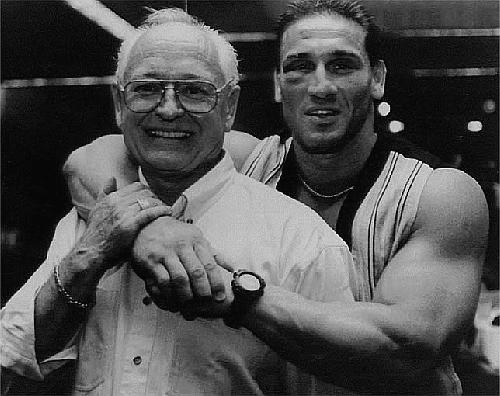
The road to the Octagon began in a state of chaos. Born Kenneth Wayne Kilpatrick in 1964, Shamrock’s early years were defined by instability and violence. By the age of 13, he had been kicked out of his home and lived in abandoned cars, eventually cycling through seven group homes.
His life took a pivotal turn when he arrived at the Shamrock Boys’ Home in Susanville, California. It was there that he met Bob Shamrock, a man who took in hundreds of “lost” boys. Bob saw the rage in Ken and gave it a productive outlet, wrestling and football. Bob eventually adopted Ken, giving him not just a name, but the foundation of discipline that would define his career.
The King Of Pancrase: Developing The Submission Blueprint
While most early UFC competitors were specialists in a single discipline, Shamrock was an early adopter of a “hybrid” style. After a stint in professional wrestling, he traveled to Japan to compete in Pancrase.
Unlike the theatrical wrestling seen in the U.S., Pancrase featured legitimate “shoot” fights with real submissions and palm strikes. It was here that Shamrock sharpened his teeth against legends like Masakatsu Funaki and Bas Rutten.
The King Of Pancrase: In 1994, he became the promotion’s first-ever champion, proving that a high-level wrestler with submission skills was the ultimate predator in a real fight.
Catch Wrestling Roots: He utilized a punishing style of catch wrestling, focusing on “hooking” (submissions from any position).


Career Peak: The World’s Most Dangerous Man
Shamrock’s North American fame exploded with the birth of the Ultimate Fighting Championship (UFC). His rivalry with Royce Gracie remains one of the most important feuds in the history of the sport, though he is far from the only one to have beef with the Gracies.
- UFC 1 (1993): Shamrock reached the semifinals but fell to Gracie’s then-mysterious Brazilian Jiu-Jitsu. This loss haunted Ken and fueled his legendary intensity.
- UFC 5 “The Superfight”: In the first-ever “Superfight” Championship, Shamrock and Gracie fought for 36 grueling minutes. Though it ended in a draw, it proved that the “Gracie magic” could be neutralized by an elite, disciplined wrestler.
- The Superfight Title: Ken finally captured UFC gold at UFC 6, defeating Dan “The Beast” Severn via guillotine choke to become the inaugural UFC Superfight Champion.
During this peak, Shamrock was more than a fighter; he was a phenomenon. His physique, his “Shamrock scowl,” and his terrifying ankle locks made him the first true face of the UFC.
A Lasting Impact: The Architect Of The Modern Team
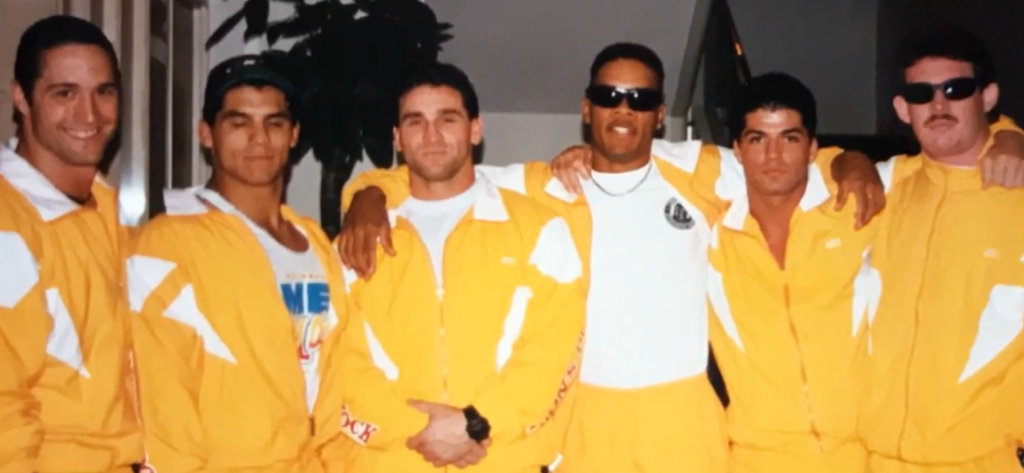
Ken Shamrock’s greatest contribution to MMA may not be a specific fight, but the creation of the Lion’s Den. Founded in the early ’90s, the Lion’s Den was the first true “MMA Team.”
Before the Lion’s Den, fighters trained in isolation or at traditional karate or boxing gyms. Shamrock realized that to win in the cage, you needed a tribe of specialists. The Den produced a generation of champions, including Frank Shamrock, Guy Mezger, and Jerry Bohlander. Their brutal tryouts were legendary, weeding out anyone who didn’t possess the mental fortitude to survive the “Lion’s Den.”
“I didn’t just want to be the best fighter; I wanted to build the best army.” — Ken Shamrock on the Lion’s Den.
The Legacy Today
Shamrock was the first athlete inducted into the UFC Hall of Fame (2003), and for good reason. He was the bridge between the old world of “style vs. style” matches and the modern era of professional, cross-trained athletes. He also proved that MMA stars could cross over into mainstream entertainment, paving the way for the likes of Brock Lesnar and Ronda Rousey through his successful career in the WWF/WWE (and a possible entrance into that Hall Of Fame as well).
Today, every time a fighter secures a heel hook or a training camp brings together wrestlers and kickboxers under one roof, they are walking the path Ken Shamrock blazed through the California dirt and the Japanese canvas decades ago.


