

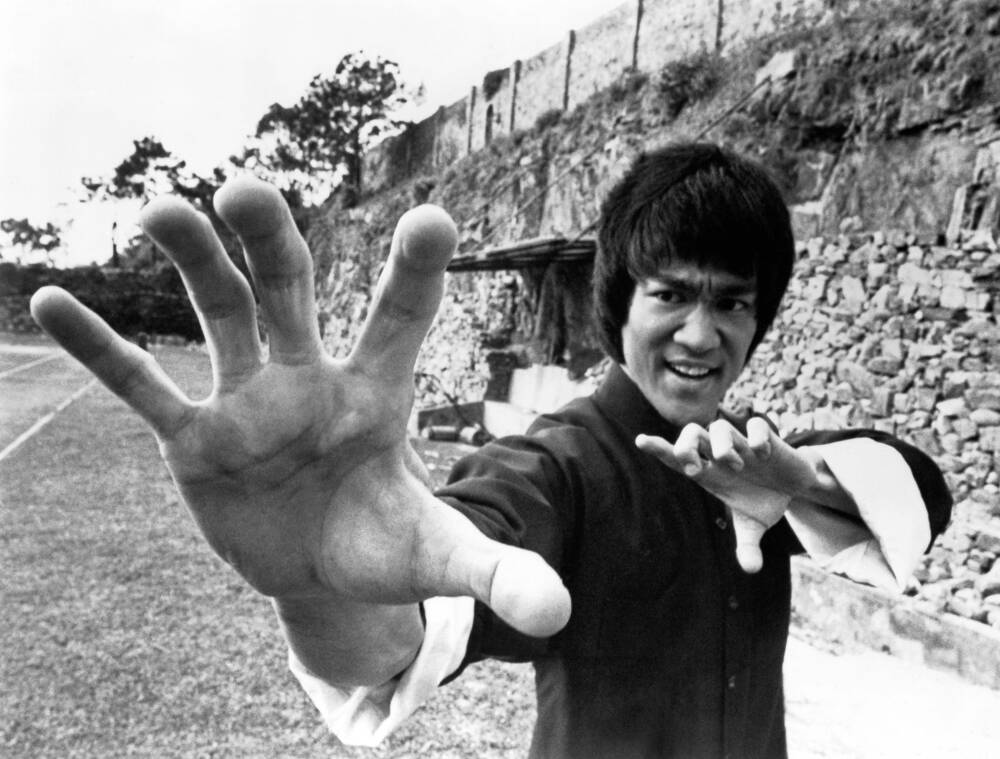
On July 20, 1973, the martial arts world lost its brightest star. Decades later, the legacy of Bruce Lee remains as electric, impactful, and alive as ever. He was not merely a movie star or a practitioner of traditional martial arts, Lee was a revolutionary iconoclast who dismantled rigid fight dogmas and laid the conceptual foundation for modern combat sports.
Early Life: A Rebel In Hong Kong
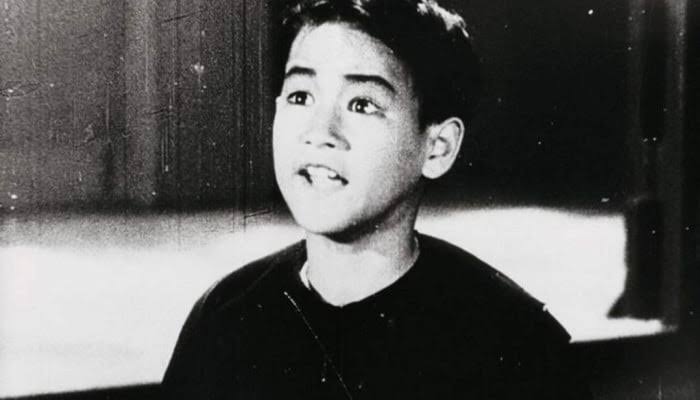
Born Lee Jun-fan on November 27, 1940, in San Francisco’s Chinatown while his parents were on tour with the Cantonese Opera Company, Lee was raised in Hong Kong. Growing up in post-war Hong Kong, young Lee was a fiery youth often involved in street fights and rival gang disputes. Although he began working as a child actor in over 20 films, it was on the streets and rooftops of Hong Kong where his passion for fighting was born.
The Beginning
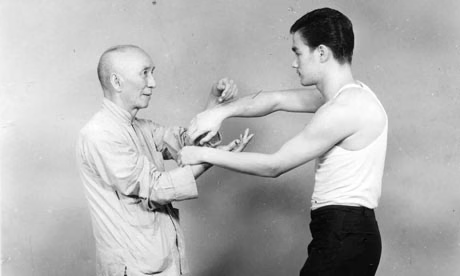
To give him direction and real defense skills, Lee’s parents enrolled him in formal martial arts training at age 13 under the legendary Wing Chun grandmaster, Ip Man.
Under Ip Man, Lee mastered Wing Chun’s centerline theory, trapping, and rapid-fire strikes. However, Lee’s relentless drive for combat practicality meant he couldn’t restrict himself to a single style. Even in his teenage years, he began cross-training, studying Western boxing, eventually winning the 1958 Hong Kong Schools Boxing Championship, and incorporating elements of Western fencing footwork.

Growth, Adaptation, And Development
In 1959, at age 18, Lee returned to the United States, eventually attending the University of Washington to study philosophy. To support himself, he began teaching martial arts. Controversially at the time, Lee refused to restrict his teachings by race or background, opening his doors to anyone willing to learn.
His breakthrough came during a performance at Ed Parker’s 1964 Long Beach International Karate Championships. Demonstrating his famous one-inch punch and lightning-fast reaction speed, Lee caught the attention of Hollywood producers, landing the iconic role of Kato in the TV series The Green Hornet (1966).
Following a legendary private fight with traditional master Wong Jack Man, Lee realized traditional martial styles were too rigid for real combat. This epiphany led him to synthesize his findings into Jeet Kune Do (“The Way of the Intercepting Fist”), centered on his legendary philosophy:
“Absorb what is useful, reject what is useless, add what is specifically your own.”
The Heights Of Global Stardom
Frustrated by Hollywood’s hesitation to cast an Asian actor as a leading man, Lee returned to Hong Kong to make movies on his own terms. What followed transformed global pop culture and action cinema forever.
- The Big Boss (1971) & Fist of Fury (1972): Shattered Asian box-office records and introduced authentic, high-impact martial arts choreography to the silver screen.
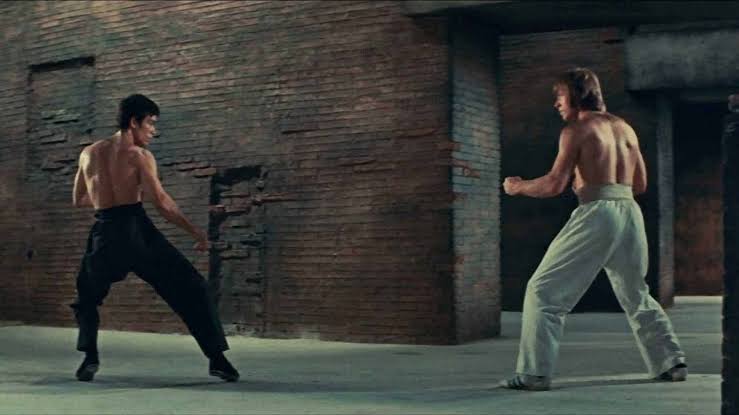
- The Way of the Dragon (1972): Written, directed, and starring Lee, featuring the iconic fight scene against Chuck Norris in Rome’s Colosseum.
- Enter the Dragon (1973): The first joint Hollywood-Hong Kong production, which propelled Lee to global megastardom.
Lasting Impact On Mixed Martial Arts
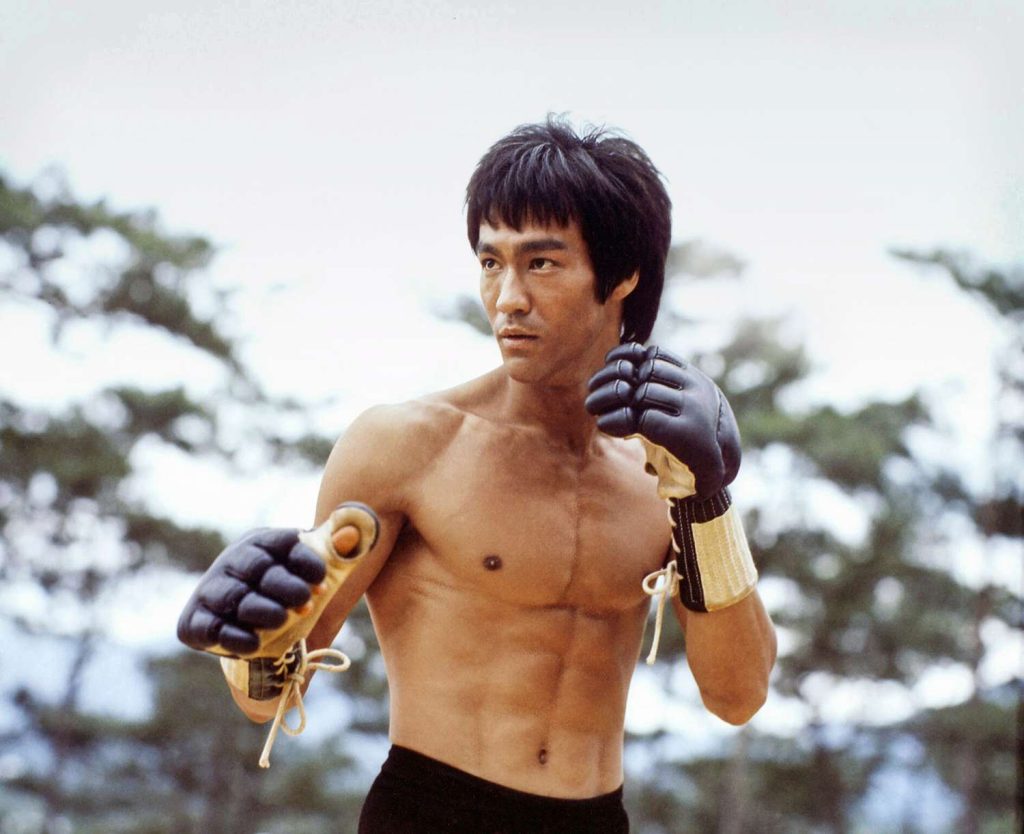
Decades before the ultimate fighting championships codified mixed martial arts into a global sport, Bruce Lee was advocating for its fundamental core. UFC CEO Dana White famously labeled Lee the “Father of Mixed Martial Arts,” and the title fits.
- Cross-Training Philosophy: Lee urged fighters to combine striking, grappling, fencing, and boxing rather than tying themselves to one style.
- Sports Science Ahead Of Its Time: He treated nutrition, isometric strength training, flexible endurance, and heavy-bag drills as core requirements, anticipating modern fighter training protocols.
- Mindset & Fluidity: His insistence on adaptability and to “be like water”, redefined fight strategy, range management, and psychological preparation in combat.
The Tragic Circumstances Of His Death
On July 20, 1973, just weeks before the world premiere of Enter the Dragon, Bruce Lee passed away unexpectedly in Hong Kong at the age of 32.
While working on the script for Game of Death, Lee complained of a severe headache. He was given Equagesic, a prescription painkiller containing aspirin and a muscle relaxant, and laid down to rest. He never woke up. The official coroner’s finding determined his death was caused by a cerebral edema (swelling of the brain), attributed to a hypersensitivity reaction to the medication.
Though wild theories and rumors circulated for years, the reality remains a profound tragedy, an unforeseen medical reaction took one of combat sports’ greatest minds at the peak of his power.
The Enduring Flame
Bruce Lee’s life was cut tragically short, but his vision proved timeless. Every time a modern martial artist switches stances, mixes takedowns with kickboxing, or adapts mid-fight to conquer an opponent, they are living out the principles Bruce Lee fought to normalize. On this day, we honor not just an actor or a martial artist, but a revolutionary who forever changed how humans train and fight.


