

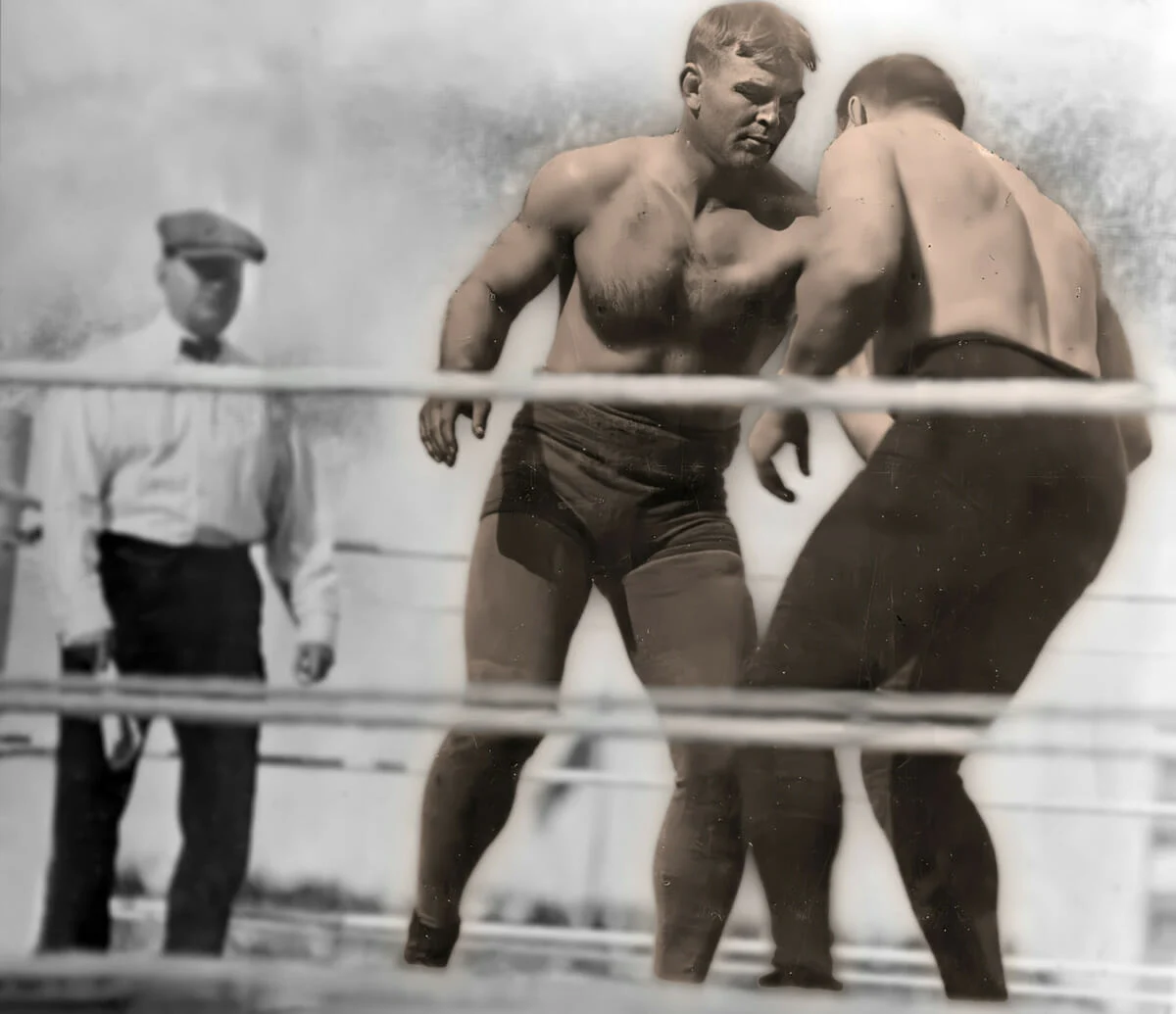
Long before the bright lights of the UFC or the spectacle of modern professional wrestling, there was one man who embodied the absolute pinnacle of human physical potential. George Hackenschmidt, known to history as “The Russian Lion,” wasn’t just a champion, he was the prototype.
At a time when fitness was a vague concept, Hackenschmidt combined elite-level strength, aesthetic bodybuilding, and world-class grappling to become the first undisputed World Heavyweight Champion in professional wrestling.
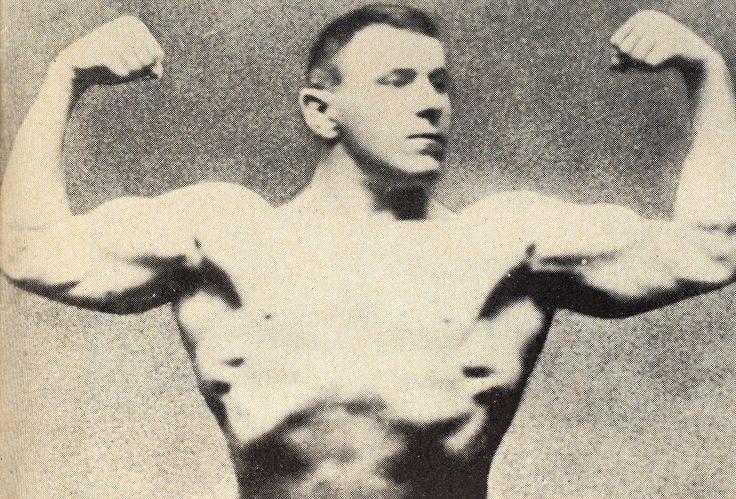
Early Life: The Making Of A Prodigy
Born in 1877 in Dorpat, Estonia (then part of the Russian Empire), Hackenschmidt was a polymath of physical culture. Before he ever stepped onto a wrestling mat, he was a standout in cycling, swimming, and gymnastics.
His life changed when he met Dr. Vladislav von Krajewski, the personal physician to the Russian Tsar and the “Father of Russian Athletics.” Krajewski saw the raw potential in the young Estonian and took him to St. Petersburg. Under the doctor’s tutelage, Hackenschmidt didn’t just train, he evolved. He began breaking world records in weightlifting, including a 214-pound one-arm overhead press.
The Transition To The Mat
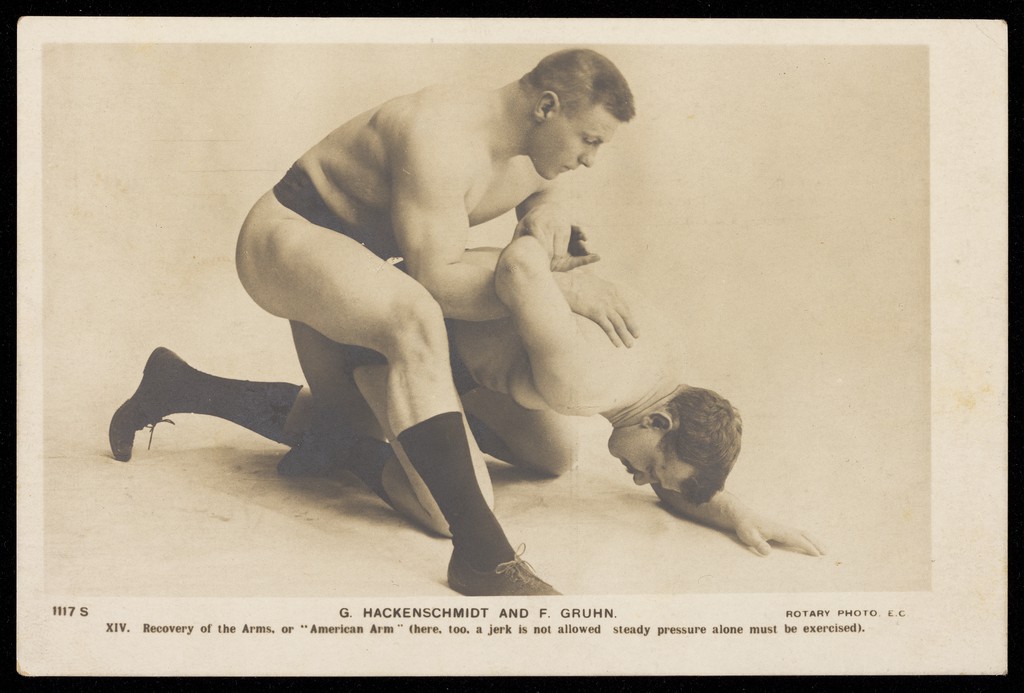
While his strength was legendary, Hackenschmidt found his true calling in Greco-Roman wrestling. His approach was a terrifying blend of raw power and technical precision. In an era where matches could last for hours, “Hack” was known for his efficiency.
The Philosophy: He believed in “The Way to Live”, the title of his later book, which preached a lifestyle of clean eating, fresh air, and heavy lifting.
1898: He won the European Over-Weight Championship in Greco-Roman wrestling.
The Streak: He allegedly went several years without losing a single fall, traversing Europe and dismantling every regional champion in his path.
The Peak: Becoming The Undisputed King
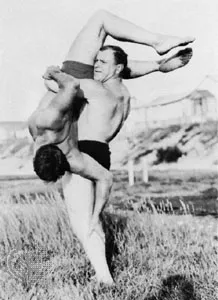
By 1905, Hackenschmidt was the most famous athlete on the planet. He solidified his status by defeating American champion Tom Jenkins in New York to become the first-ever World Heavyweight Champion.
Physically, he was a marvel. Standing 5’9″ and weighing a rock-solid 210 lbs, he possessed a physique that would not look out of place on a modern bodybuilding stage. He was the first athlete to truly demonstrate that functional strength and aesthetic muscle were not mutually exclusive.
The Gotch Rivalry: A Clash Of Eras
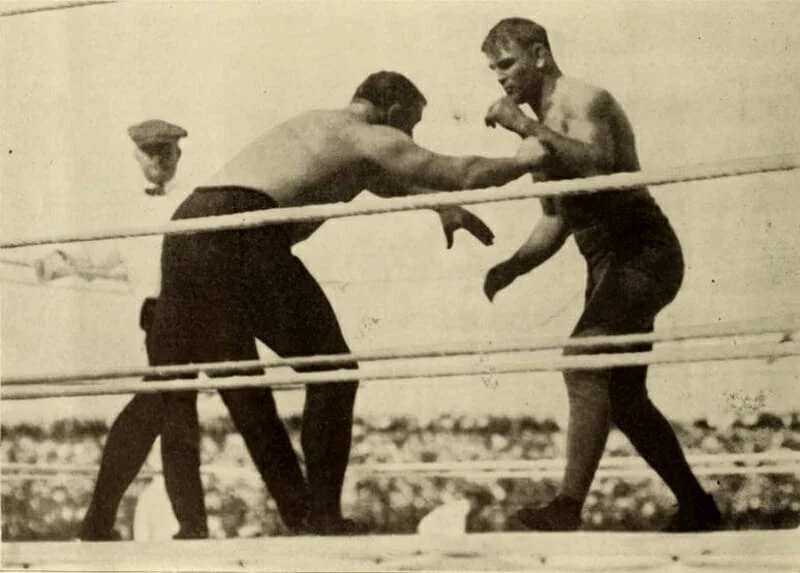
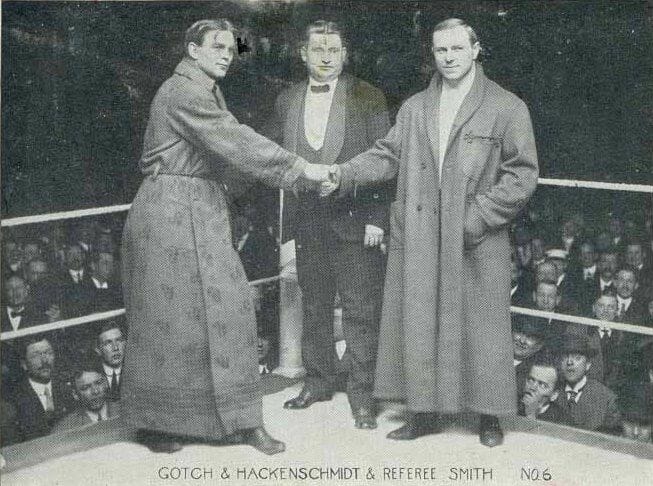
No discussion of the Russian Lion is complete without his rivalry with Frank Gotch. This was the 20th century’s version of a “Superfight.”
- The 1908 Match: After two hours of grueling grappling, Hackenschmidt conceded. The match was controversial, Gotch was accused of using “illegal” tactics like oiling his body and using thumb-to-eye gouges to escape Hackenschmidt’s legendary bear hug.
- The 1911 Rematch: Held at Comiskey Park in front of 30,000 fans, it was the “Fight of the Century.” However, Hackenschmidt entered with a severe knee injury sustained during training. Gotch capitalized, winning in two straight falls.
While the losses to Gotch dimmed his competitive career, they did nothing to erase his status as a pioneer.
The Lasting Impact: From The Gym To The Octagon
George Hackenschmidt’s influence is woven into the very fabric of modern fitness. If you’ve ever stepped foot in a gym or a dojo, you owe him a debt of gratitude.
Grappling Pedigree: He helped bridge the gap between regional folkstyle wrestling and the organized, international sport we see today. His emphasis on “bridging” to avoid pins is still a fundamental skill in BJJ and wrestling.
The Hack Squat: He popularized the “Hacke” (heel) squat, originally performed with a barbell behind the legs. Today, the Hack Squat machine is a staple in every serious bodybuilding gym.
The Bench Press: Hackenschmidt is credited with inventing the precursor to the bench press, the floor press, originally done by rolling a barbell over his face and pressing it from a bridge position.
“A man should always be ready for anything, and he should be able to do everything.” — George Hackenschmidt
Final Thoughts
Hackenschmidt lived to the ripe age of 90, remaining physically active and mentally sharp until the very end. He transitioned from an athlete to a philosopher, proving that the discipline learned on the mat is a lifelong asset. He wasn’t just a wrestler, he was the first true complete athlete of the modern age.


