

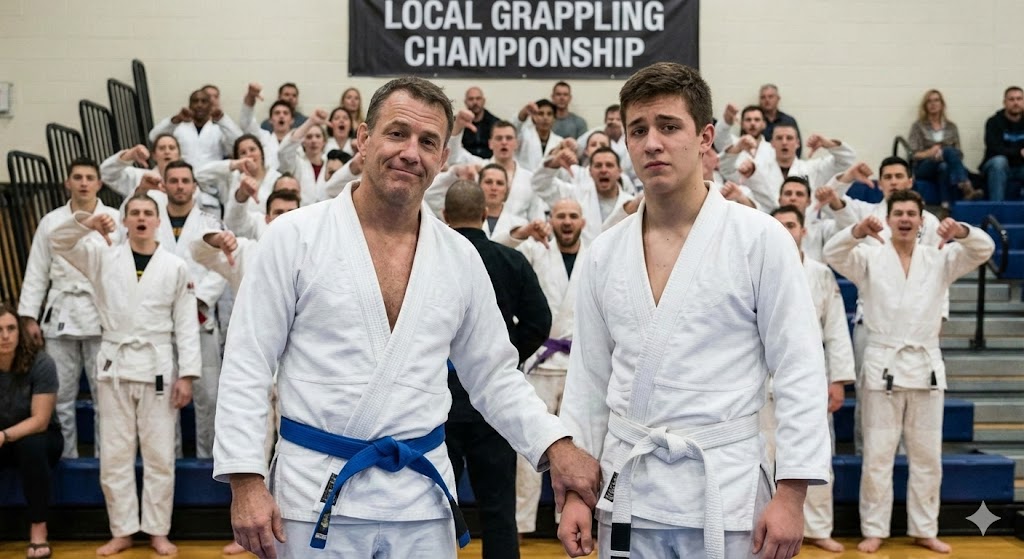
In the hierarchy of submissions, the wristlock occupies a strange, shadowy corner. It doesn’t have the cinematic grace of a flying triangle or the prestige of the rear-naked choke. Instead, the wristlock is the unloved step-child of the mats, a move that often arrives without warning, ends matches in a blink, and leaves the victim feeling more annoyed than outplayed.
Despite its reputation as the dirty move of the blue belt (specifically middle-aged blue belts with limited athletic prowess), the wristlock has a pedigree that stretches back centuries.
The Samurai Roots: From Daito-Ryu To The Mats
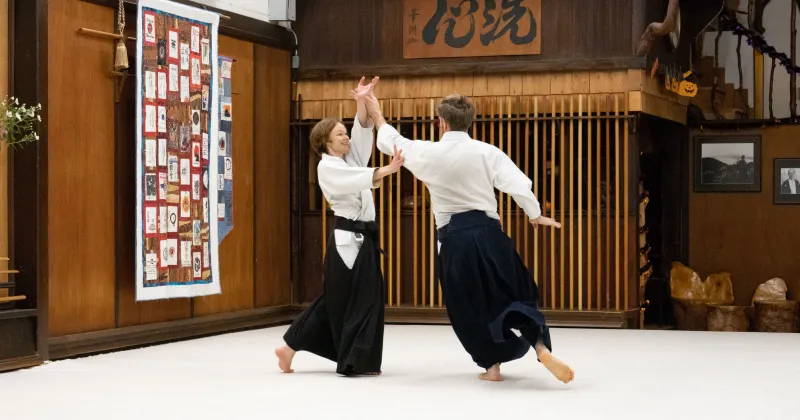
While many submissions in BJJ have murky origins, the wristlock’s DNA is clearly traced back to Japanese Jujutsu, and most prominently, Daito-ryu Aiki-jujutsu.
In the era of the Samurai, grappling (Koryu Bujutsu) was often a secondary necessity when a warrior was disarmed. Manipulating the small joints of the hand and wrist was a practical way to force a blade drop or control an opponent with minimal leverage.
When Morihei Ueshiba founded Aikido, he took these Daito-ryu techniques and made them central to the art. If you’ve ever seen an Aikido practitioner perform Nikyo (a painful inward wrist turn) or Kote-gaeshi (an outward wrist throw), you are seeing the direct ancestors of the BJJ wristlock. While Aikido focused on these as stand-up entries, they provided the technical blueprint for the folding and twisting mechanics we use on the ground today.
Integration Into The “Gentle Art”
The wristlock didn’t just appear in BJJ, it was always there, tucked away in the traditional Gracie Self-Defense curriculum. However, it was largely sidelined during the sport explosion of the 90s and early 2000s, where the focus shifted toward large-joint manipulation like armbars and Kimuras.
Its modern integration is largely credited to the technician lineages of BJJ. Legends like Osvaldo Alves, who had a strong background in Judo, and later, innovators like Claudio Calasans and Pete “The Greek” Letsos, proved that the wristlock wasn’t just a hail mary. They integrated it into the meta as a secondary attack.
Pro Tip: The most effective wristlocks in BJJ aren’t hunted; they are discovered. When an opponent frames against your chest or defends a triangle by “T-Rexing” their arms, they are essentially handing you their wrists on a silver platter.
Why The “Cheap” Reputation?
If you catch a teammate with a wristlock, don’t be surprised if they give you a look. There are two main reasons why the move is often viewed with disdain in modern academies:
1. The “Low Effort” Stigma
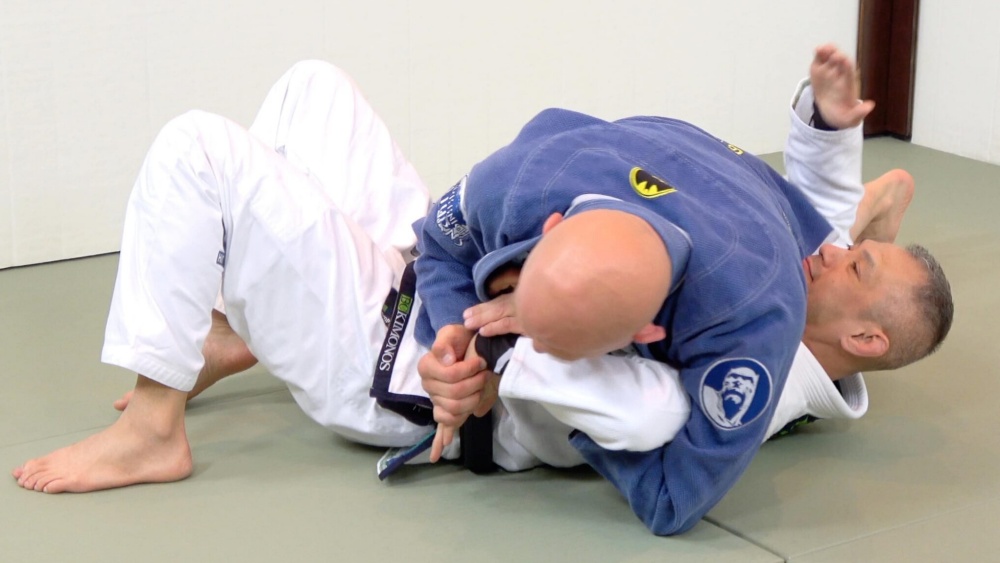
In a sport that prides itself on human chess, the wristlock can feel like flipping the board. A practitioner can spend five minutes passing a guard, establishing mount, and working a complex collar choke, only for the person on the bottom to grab a stray hand, fold it, and get the tap in two seconds. It feels like a shortcut that bypasses the traditional positional hierarchy (and it is!)
2. The Danger Factor (The “Zero to Sixty” Problem)
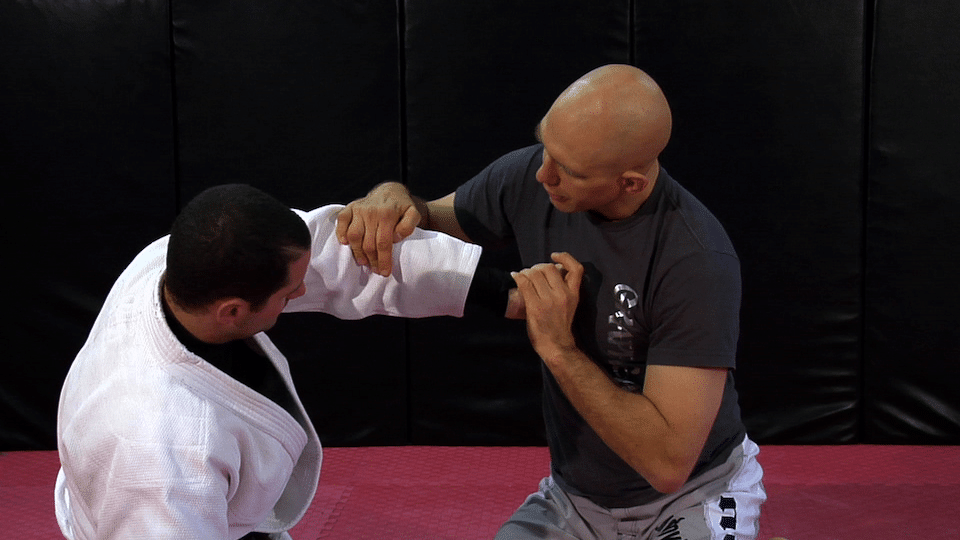
The wrist is a delicate complex of eight small carpal bones, ligaments, and tendons. Unlike the shoulder or the elbow, the wrist has a very short pain-to-break window.
- The Lack Of Warning: In an armbar, you feel the tension build.
- The Instant Pop: In a wristlock, the joint often goes from uncomfortable to ligament tear with just a millimeter of movement.
In a high-intensity rolling environment, an explosive wristlock is objectively dangerous because the victim often doesn’t have time to process the danger before the damage is done. This is why many IBJJF regulations ban wristlocks for white belts, it requires a level of control and mat maturity that can take years to develop.
Embracing the Villain Arc
Love it or hate it, the wristlock is an essential part of the meta submission game. It forces opponents to be mindful of their hand placement and punishes lazy frames. It may be the cheap move of the week, but as the old saying goes, “If you don’t want to get wristlocked, don’t give me your wrist.”


