

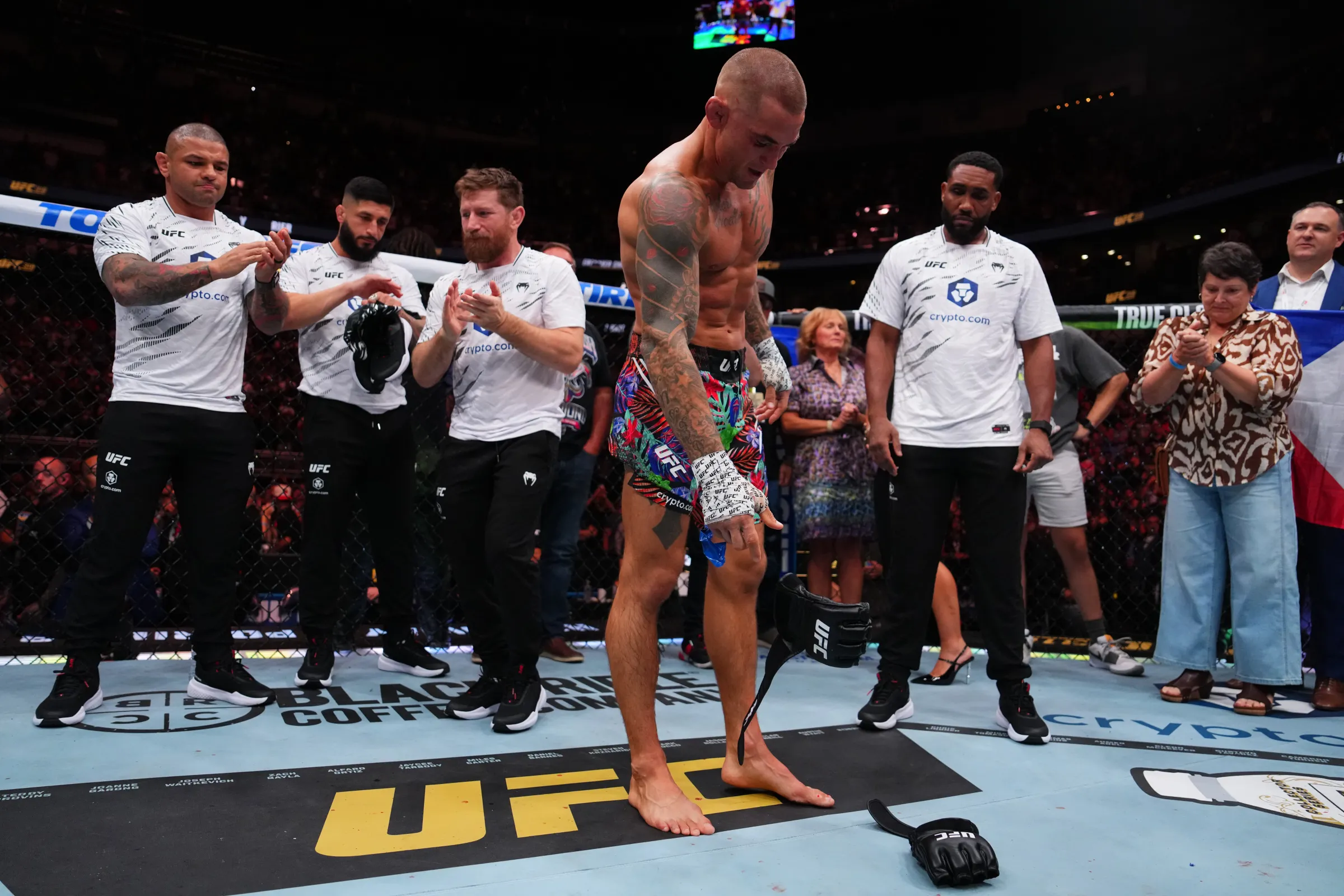
Half a year has passed since the roar of the crowd inside the Smoothie King Center in New Orleans faded to a respectful murmur, denoting the end of an era. On that sultry July night at UFC 318, Dustin “The Diamond” Poirier, a man whose heart was often as visible as the tattoos on his skin, laid down his gloves in the center of the Octagon after a final, hell-for-leather battle against his longtime rival, Max Holloway. It was a poetic, if bittersweet, conclusion to a career defined not by unblemished records, but by an indomitable spirit and a willingness to walk through fire. Today, as the MMA world continues to turn without one of its most beloved warriors, we look back on the journey of a Lafayette street fighter who became a global icon and a beacon of hope far beyond the cage.

Born on this day in 1989, in Lafayette, Louisiana, Dustin Glenn Poirier was forged in the humid crucible of the American South. His early life was far from the polished veneer of a future professional athlete. A child of divorce, Poirier was a self-admitted troubled youth, a ball of anger and energy that often found release in street fights. His formal education ended in the ninth grade after repeated run-ins with the law and a stint in juvenile detention. Yet, beneath the rough exterior lay a fighter’s lineage, inherited from a father and grandfather who knew the language of fists.
The turning point came around his 18th birthday. Desperate to break the cycle of violence and trouble that threatened to consume his future, Poirier walked into a local boxing gym. What began as an escape became a salvation. The discipline of the sweet science, followed by his immersion in the expanding world of mixed martial arts, provided a constructive outlet for his natural aggression. After a brief but successful amateur run in 2009, he turned professional, winning his first seven bouts on the regional circuit with a raw, aggressive style that would become his trademark.
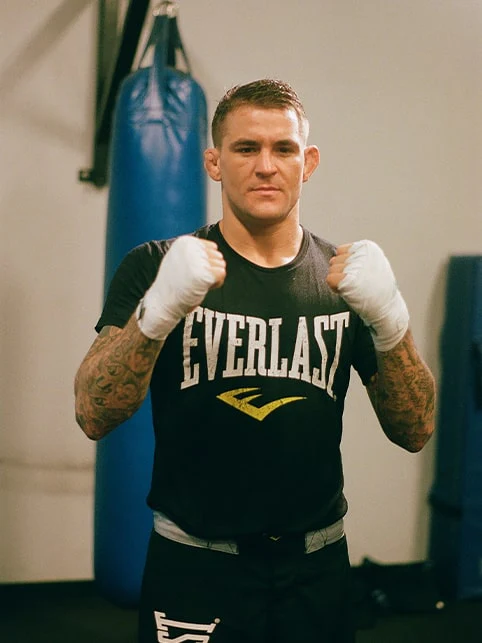

Poirier’s ascent through the ranks of MMA was a testament to grit. After a brief stint in the WEC, he transitioned to the UFC in 2011 as a featherweight. His early run was marked by highlight-reel submissions and a developing striking game, but a devastating loss to Conor McGregor in 2014 prompted a pivotal move up to the lightweight division. At 155 pounds, “The Diamond” truly began to shine. He tore through a murderer’s row of contenders, engaging in legendary wars with the likes of Eddie Alvarez, Justin Gaethje, and Anthony Pettis. His resume reads like a who’s-who of the division’s elite, and his penchant for thrilling bouts saw him tie the record for the most Fight of the Night bonuses in UFC history.
The pinnacle of his competitive career came at UFC 236 in 2019, where he defeated featherweight champion Max Holloway in a grueling five-round war to capture the Interim UFC Lightweight Championship. Though the undisputed title would elude him in valiant efforts against Khabib Nurmagomedov, Charles Oliveira, and Islam Makhachev, Poirier’s legacy was already cemented. His trilogy with Conor McGregor, particularly his back-to-back stoppages of the Irish superstar in 2021, catapulted him to a level of global fame few fighters ever achieve, proving once and for all that he was not just a brawler, but an elite, world-class martial artist.
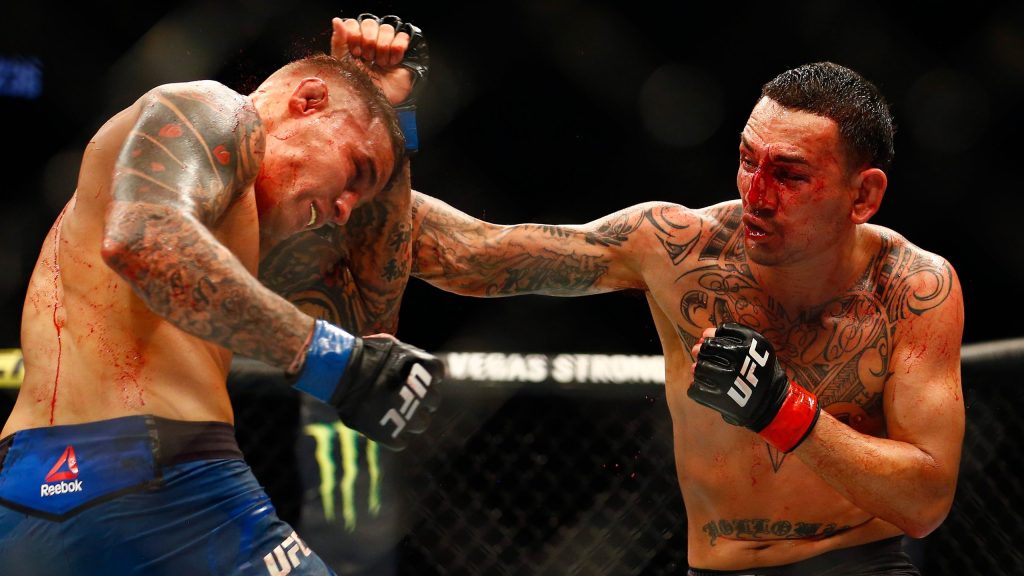
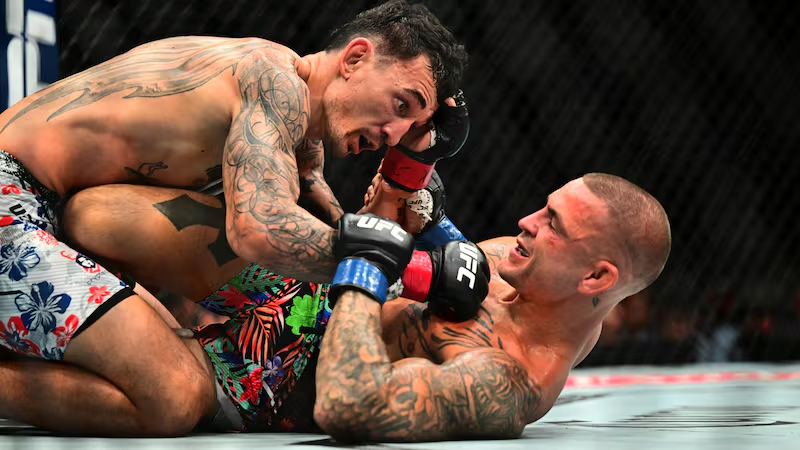
His final walk to the cage in his home state in July 2025 was a fitting farewell. Facing Holloway for the third time, with the symbolic “BMF” title on the line, Poirier fought with the same ferocity that had defined his two-decade career. The final ten seconds, with both men swinging wildly in the center of the cage, encapsulated everything fans loved about him. Though he lost the decision, he left on his own terms, a warrior respected by all. In the months since, Poirier has been honest about the difficulty of the transition, admitting that “a part of me has died” without the singular focus of fighting.
However, Dustin Poirier’s impact extends far beyond the blood and sweat of the arena. His greatest victory may well be the establishment of The Good Fight Foundation. Started with his wife, Jolie, the nonprofit has turned fight memorabilia into a lifeline for underserved communities. From stocking food banks and building playgrounds for disabled children to supporting the families of fallen first responders, Poirier has used his platform to be a champion for those fighting their own battles outside the cage.

As he celebrates his 37th birthday today, Dustin Poirier stands as a paragon of redemption and resilience. He is the street kid who became a world champion, the prizefighter with a heart of gold. While his days of trading leather under the bright lights are over, the brilliance of “The Diamond” continues to illuminate the sport he helped build and the countless lives he has touched. His name will forever be etched not just in record books, but in the hearts of fight fans who saw themselves in his struggle and celebrated his every triumph.


