

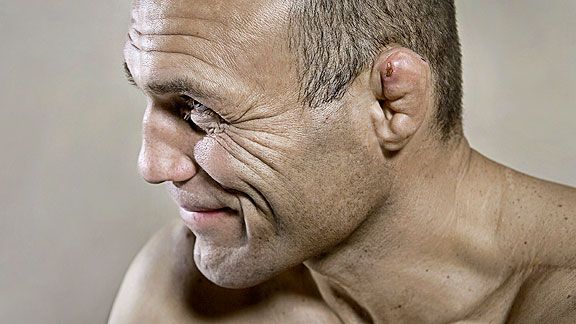
In combat sports, some scars are worn with pride. A broken nose tells a story of a tough scrap, a cut over the eye speaks to an opponent’s sharp striking, but perhaps no physical attribute is as synonymous with a lifetime on the mats as the lumpy, misshapen deformity known as cauliflower ear.
Commonly seen in wrestling, Brazilian Jiujitsu (BJJ), Mixed Martial Arts (MMA), and boxing, it is often viewed by newcomers as a daunting rite of passage and by veterans as a badge of honor. However, behind the rough exterior of a wrestler’s ear lies a serious medical condition that can lead to permanent disfigurement, chronic pain, and hearing loss if not managed correctly.
Here is the essential breakdown of cauliflower ear, what it is medically, why your ears are at risk, how to fix it, and most importantly, how to keep your ears looking normal.
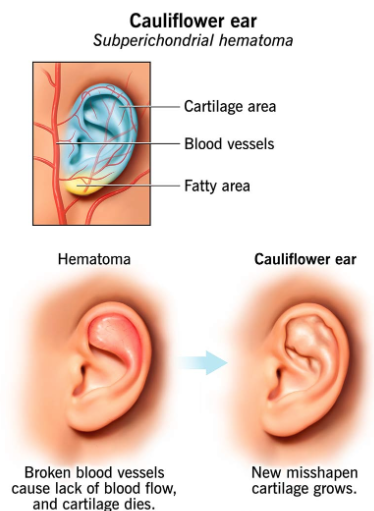
The Anatomy: What Is Its Medical Name And Why Does It Happen?
Informally termed Cauliflower Ear or Wrestler’s Ear, the medical community knows this condition as an auricular hematoma, or sometimes a perichondrial hematoma.
To understand why it happens, you need to understand how your ear is fed. Unlike most of your body, the cartilage that gives your outer ear its rigid yet flexible shape has no internal blood supply. Instead, it relies entirely on the nutrients and oxygen supplied by the overlying skin, which is tightly bound to the perichondrium (the layer surrounding the cartilage).
When you are in the clinch, grappling on the mat, or taking a strike to the side of the head, your ear is subjected to blunt force trauma or, more commonly, shearing forces. This grinding or squeezing causes the skin to be ripped away from the underlying cartilage.
When this separation occurs, the blood vessels supply the cartilage rupture. Blood and fluid begin to pool in the newfound space between the skin and the cartilage, creating a localized swelling known as a hematoma.
The Cauliflower Formation: If this hematoma is left untreated, the pooled fluid is cut off from the body’s circulation. Within 7 to 10 days, this fluid begins to clot, calcify, and turn into permanent, hardened scar tissue and new, deformed cartilage. Because the original cartilage no longer receives nutrients, it may also die (necrosis), causing the ear to fold in on itself, giving it the shriveled, lumpy, cauliflower-like appearance.
The Critical Window: How And When It Can Be Treated
When you notice your ear is beginning to fill with fluid, it will feel soft, warm, and like a water balloon, the clock starts ticking. Early intervention is the only way to prevent permanent deformity.
1. Immediate Care (0-6 Hours)
The moment you suspect damage, stop training. Applying ice immediately can help constrict blood vessels, reduce initial swelling, and numb the pain.
2. Professional Medical Drainage (24-72 Hours)
While you will see many fighters on social media draining their own ears with a needle and syringe, home treatment is strongly discouraged due to the massive risk of infection (perichondritis), which can be far more destructive than the hematoma itself.
A medical professional (an emergency room doctor, ENT specialist, or plastic surgeon) should handle the drainage.
*please note, most ER doctors won’t do much other than to refer you to either an ENT, or if the damage is extensive enough, a plastic surgeon.
They generally use two methods:
- Needle Aspiration: A fine needle is used to draw the fluid out. This is quick but has a high recurrence rate because the fluid often simply refills the empty space.
- Incision And Drainage: A small incision is made with a scalpel. This method is more effective at removing clotted or thickened blood that a needle cannot draw. It reduces the chance of refilling.
3. The Most Important Step: Compression
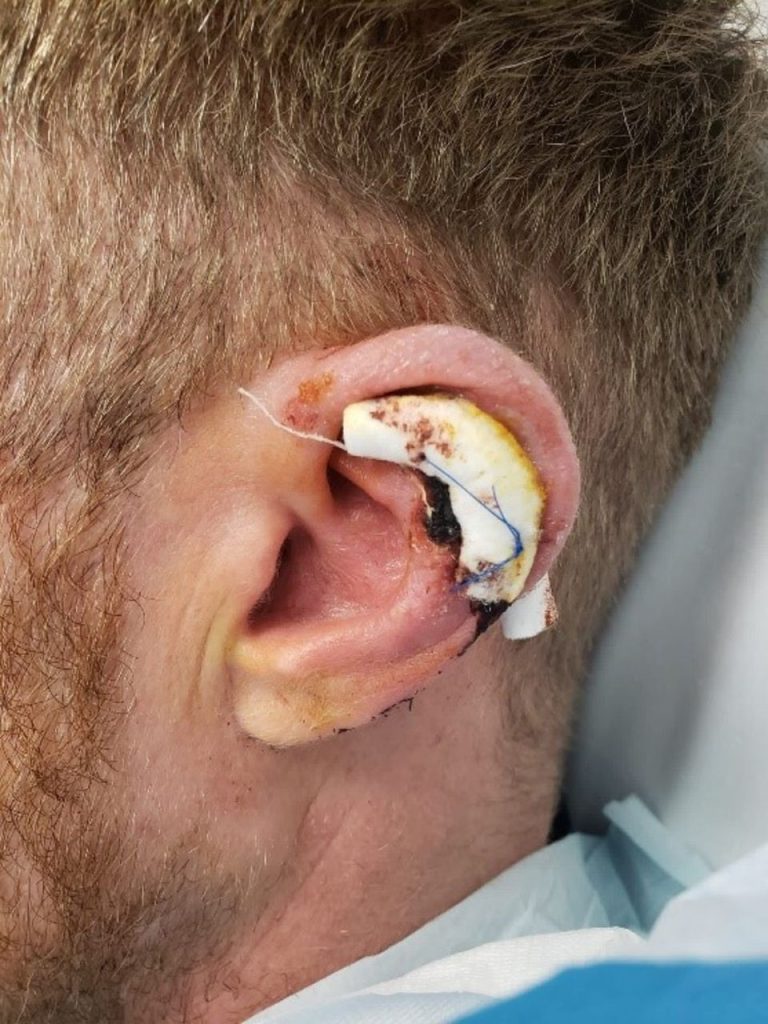
Simply draining the fluid is not enough. You must eliminate the dead space between the skin and cartilage so they can re-adhere. If you don’t compress it, it will almost always refill.
Professionals will apply steady, continuous pressure for 3 to 7 days. Compression methods include:
- Specialized compressive dressings.
- Mattress sutures, where a surgeon stitches completely through the ear to hold the skin against the cartilage.
- Specialized molded splints or magnetic clips designed specifically for combat athletes.
4. The Chronic Option: Otoplasty
If you have old, hardened Cauliflower Ear, the only solution is surgery, or otoplasty. A surgeon must cut open the ear, physically shave or chisel away the hardened, abnormal scar tissue and cartilage, and then reshape the ear before suturing it back together under compression.
Your Best Defense: How To Prevent It
While many veterans wear their cauliflower ears with pride, prevention is the healthiest long-term strategy. Permanent deformity can lead to narrow ear canals (affecting hearing), difficulty wearing headphones, and constant sensitivity.
1. Wear Proper Headgear
The single most effective way to prevent Cauliflower Ear is to wear high-quality grappling headgear or ear guards during all contact training sessions, wrestling practice, BJJ rolling, and MMA sparring.
The gear must fit snugly. If it is loose, the friction of the headgear moving against your ear can actually cause a hematoma.
2. Technical Adjustments
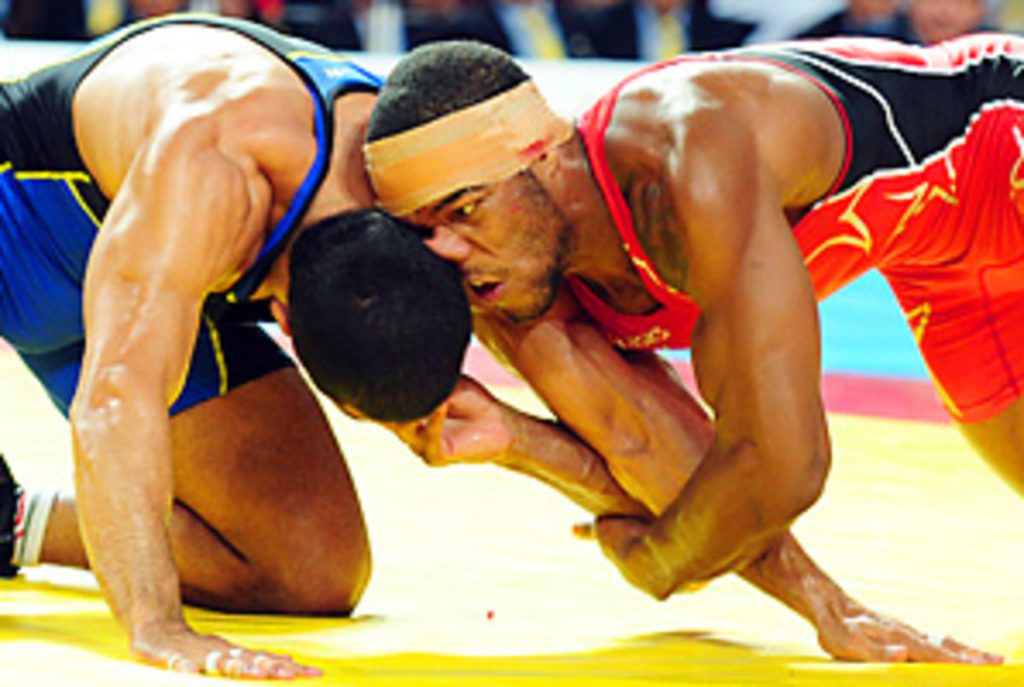
For grapplers, particularly in BJJ, Cauliflower Ear is often the result of using your head as a third hand. If you find your ears are constantly taking a beating, speak to your coach about adjusting your head positioning during escapes, takedowns, and clinching to reduce the grinding pressure you place on them.
3. Know When to Rest
If your ear feels sore, warm, or slightly puffy after training, do not return to live drilling or rolling until the sensitivity has gone down completely. Repeated minor trauma to an already inflamed ear is the fastest way to trigger a major hematoma. If you must train, make headgear mandatory.
Ultimately, while an auricular hematoma might be the most recognizable badge of honor in the gym, it remains a race against a physiological clock. Whether you view the cauliflower look as a gritty rite of passage or a deformity to be avoided at all costs, the strategy for ear health is clear, respect the shearing forces of the mat, seek professional drainage and relentless compression the moment swelling starts, and never underestimate the protective power of a well-fitted headguard. After all, your legacy in combat sports should be defined by your performance on the mats, not the shape of your ears.


