

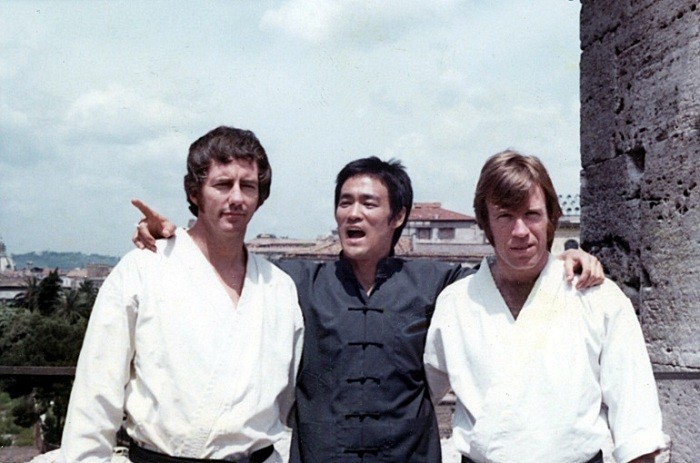
Today marks a milestone that even the internet’s most hyperbolic facts can’t exaggerate, Chuck Norris turns 86. While a younger generation may know him primarily as a meme-ified force of nature or the stoic star of Walker, Texas Ranger, the combat sports community remembers him as something more tangible: one of the most dominant and technically proficient point-fighters in the history of American karate.
Long before he was a Hollywood icon, Norris was a legitimate pioneer who helped bridge the gap between traditional Eastern disciplines and the burgeoning American martial arts scene of the 1960s and 70s.
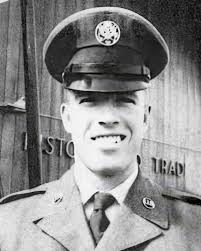
From Introvert To Airman: The Korean Transformation
The man the world knows as “Chuck” began life as Carlos Ray Norris in Ryan, Oklahoma. By his own admission, he was a shy, non-athletic child who struggled with self-confidence. The turning point came in 1958 when he joined the U.S. Air Force as an Air Policeman.
Stationed at Osan Air Base in South Korea, Norris was introduced to Tang Soo Do, a Korean martial art that would become the foundation of his life’s work. It was here that he earned his first black belt and the nickname “Chuck.” Unlike many of his peers, Norris wasn’t a natural athlete, he was a grinder. He often remarked that he had to train twice as hard as his classmates just to keep pace, a work ethic that would eventually make him untouchable.
The Competitive Peak: 183 Wins And The Triple Crown
Returning to the States in 1962, Norris opened a chain of karate schools and entered the tournament circuit. His start was rocky, he lost his first two tournaments to legends Joe Lewis and Allen Steen, but his evolution was rapid.
Between 1964 and 1974, Norris became a fixture of the Golden Age of American Karate. His resume is staggering!
The Record: He retired in 1974 with a professional record of 183-10-2, having avenged every one of his 10 losses.
Professional Middleweight Karate Champion: He held this title for six consecutive years (1968–1974).
The Triple Crown: In 1969, he won the triple crown for the most tournament wins in a single year.
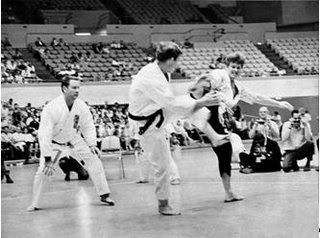
Norris wasn’t just a kicker, he was a technician. His ability to blend the power of Tang Soo Do with the speed required for point-sparring made him a nightmare for opponents. His influence was so great that in 1969, Black Belt magazine named him “Fighter of the Year.”
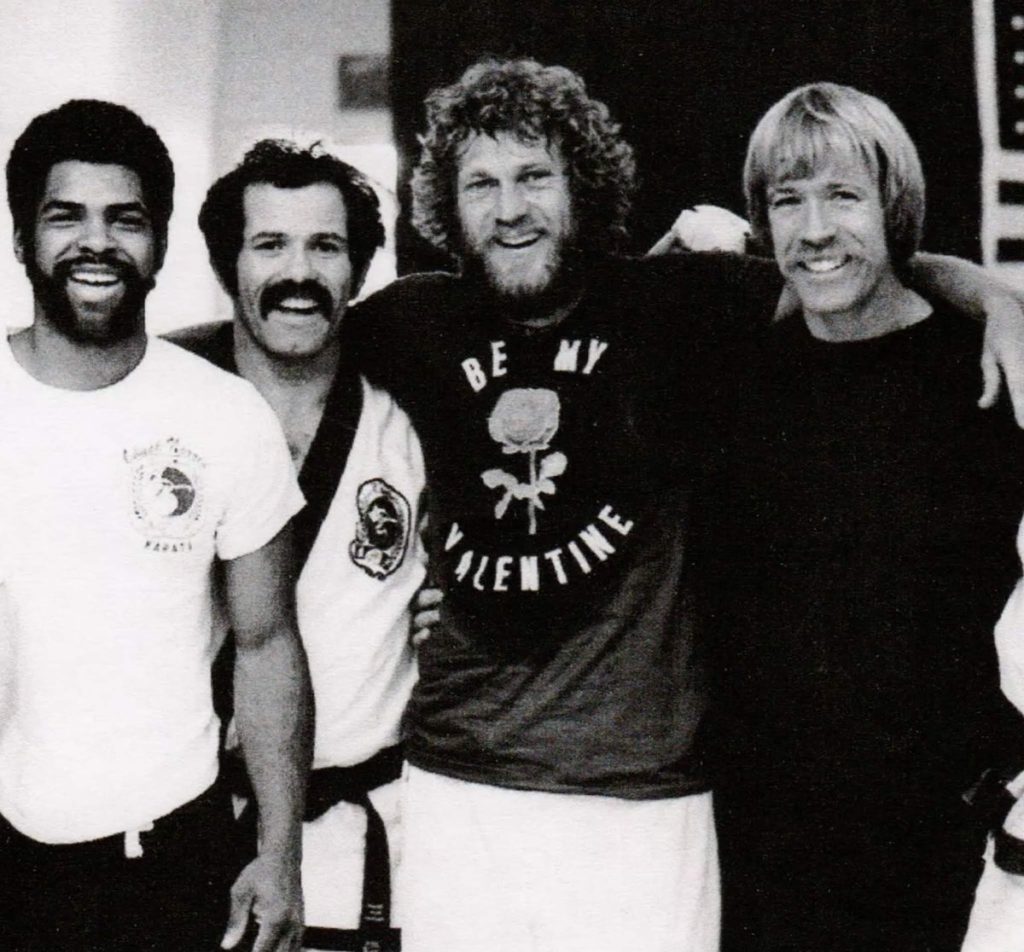
The Hollywood Pivot: Bruce Lee and Steve McQueen
Norris’s transition to the silver screen wasn’t a calculated career move so much as a series of fortunate encounters. At the 1968 All-American Karate Championship, he met Bruce Lee. The two struck up a friendship and spent years training together in a backyard in Los Angeles, exchanging philosophies and techniques.
This relationship led to the iconic Battle at the Colosseum in 1972’s Way of the Dragon. The fight is still widely regarded as the greatest martial arts sequence in cinema history, pitting Lee’s fluidity against Norris’s disciplined, powerhouse style.
However, it was actually another of his students, legendary actor Steve McQueen, who pushed Norris into acting as a full-time career. McQueen recognized that Norris had a screen presence that matched his physical prowess. Taking McQueen’s advice, Norris enrolled in acting classes at MGM, eventually breaking out as a lead star in 1978’s Good Guys Wear Black.
A Lasting Impact: Chun Kuk Do And Beyond
Perhaps Norris’s most significant contribution to the sport is his willingness to evolve. While many traditionalists stayed within the confines of a single style, Norris was an early adopter of cross-training.
Philanthropy: Through his Kickstart Kids foundation, he has used martial arts to provide discipline and self-esteem to over 110,000 at-risk youth since its inception.
Chun Kuk Do (The Chuck Norris System): In 1990, he formalized his own martial arts system, which incorporates elements from Tang Soo Do, Brazilian Jiu-Jitsu (under the Machado brothers), Judo, and Shotokan.
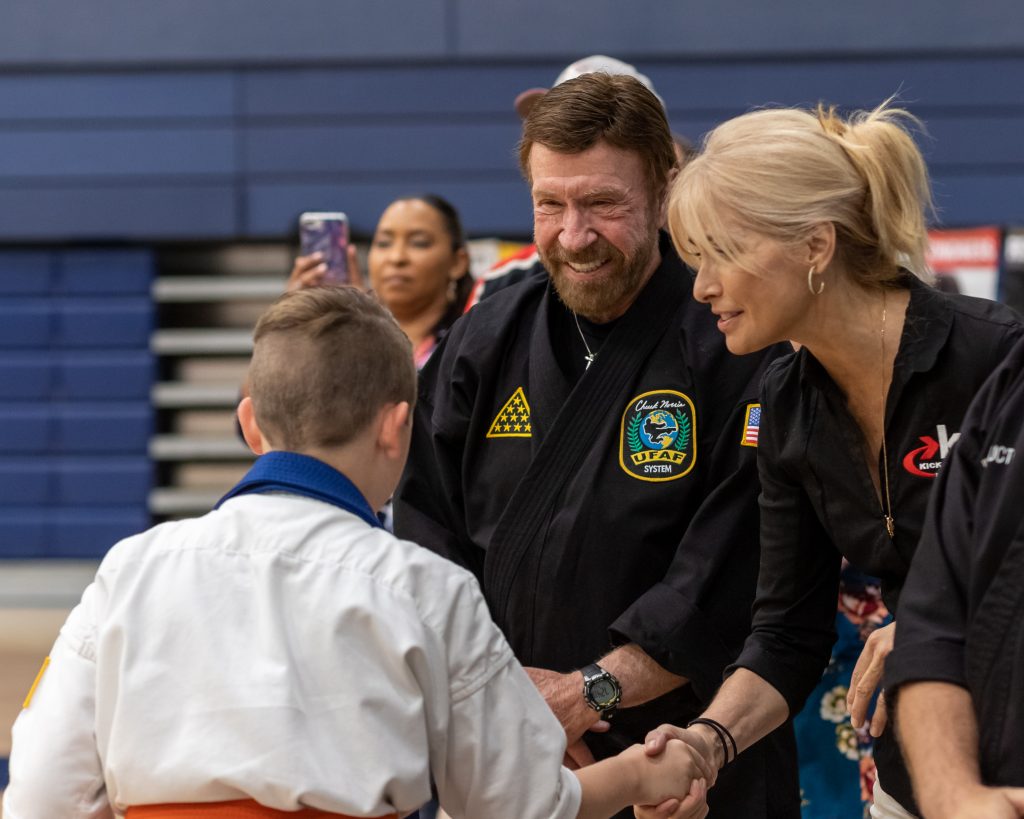
Today, at 86, Norris remains active, recently sharing videos of himself training in the pool to preserve his joints while maintaining the forms he mastered over half a century ago. He isn’t just another relic of the past, he is the blueprint for the modern martial artist, disciplined, adaptable, and perpetually a student of the game.


