

In the world of combat sports, particularly in the grinding realms of BJJ, wrestling, and Judo, we talk a lot about “heart.” We talk about resilience, the ability to absorb pressure, sustain damage, and somehow find a way to keep moving forward. It is a modern warrior ethos rooted in ancient traditions.
Yet, few modern mat-warriors realize that their discipline has a spiritual figurehead whose story is perhaps the ultimate example of the “never-say-die” attitude.
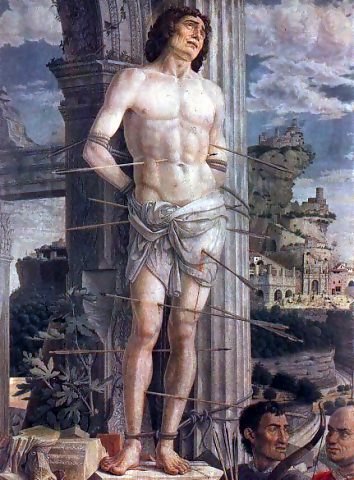
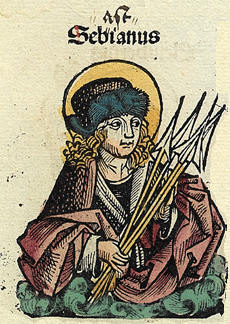
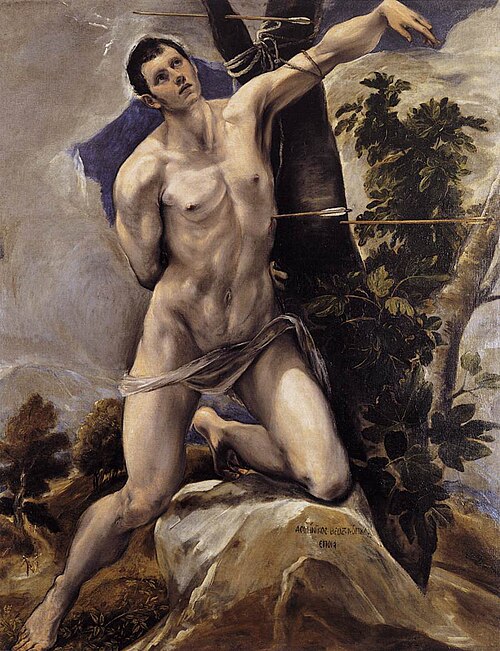
Enter Saint Sebastian. You’ve likely seen his image, a handsome youth bound to a post, pierced by arrows, looking serenely toward heaven. He is widely known as the Patron Saint of Athletes and Soldiers.
But if you look closely at his life, and more importantly, his refusal to die, it becomes clear that Sebastian is, specifically, the patron saint of grappling. His story isn’t just about faith, it’s about the capacity to endure crushing torment and return to the fight.
Here is the history of the soldier-saint who embodies the spirit of the mat.
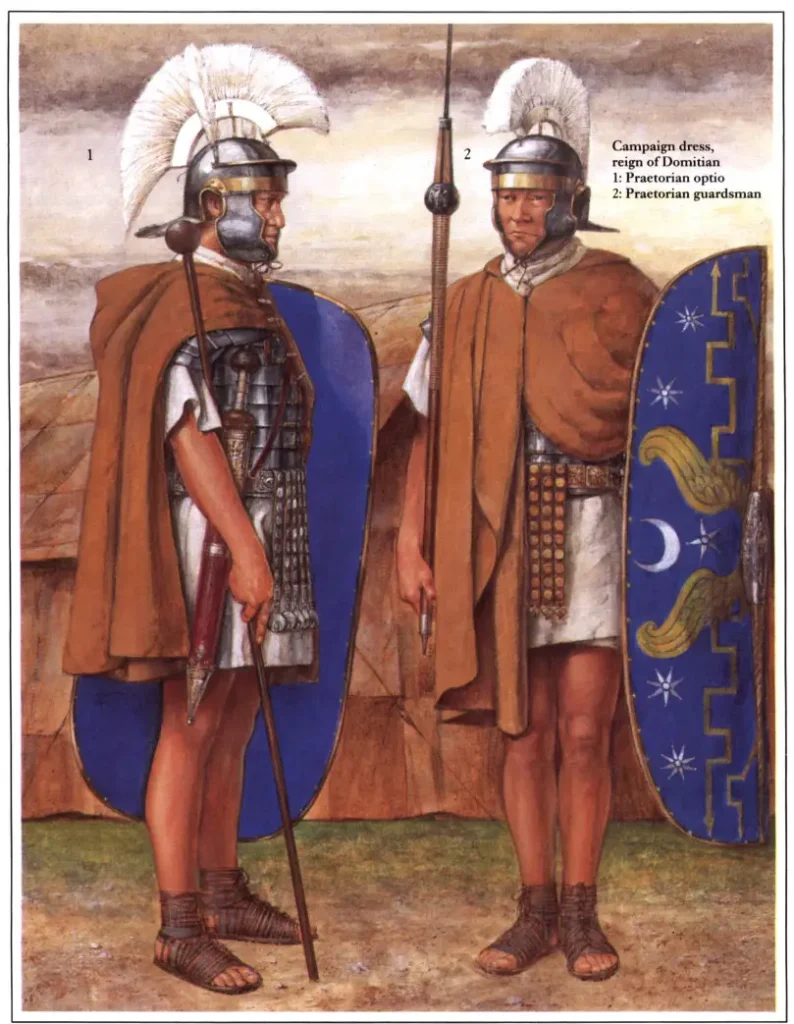
Sebastian was no cloistered monk. The saint lived during the late 3rd century AD and he was a man of violence in service to the Roman Empire. He rose through the ranks to become a captain in the Praetorian Guard, the elite special forces tasked with protecting Emperor Diocletian.
To be a Praetorian required peak physical condition, martial mastery, and unwavering discipline. Sebastian was, by all accounts, a tier-one operator of his day.
However, Sebastian lived a dangerous double life. While serving the Emperor, he was secretly a Christian during the height of the Diocletianic Persecution, the most severe purge of Christians in Roman history. He used his military status as cover to convert soldiers and comfort prisoners facing execution. He was operating behind enemy lines, maintaining a “poker face” while under constant threat of exposure.
Eventually, Sebastian’s cover was blown. Diocletian, furious at the betrayal by one of his elite guards, ordered a brutal execution.
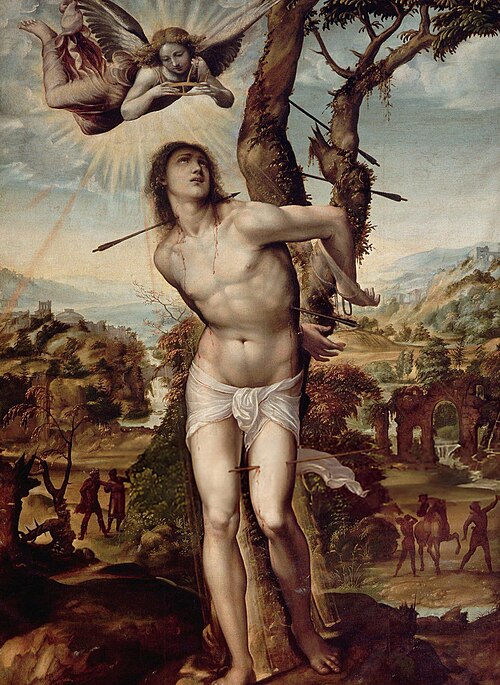
Sebastian was stripped, bound to a stake in a field, and used as target practice by Mauritanian archers. The ancient texts say they shot him until he resembled a “urchin bristling with quills,” leaving him for dead.
This is the image most associate with Sebastian. But this is where his story becomes legendary for combat athletes.
He Didn’t Die.
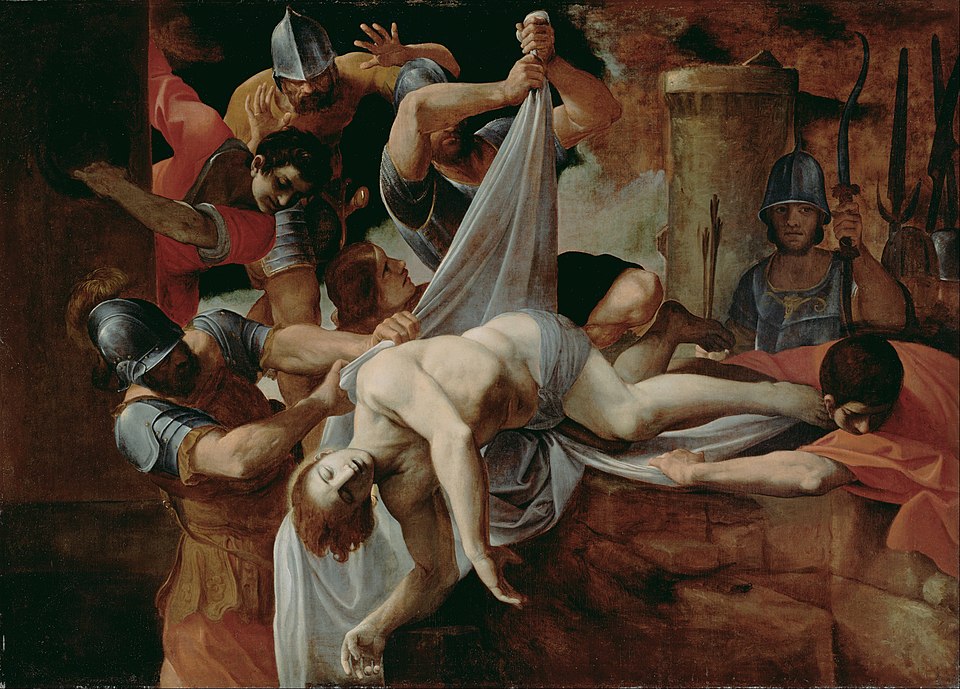
Like a fighter caught in the tightest, most agonizing submission hold who refuses to tap, Sebastian endured the unendurable. Left bleeding in the field, a widow named Irene went to retrieve his body for burial, only to find he was still breathing.
For the grappler, this resonates deeply. We spend our lives learning how to be comfortable being uncomfortable. We train to survive the choke, to weather the storm of a heavy top-player, and to find that millimeter of space to breathe when it seems impossible. Sebastian surviving a volley of arrows is the ultimate historical example of “late-stage submission defense.”
Most men, having survived an execution, would flee into obscurity. Sebastian was not most men. He possessed that stubborn streak essential to any champion fighter.
Once recovered, Sebastian did the unthinkable. He positioned himself on a staircase where he knew the Emperor would pass and verbally confronted Diocletian for his cruelty. It was an act of suicidal bravery, calling out the most powerful man in the world to his face.
Diocletian was stunned to see the man he thought dead standing before him. This time, the Emperor took no chances with arrows. He ordered Sebastian to be beaten to death with heavy clubs in the Roman arena.
The arrows couldn’t finish him, it took raw, blunt-force trauma to finally end him. His body was thrown into the Roman sewers, a final insult to the indomitable soldier.
Sebastian was canonized rapidly after his death. Initially, he was famously invoked as a protector against the Bubonic Plague (the logic being that the “arrows” of disease could not kill him, so he could protect others from them).
However, over the centuries, his patronage shifted toward soldiers (due to his military service) and athletes.
For the modern grappler, the connection is more profound than general athleticism. Striking arts are often about inflicting damage quickly whereas grappling arts are about controlling an opponent and enduring pressure over time.
Sebastian is the archetype of the grappler because his heroism wasn’t defined by what he dished out, but by what he could take.
When you step onto the mats, you are accepting a compact of suffering. You agree to be crushed, twisted, and choked in the pursuit of mastery (and also for funsies). It is a discipline that demands an unbreakable spirit even more than an unbreakable body.
Saint Sebastian serves as a powerful historical reminder that the human capacity to endure pain and return to the fight is older than any martial art, it is fundamental to the human condition. He is a fitting patron for those who make a hobby out of fighting off their back.


