

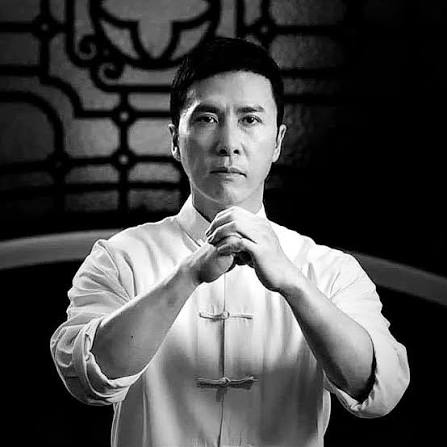
Today marks the birthday of one of the most influential martial artists and action cinema icons in modern history, Donnie Yen.
Whether you know him as the stoic Wing Chun grandmaster Ip Man, the blind force-sensitive warrior Chirrut Îmwe in Rogue One, or the deadly assassin Caine in John Wick: Chapter 4, Yen’s impact on fight choreography and combat culture is undeniable. Long before Mixed Martial Arts (MMA) reached mainstream global saturation, Yen was synthesizing diverse combat arts on screen, blending traditional Eastern discipline with modern fight realism.
On his birthday, we look back at the life, training, and cinema legacy of a true combat arts ambassador.
Early Life: Raised In A Martial Heritage
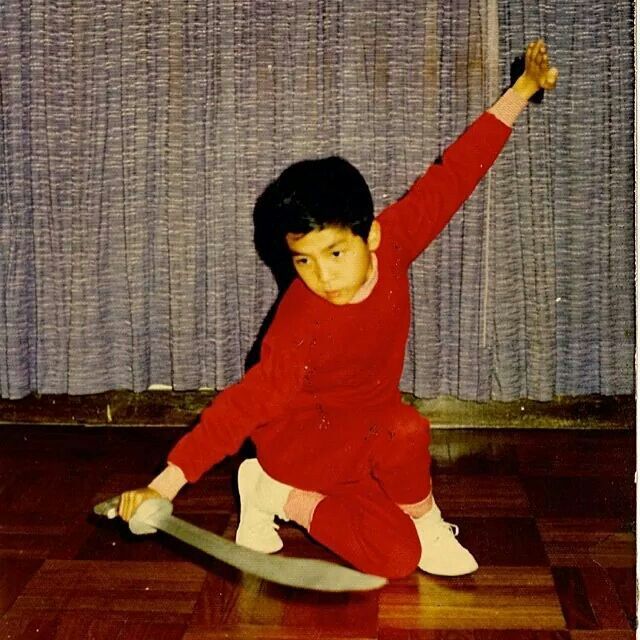
Donnie Yen Chi-tan was born on July 27, 1963, in Guangzhou, China. When he was just two years old, his family moved to Hong Kong, and later relocated to Boston, Massachusetts, when Yen was eleven.
Growing up in Boston’s Chinatown, Yen was immersed in two distinct worlds, Western urban youth culture, where he picked up hip-hop dance and piano and the rigorous world of martial arts. That combat foundation came directly from home. His mother, Mark Bow-sim, is a world-renowned Wushu and Tai Chi grandmaster who established the Chinese Wushu Research Institute in Boston. Under her watchful eye, Yen began training almost as soon as he could walk, mastering the precise forms and explosive flexibility of traditional Chinese Wushu and Tai Chi.
Development And Integration Of Martial Arts
While his mother provided a strict foundation in classical martial arts, Yen’s obsession with fighting extended far beyond traditional forms. As a teenager in Boston, he frequented local dojos and gyms, soaking up knowledge across every discipline he could find, including Taekwondo, Karate, Judo, Boxing, and Kickboxing.
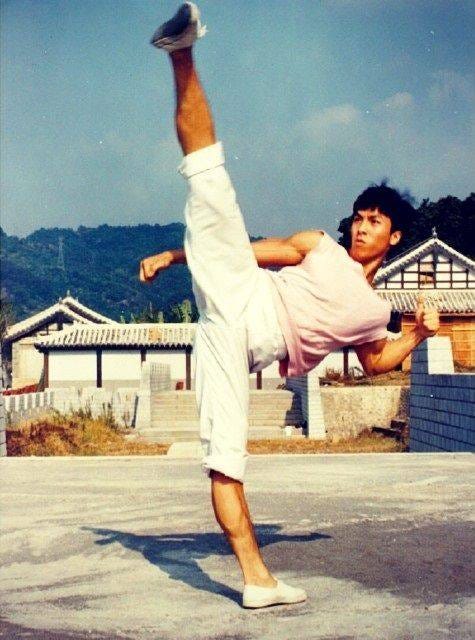
Recognizing his raw potential and rebellious energy, his parents sent him to Beijing to train with the prestigious Beijing Wushu Team, the same elite academy that trained Jet Li. Under rigorous state-level coaching, Yen honed his speed, athleticism, and weapon mastery.
Yen’s lifelong martial philosophy has always been driven by practical adaptability. Over the years, he expanded his toolkit to include:
- Traditional Wushu & Wing Chun: Mastering precise strikes, center-line theory, and weapon flow.
- Western Boxing & Muay Thai: Incorporating heavy head movement, power punching, and devastating knee/elbow strikes.
- Brazilian Jiu-Jitsu & Wrestling: Earning a purple belt in BJJ and integrating submission grappling, takedowns, and joint locks long before it was fashionable in screen fighting.
- Taekwondo & Judo: Holding high-tier belts in both, giving him a trademark kicking repertoire and throw mechanics.
The Screen Calling: Redefining Action Cinema
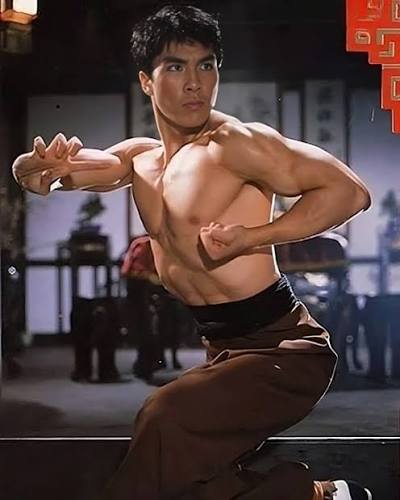
While returning to Hong Kong from Beijing, Yen was introduced to legendary director and action director Yuen Woo-ping (the mind behind the action in The Matrix and Crouching Tiger, Hidden Dragon). Recognizing Yen’s rare combination of physical speed and camera presence, Yuen cast him in Drunken Tai Chi (1984) and Iron Monkey (1993).
Yen quickly established himself as an elite screen combatant, trading iconic blows with Jet Li in Tsui Hark’s Once Upon a Time in China II (1992) and Zhang Yimou’s Hero (2002). However, Yen’s greatest contribution to martial arts cinema came when he took control behind the camera as an action director.
The Modern MMA Cinematic Revolution
In the mid-2000s, Yen revolutionized martial arts filmmaking by introducing modern MMA mechanics to Asian action cinema.
SPL: Sha Po Lang(2005): Featured brutal, grounded combat including armbars, rear-naked chokedowns, and wrestling takedowns.Flash Point(2007): Widely considered a masterclass in MMA choreography, seamlessly blending striking exchanges with triangle chokes, guard passes, and suplexes on film.
The Ip Man Phenomenon
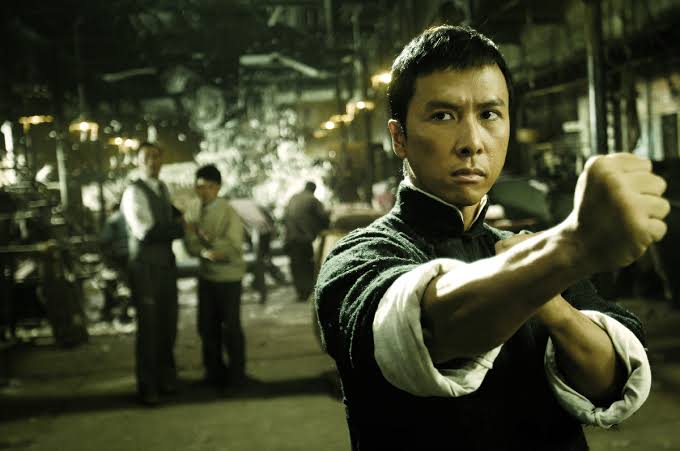
In 2008, Yen took on the role of Grandmaster Ip Man, the real-life teacher of Bruce Lee. His portrayal of Wing Chun’s rapid-fire chain punching and calm, rooted defense turned Ip Man into a global phenomenon, sparking a worldwide resurgence in Wing Chun training.
Unstoppable Momentum In Recent Years
Rather than slowing down, Donnie Yen’s recent career has seen him operating at the absolute peak of international stardom, both in Hollywood blockbusters and high-budget Asian cinema.
- Global Action Icon (John Wick: Chapter 4, 2023): Yen stole the show as Caine, a blind assassin who matched Keanu Reeves blow-for-blow. His performance earned universal acclaim for bringing pitch-perfect martial humor, speed, and fencing-style swordwork to the franchise.
- Directorial Vision (Sakra, 2023): Yen took the helm as director, producer, and star for this epic wuxia adaptation, showcasing his ability to manage massive visual scale alongside complex martial choreography.
- Gritty Action-Thriller (The Prosecutor, 2024–2025): Directing and starring in this hard-hitting legal action thriller, Yen proved once again that his signature blend of brutal street fighting and dramatic storytelling remains as sharp as ever.
- Expanding Franchises: Yen continues to develop major projects, including a planned standalone John Wick spin-off centered on his character Caine, as well as feature adaptations of classic martial arts properties like Kung Fu.
A Lasting Legacy
Few artists in history have bridged the gap between authentic combat sports and high-octane cinematic storytelling quite like Donnie Yen. At 63, his technical precision, explosive physical output, and dedication to pushing fight choreography forward remain unmatched.
Happy Birthday to a true grandmaster of martial arts cinema!


