


You did it. You survived the notorious bluebelt blues, that dark, existential wasteland where the initial honeymoon phase of Jiujitsu dies, injuries pile up, and a massive percentage of practitioners quietly walk away from the sport forever. You stuck it out, put in the mat hours, and your professor just wrapped a brand-new, stiff-as-cardboard purple belt around your waist.
You should feel like a absolute assassin, right?
Instead, you’re driving home with a knot in your stomach, staring at the rearview mirror thinking: “My professor has clearly lost his mind. I am a fraud. Tomorrow, every athletic bluebelt in the gym is going to murder me.” (and, in all reality, they probably will try to for a few weeks)
Welcome to the purplebelt impostor syndrome. It’s real, it’s deeply uncomfortable, and almost everyone goes through it. Moving from blue to purple is arguably the biggest psychological leap in BJJ because you cross the threshold from advanced beginner to knowledgeable intermediate.
If you’re currently tying your new rank with a sense of impending doom, here are 6 tips, tricks, and insightful reminders to help you settle into your new skin.

6. Lean Into Your New Identity (Skipping Warmups Is Optional)
I’ve personally confirmed the jokes are true, purplebelts love to skip warmups and talk about mat philosophy. While you should probably still do your jumping jacks, do lean into the autonomy of this rank.
Start directing your own training. Instead of just rolling aimlessly, pick specific positional weaknesses to work on. The sooner you take ownership of your development, rather than just waiting for instructions, the sooner that purple belt will start to feel like it truly belongs to you.
5. You Aren’t Expected To Be A Blackbelt Yet
There is a massive chasm between a fresh purplebelt and a brown or blackbelt. Somehow, when we get promoted, we expect our skills to magically jump three tiers overnight.
Give yourself permission to be a beginner purple belt. You are at the start of the advanced middle-management of BJJ. You are allowed to make mistakes, you are allowed to tap, and you are allowed to still have questions.
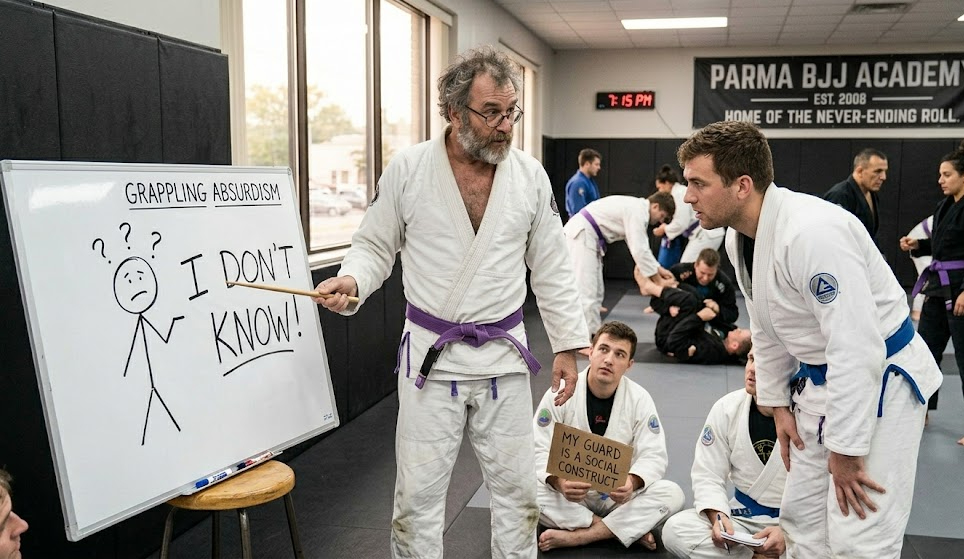
4. Recognize Regression Illusion
You are going to have days where you feel like you’ve actually gotten worse. You’ll get swept, you’ll miss a transition, or you’ll get stuck under side control by a “calorie-dense grappler”.
| What You Think It Means | What It Actually Means |
| “I am losing my skills and don’t deserve this belt.” | “I am attempting higher-level techniques that require tighter execution.” |
| “Everyone else is passing me by.” | “My training partners know my game perfectly, forcing me to evolve.” |
When you try to play a more calculated, technical game, you will fail more often initially than when you were just using athleticism at blue belt. That isn’t regression, it’s evolution.
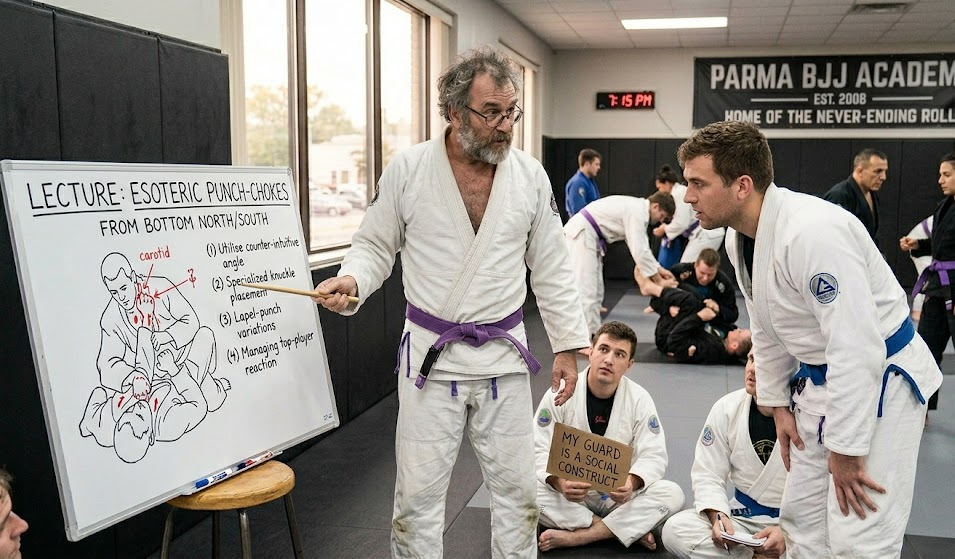
3. Shift Your Focus From Knowing Everything To Specificity
Bluebelt is about collecting pieces of the puzzle. Purplebelt is where you actually start putting the picture together. You don’t need to know every obscure lasso guard variation to deserve your rank.
Instead, focus on honing your specific game. A fresh purplebelt isn’t a master of all Jiujitsu, they are someone who has developed a few lethal, highly efficient combinations that they can enforce on almost anyone.
2. Expect The Target On Your Back And Embrace It
The moment you tie that purple belt, every athletic whitebelt and ambitious bluebelt in the gym sees you as a trophy. They are going to bring intensity to the round that may have not been present before.
- The Trick: Do not feel obligated to defend the honor of the purple belt by matching their energy.
- Use your technical knowledge to slow the roll down. If you get caught because you were experimenting or pacing yourself, so what? A belt holds up your pants, it doesn’t make you bulletproof.


1. Trust Your Coach’s Vision, Not Your Inner Critic
When impostor syndrome strikes, you are essentially telling your professor, “Hey, I know you’ve dedicated decades of your life to this sport, but your talent assessment metrics are completely broken.”
Kind Reminder: Your coach doesn’t just look at how many people you tapped today. They look at your technical understanding, your defense, your consistency, and your ability to mentor others. Trust their eyes over your anxiety.
The Final Verdict
Is impostor syndrome actually a sign of respect for the art? Perhaps. It means you hold the rank of purplebelt in high regard. Keep showing up, keep tapping out to the calorie-dense grapplers (using their overwhelming girth against your superior skill), and let the mat hours wash away the doubt. You earned the dye in that cotton. Now go roll.


