

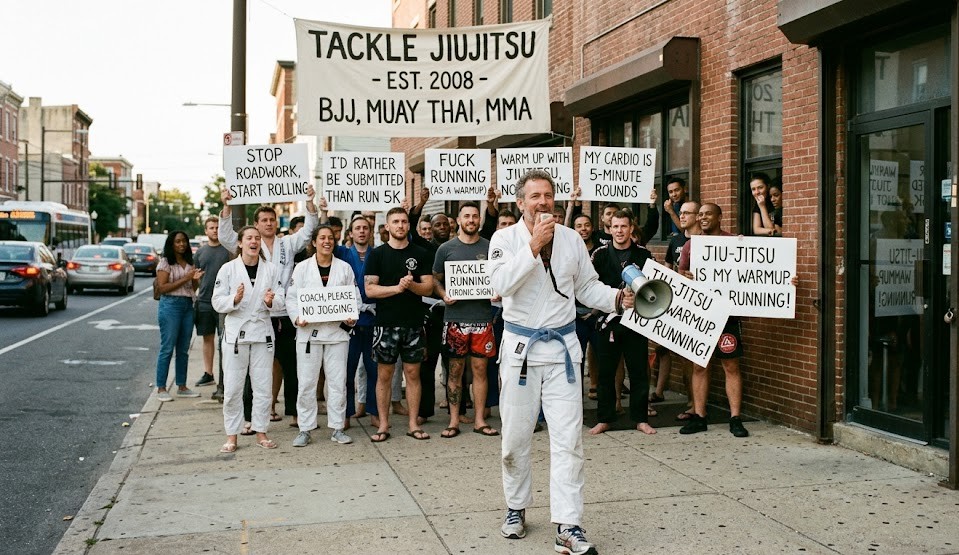
For decades, the image of a fighter hooded up, pounding the pavement at 5:00 AM, has been the gold standard of discipline. From Ali to Tyson, roadwork was the foundation, but let’s be honest, just because a training method is iconic doesn’t mean it’s efficient.
If you’re still logging five-mile jogs to prepare for a three-round war, you’re essentially training to be a very fast track athlete who gets exhausted the moment someone clinches with them. It’s time to retire the running shoes and trade them for conditioning that actually translates to the cage or the ring.
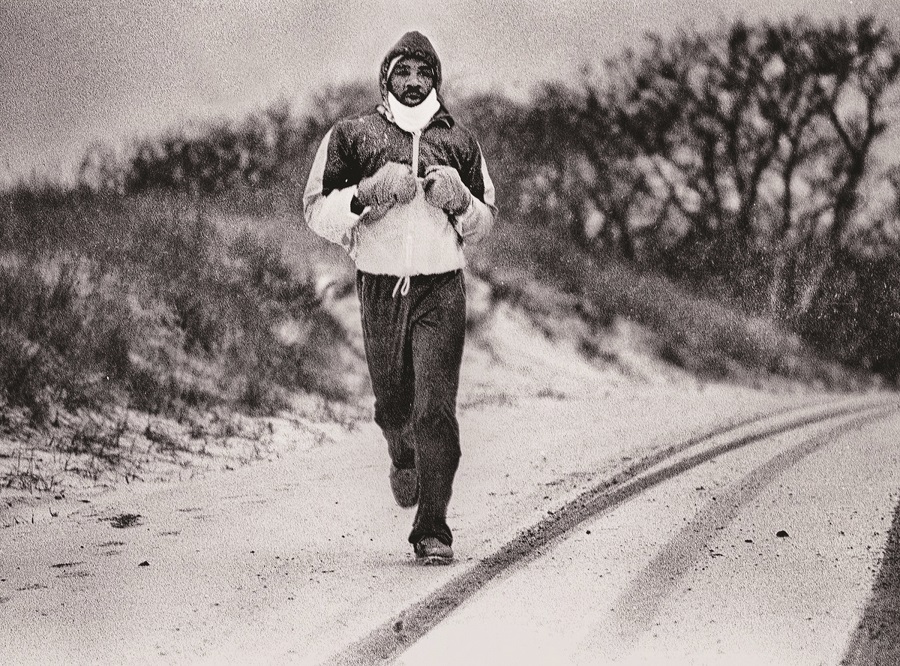
The Trouble With Trotting
The primary issue with long-distance, steady-state running is the SAID Principle (Specific Adaptation to Imposed Demands). Your body gets better at exactly what you tell it to do.
The Heavy Leg Syndrome: Pounding pavement creates significant joint stress, specifically on the knees and ankles, without providing any upper-body engagement.
Linear vs. Multi-Directional: Running is a linear, repetitive motion. Fighting is explosive, lateral, and involves constant level changes.
The Energy System Mismatch: A fight is a series of high-intensity anaerobic bursts followed by brief periods of active recovery. A 45-minute jog trains your aerobic system at a low ceiling, leaving you unprepared for the redline moments when you’re wrestling for a double-leg.
The Reality Check: You don’t lose a fight because you couldn’t run a marathon, you lose because your heart rate hit 190 during a scramble and you didn’t have the recovery gear to get it back down.
Superior Alternatives for the Modern Combat Athlete
If we want to build a fighter’s gas tank, we need tools that engage the full body and mimic the chaotic rhythm of combat. Here are three methods that leave the treadmill in the dust.
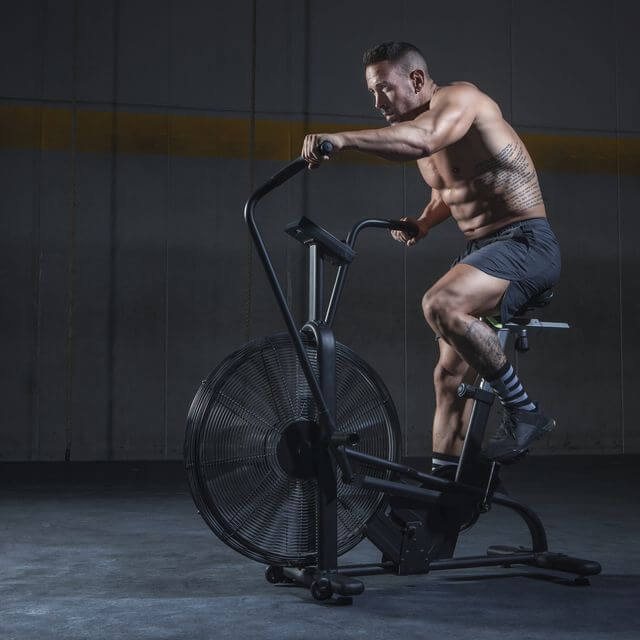
1. The Air Bike (Assault/Echo Bike)
Often called “Satan’s Tricycle,” the air bike is arguably the most specific tool for combat conditioning.
The Fan Factor: The harder you push, the more resistance the bike gives back, exactly like a high-level opponent.
Full Body Engagement: Unlike running, you are pushing and pulling with your arms while sprinting with your legs.
No Impact: You get the same (or higher) cardiovascular strain as a sprint without the orthopedic cost of hitting concrete.
2. High-Intensity Interval Drills & The Shark Tank
Specificity is king. If you want to get in shape for fighting, fight.
The Protocol: Instead of a jog, perform 30 seconds of max-effort heavy bag work (power shots and high volume), followed by 30 seconds of sprawl-and-shadowbox.
The Benefit: This conditions your muscles to clear lactic acid while you are performing the actual movements required in a bout. It builds functional endurance that running simply can’t touch.

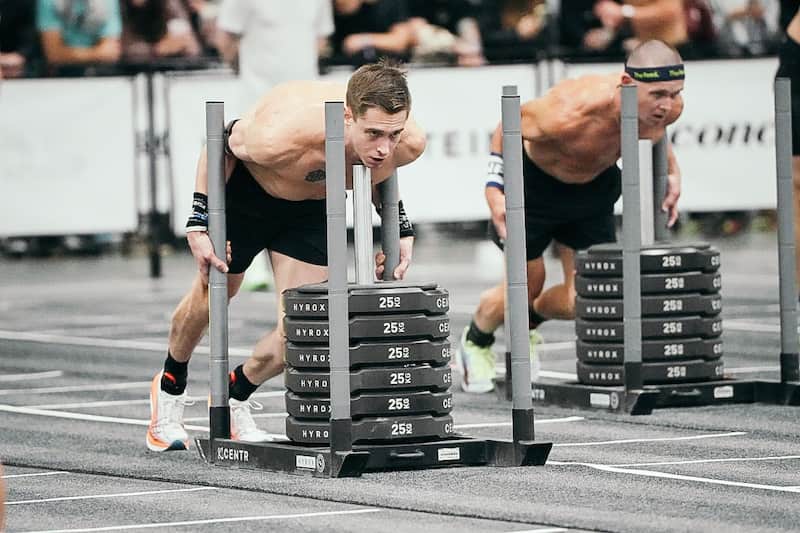
3. Weighted Sled Pushes And Drags
Wrestling and clinching require isometric endurance and explosive drive.
The Cardiovascular Spike: Sled work forces the heart to pump blood to both the upper and lower extremities simultaneously, creating a massive systemic burn that traditional cardio lacks.
Why it Works: Pushing a heavy sled mimics the physical exertion of driving an opponent against the fence or finishing a takedown.
A Fight-Ready Conditioning Circuit
Ditch the 40-minute run. Try this 3-round circuit (simulating a standard MMA bout) to see where your fitness actually stands:
| Station | Duration | Intensity |
| Air Bike Sprint | 1 Minute | Max Effort (100%) |
| Heavy Bag Power Volley | 1 Minute | Constant Movement |
| Burpee-to-Sprawl | 1 Minute | High Tempo |
| Medicine Ball Slams | 1 Minute | Explosive |
| Active Recovery (Shadowbox) | 1 Minute | Focus on Breathing |
Rest 1 minute between rounds. Repeat 3–5 times. Thank me after your next fight.
The Verdict
Traditional roadwork isn’t useless, but it is inefficient. In a sport where training time is a finite resource and injury prevention is paramount, spending hours on the road is a luxury fighters can no longer afford.
If you want to be a runner, go to the track. If you want to be a fighter, start training your heart to handle the chaos of the cage. Stop running away from the hard work that actually matters.


