

The Foundation of Gravity: Why O-Goshi Remains Relevant To This Day(and probably will always remain so)
In the world of combat sports, there are flashy sweeps and complex inverted guards that come and go, but there is one move that transcends eras, styles, and rule sets. It is the O-goshi, the major hip throw. Whether you are a white belt stepping onto the tatami for the first time or a seasoned black belt in a high-stakes tournament, the hip toss is ubiquitous.
The Roots: From Samurai Battlefields To Kodokan Judo
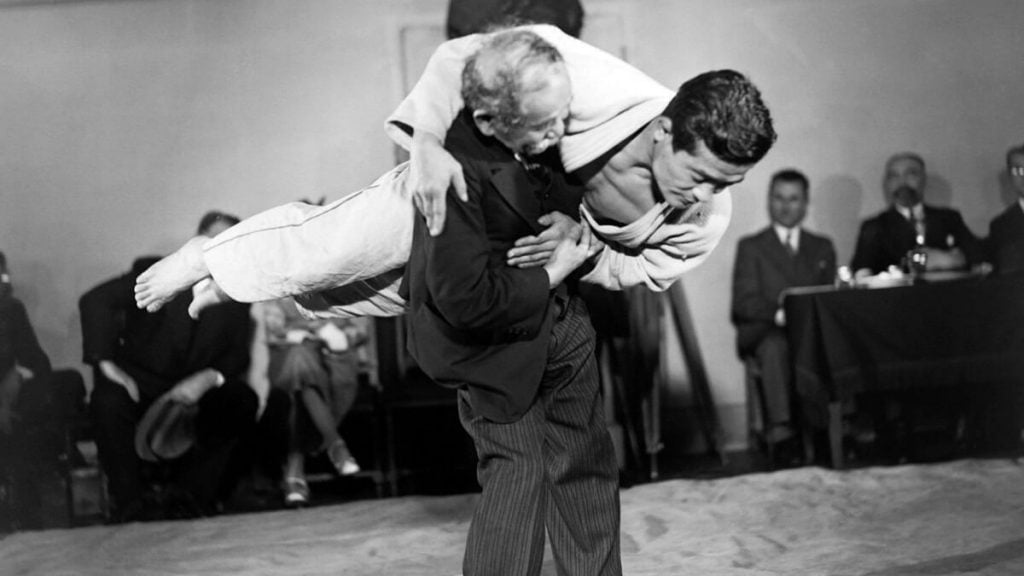
Before it was a staple of Olympic competition, the hip toss was a pragmatic solution to a life-or-death problem. Origins of the move can be traced back to Japanese Koryu Jujutsu, where armored warriors needed a way to dump an opponent onto their head while maintaining enough balance to draw a dagger.
When Jigoro Kano founded Judo in 1882, he refined these battlefield techniques into the Gokyo no Waza (the five sets of throwing techniques). O-goshi was categorized as a Koshi-waza (hip technique). The brilliance of Kano’s version was the shift from brute force to lever and fulcrum mechanics.
The Mechanics Of The Toss: To execute a perfect O-goshi, the practitioner (tori) slides their arm around the opponent’s (uke) waist, pulling them flush against the hip while stepping deeply across their base. By lowering their center of gravity below the opponent’s belt line, the tori becomes the fulcrum upon which the uke is hoisted and rotated.
Modern Judo And The Speed Of The Underhook
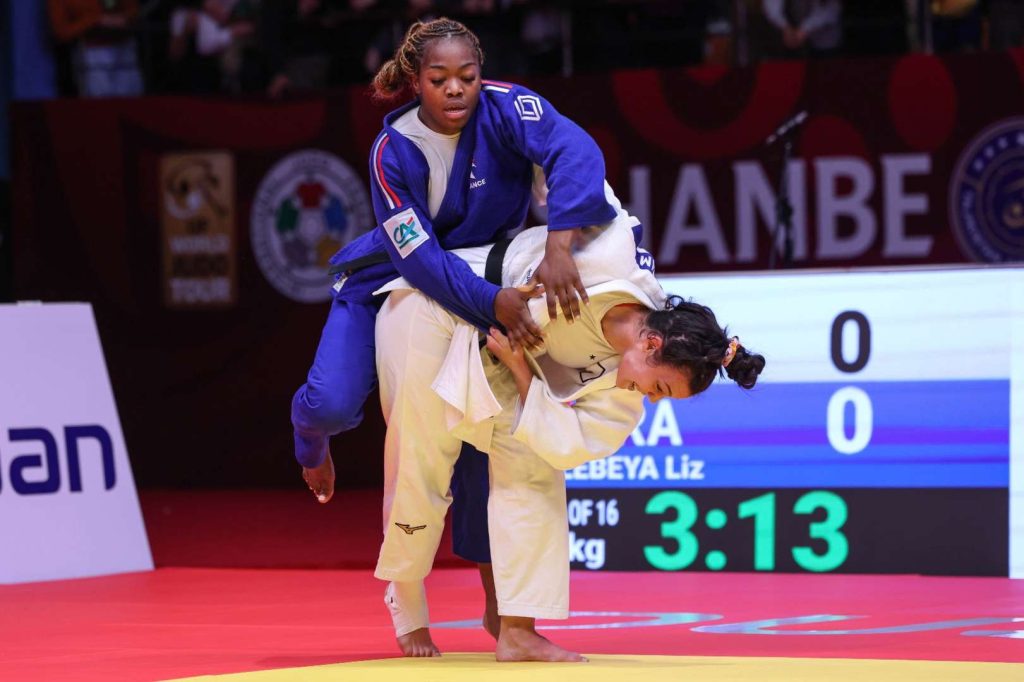
In contemporary Judo, O-goshi is often the first real throw a student learns, but it remains a lethal weapon in elite competition. Unlike its cousin, Uchi-mata (the inner thigh reap), which relies on a specialized high-leg kick, O-goshi is a power move.
In the modern era, O-goshi is frequently used as a counter-attack. When an opponent over-commits to a high collar grip, a savvy Judoka will swim their arm underneath for a deep underhook, clinching the waist and launching the opponent before they can reset their stance. It is a game of millimeters, if your hips aren’t lower than theirs, you aren’t throwing, you’re just giving a back-take.
The BJJ Evolution: Solving The Hunker Down Approach
As Brazilian Jiujitsu (BJJ) evolved, it inherited much of its takedown lexicon from Judo. However, the stance in BJJ is notoriously different—lower, wider, and more defensive to prevent leg grabs. This is where O-goshi shines.
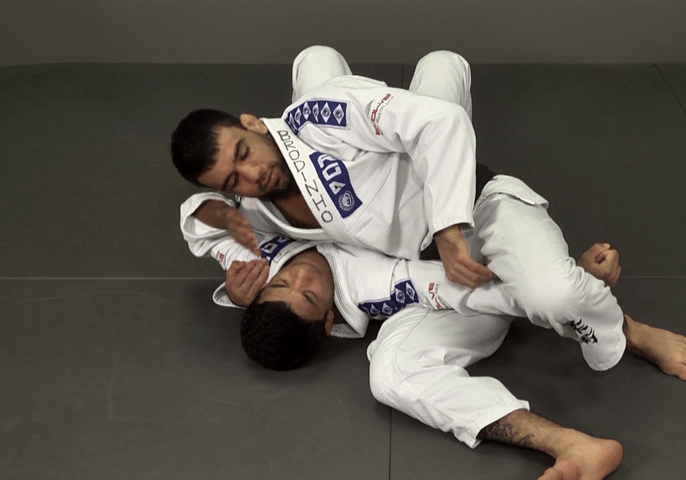
In BJJ, the hip toss is often integrated into chain wrestling.
The Payoff: The beauty of the hip toss in a grappling context is the landing. Unlike a double-leg takedown that often lands in the opponent’s guard, a clean O-goshi usually deposits the practitioner directly into side control or kesa-gatame (scarf hold), bypassing the most dangerous part of the BJJ player’s arsenal.
The Setup: When a BJJ practitioner fails a single-leg takedown and the opponent sprawls, the transition into an underhook allows for a quick hip-switch into O-goshi.
Conclusion: The Timeless Integral
At its core, O-goshi is not just a Judo move. It is a physical manifestation of the most basic rule of human physics, whoever controls the center of gravity controls the fight. Across centuries, from the mud-soaked fields of feudal Japan to the neon-lit mats of the ADCC, the hip toss has remained an integral thread in the fabric of martial arts. It is simple, it is brutal, and it is beautiful. Whether you wear a Gi or a rash guard, if you haven’t mastered the art of putting your hip across your opponent’s belt and sending them skyward, your education in combat is fundamentally incomplete.


