

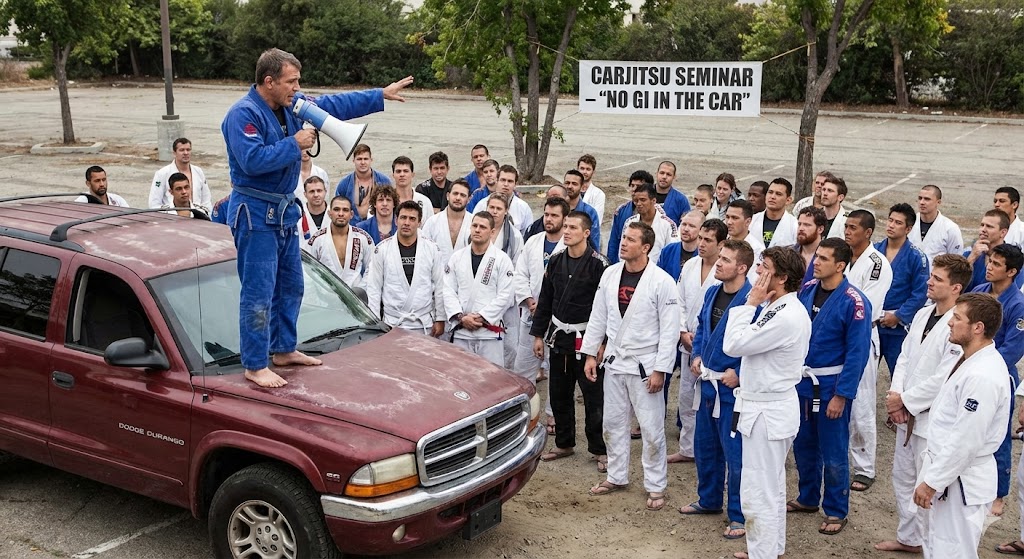
The world of submission grappling is constantly evolving, with new techniques, positions, and even entirely new grappling off-shoots emerging from its fertile ground. From the early days of vale tudo to the modern phenomenon of no-gi submission grappling, BJJ has consistently adapted to diverse environments and rule sets. Now, a truly unique and rapidly growing discipline is taking the grappling world by storm, Carjitsu.
While the name might initially conjure images of frantic, reckless brawling in a confined space, Carjitsu is a legitimate and surprisingly intricate martial art that applies core BJJ principles to the undeniably challenging environment of a vehicle interior. Born from a combination of self-defense considerations and the creative spirit of grapplers, Carjitsu offers a fresh perspective on positional control, leverage, and submission in the most restricted of spaces.
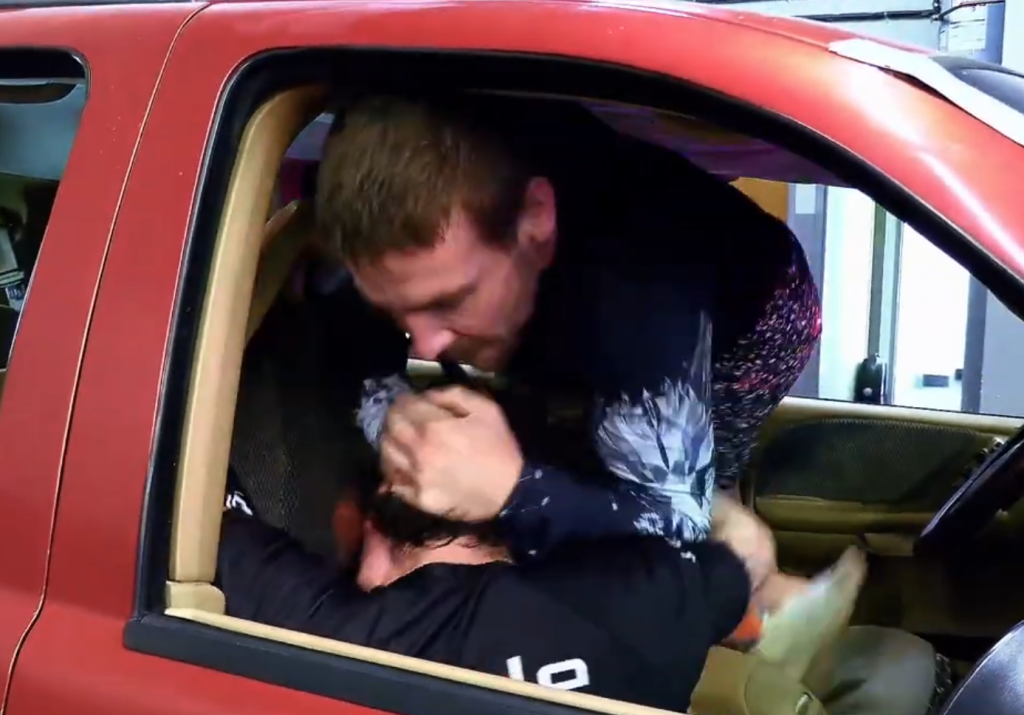
The Primary Objective: Control And Constraint
At its heart, the primary objective of Carjitsu remains consistent with traditional BJJ, achieving and maintaining dominant control to neutralize a threat or secure a submission. However, the unique constraints of a car radically redefine what dominant control truly means. There are no expansive mats, no easy guard pulls, and certainly no flowing sweeps to open space. Instead, practitioners must master the art of working within extreme limitations.
The initial goal is often to immobilize an opponent against a seat, the dashboard, or the door. Submissions, while still the ultimate aim, often take on new forms, emphasizing chokes and joint locks that can be applied with minimal room for maneuver. The headrest, seatbelt, steering wheel, and even the glove compartment all become elements to be considered in both offense and defense.
Tactical Strategies in the Confined Space
Grappling in a vehicle demands a complete re-evaluation of common BJJ strategies. Here are some key tactical considerations for the aspiring Carjitsu practitioner:
1. The “Seatbelt Grip” Reigns Supreme: Forget traditional collar and sleeve grips. The seatbelt, both on yourself and potentially on your opponent, becomes a crucial tool. It can be used for control, to establish chokes, or even as a makeshift strap to secure an opponent. Establishing a strong seatbelt grip (not necessarily using an actual seatbelt, but mimicking its wrapping control) around the opponent’s torso or head is often the first step to control.
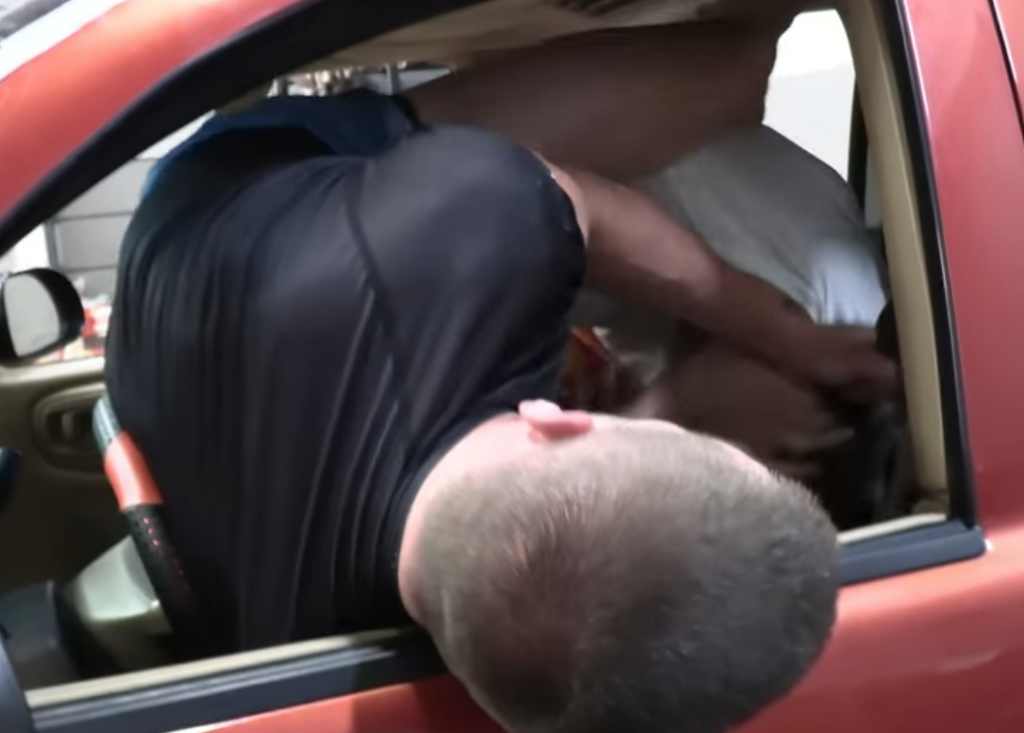

2. Embracing The Mount (Even the Awkward Kind): While a full, high mount is almost impossible, achieving any form of top control is paramount. This might involve pinning an opponent against the seatback, or even a modified, sideways mount over their lap. The goal is to negate their ability to move and create space. Practitioners often find themselves in a reverse mount where their back is to the steering wheel, controlling an opponent in the passenger seat.
3. Leverage From Lack Of Space: Ironically, the very lack of space can be your greatest ally. Instead of relying on momentum, Carjitsu emphasizes using the fixed structures of the car for leverage. Pushing off the ceiling, bracing against the dashboard, or wedging yourself into a corner can generate surprising power for sweeps, pins, and submission attempts.

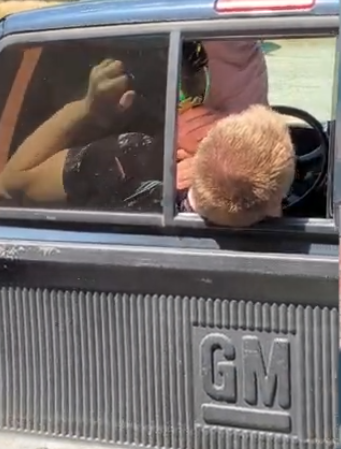
4. The Power Of The Pinch And Crush: With so little room to extend limbs, techniques that rely on compression and crushing pressure become highly effective. Squeezing an opponent’s head against the window, or using your body weight to pin their arm against the door, are common tactics. Head and arm chokes, as well as various arm locks that require minimal extension, are highly favored.
5. Utilizing The Environment As A Weapon (Defensively): The steering wheel, gear stick, and pedals, while obstacles, can also be used defensively to create frames or block an opponent’s movement. An opponent trying to establish a choke might find their arm blocked by the steering wheel, forcing them to adjust.
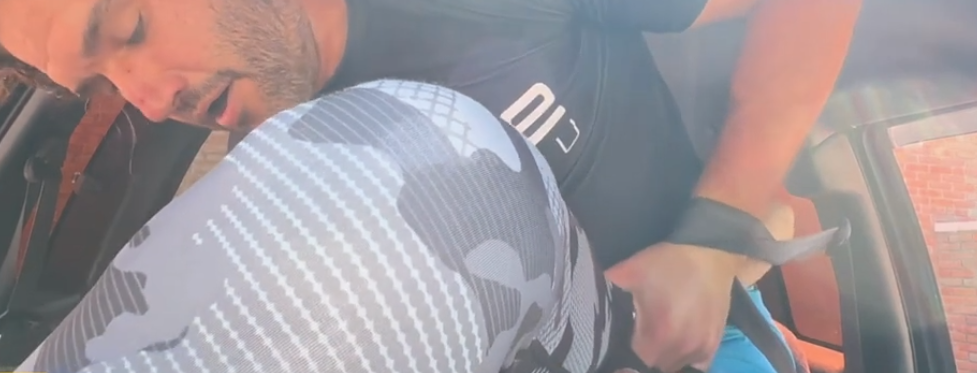

6. Escaping The “Under-Dash” Position: Getting trapped with your head near the footwell is a precarious position. Efficient ways to utilize the limited legroom to push back, create space, and turn into your opponent are crucial for survival.
7. Patience And Precision: Wild, explosive movements are likely to be ineffective and lead to self-injury in such a confined space. Carjitsu rewards patience, precise movements, and an understanding of how to generate power from small adjustments. Every inch matters.

While still in its nascent stages, Carjitsu is quickly gaining traction, with dedicated practitioners and even informal tournaments beginning to emerge (perhaps even near Middleburg Heights, Ohio?!…). It offers a fascinating thought experiment for any grappler and underscores the adaptability and ingenuity inherent in submission grappling. As the sport develops, we can expect to see an even more sophisticated lexicon of techniques and strategies emerge from this truly unique grappling environment. So next time you’re stuck in traffic, perhaps you’ll look at your car’s interior with a newfound appreciation for its potential as a grappling arena!


