

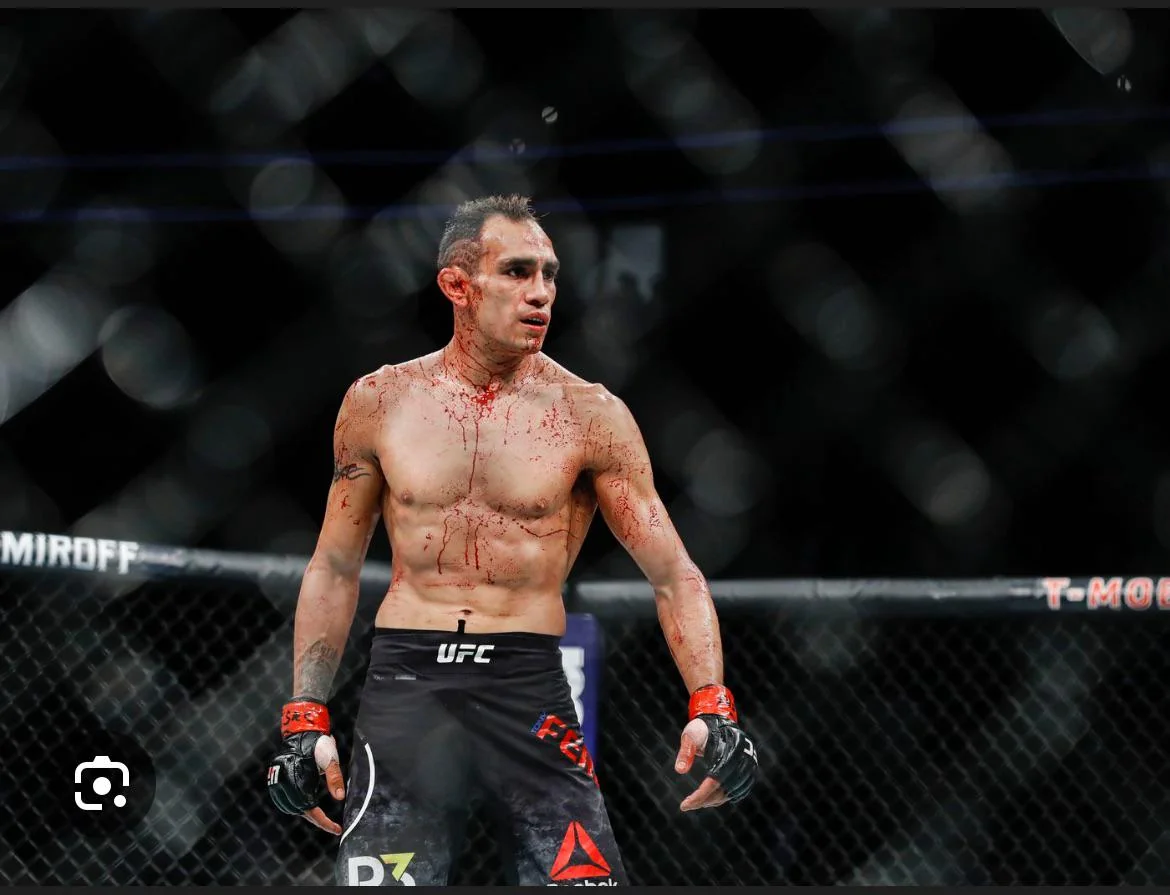
From a Midwestern wrestling mat to the dizzying heights of a 12-fight UFC win streak, Tony Ferguson carved out a legacy as one of the most unique and violent fighters in MMA history.
In the annals of mixed martial arts history, few figures cut as distinct a silhouette as Tony “El Cucuy” Ferguson. A whirlwind of unorthodox violence, relentless pressure, and eccentric charisma, Ferguson captivated the combat sports world for over a decade. His journey from a multi-sport high school athlete to an interim UFC champion is a testament to a one-of-a-kind mindset and a fighting style that defied convention. As his storied career enters its final chapters, it is time to reflect on the man who made blood, sweat, and D’Arce chokes his trademark.

From Muskegon To The Mat: The Making Of A Grinder
While born in Oxnard, California, Anthony Armand Ferguson Padilla was molded by the blue-collar grit of Muskegon, Michigan. Growing up, sports were not just a pastime but a way of life. At Muskegon Catholic Central High School, Ferguson was a standout three-sport athlete, excelling in football and baseball. However, it was on the wrestling mat where his future forged its first sparks. A relentless competitor, he became a state football champion in 2000 and a three-time All-State selection in wrestling, culminating in a 152-lb state championship in 2002.
His wrestling journey continued into the collegiate ranks, first at Central Michigan University and later at Grand Valley State University. Though he didn’t complete his degree, his time on the mats was fruitful, earning him a National Collegiate Wrestling Association (NCWA) national championship in the 165-lb division in 2006. This extensive wrestling base would later become the engine for his suffocating pressure and legendary cardio in the cage.
Following college, a move back to California and a chance encounter while working as a bartender changed his trajectory forever. A patron noticed Ferguson’s cauliflower ear, a telltale sign of a grappler, and invited him to train young MMA fighters in wrestling. The transition was natural, and soon, Ferguson was embarking on his own professional fighting career.
The Ultimate Fighter And A Violent Arrival
After compiling an impressive 10-2 record on the regional circuit, Ferguson got his big break in 2011 as a cast member on The Ultimate Fighter: Team Lesnar vs. Team dos Santos. Competing as a welterweight, Ferguson tore through the competition. His run on the show was punctuated by a brutal knockout of Ramsey Nijem in the first round at The Ultimate Fighter 13 Finale. The victory earned him the “Knockout of the Night” bonus, a six-figure UFC contract, and announced his arrival to the global stage.
Immediately following his TUF victory, Ferguson made the wise decision to drop down to his more natural weight class of 155 pounds. This move set the stage for one of the most terrifying runs in lightweight division history.

The Streak: Twelve Steps To Immortality
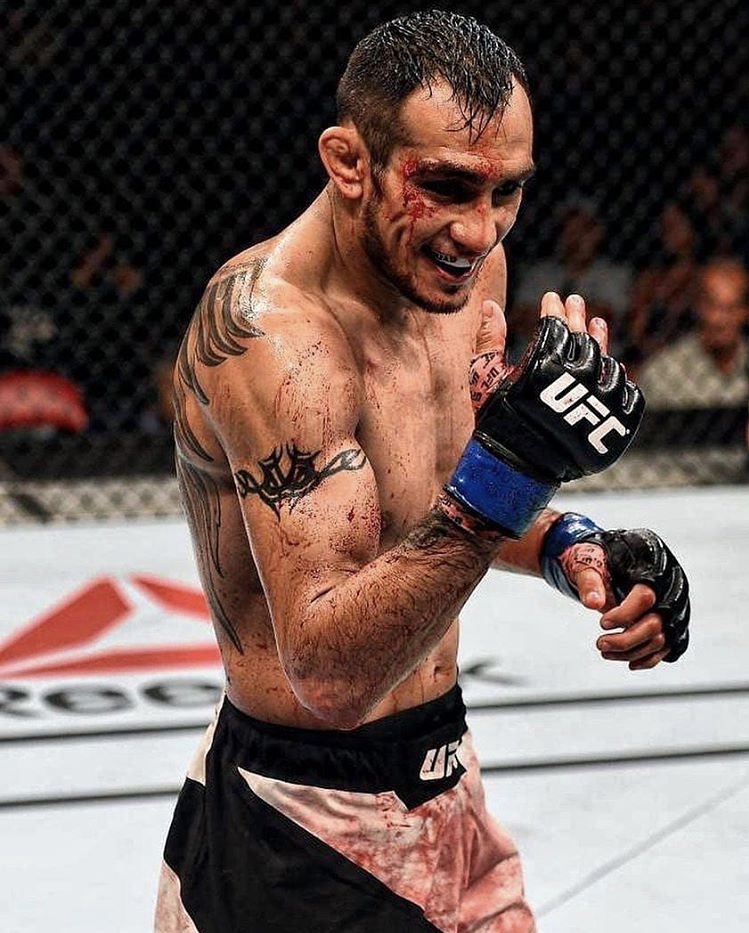
Following a decision loss to Michael Johnson in 2012, something clicked in Ferguson. What followed was a six-year reign of terror that saw him compile an astonishing 12-fight win streak in the deepest division in the sport.
This period, from late 2013 to mid-2019, was peak “El Cucuy.” He was a boogeyman in every sense, a fighter whose style was a chaotic blend of freestyle wrestling, 10th Planet Jiujitsu (where he earned a black belt under Eddie Bravo), and unorthodox, flowing striking that included spinning elbows, Imanari rolls, and a jab that felt like a piston. His cardio was legendary, often seeming to gain energy as his opponents faded under his relentless forward pressure.
The names on his hit list read like a who’s-who of the lightweight elite, Edson Barboza, Rafael dos Anjos, Kevin Lee, Anthony Pettis, and Donald “Cowboy” Cerrone were all drowned in deep waters. His bouts were must-see TV, frequently earning “Fight of the Night” honors for their sheer violence and entertainment value.
The pinnacle of this run came at UFC 216 in October 2017, where he submitted Kevin Lee with a triangle choke to become the Interim UFC Lightweight Champion. It was a validation of his dominance, a tangible symbol of his place at the top of the mountain.
A Complicated Legacy And Enduring Impact
No discussion of Tony Ferguson’s career is complete without mentioning the cursed saga of his scheduled bouts against Khabib Nurmagomedov. Booked five separate times, the fight that many considered the greatest stylistic matchup in lightweight history never materialized due to a series of injuries, weight-cut issues, and a global pandemic. The fight that never was remains one of the sport’s greatest “what ifs.”
Following his TKO loss to Justin Gaethje at UFC 249 in May 2020, a fight he took on short notice during the height of the COVID-19 pandemic, ending his historic streak, Ferguson’s career entered a difficult downturn. He has since endured a long losing skid, facing a new generation of contenders.
Yet, even in defeat, Ferguson’s impact is undeniable. He is widely regarded as one of the greatest lightweights to never hold the undisputed title. His influence extends beyond his record, he embodied a warrior spirit that resonated deeply with fans. His eccentric personality, cryptic interviews, and unique training methods made him a cult hero. He showed the world a style of fighting that was creatively violent and wholly his own.
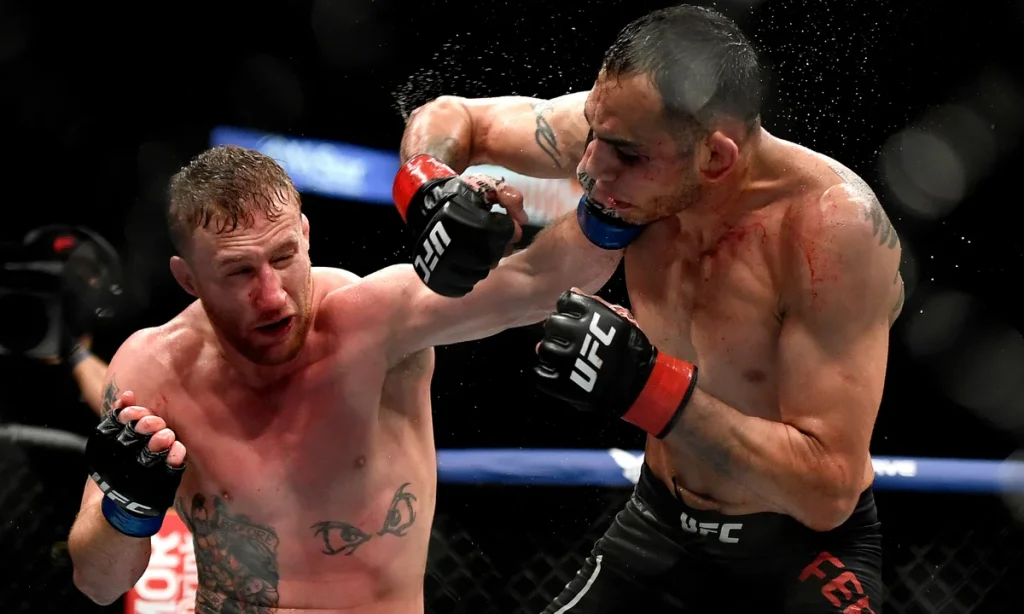
Today, as the sun sets on his fighting days, Tony Ferguson remains a beloved figure. His legacy is not defined by recent losses but by a half-decade of dominance where he was the most feared man in his division. He is, and always will be, “El Cucuy”, the boogeyman who came from the Midwest to haunt the dreams of lightweights inside the Octagon.


