

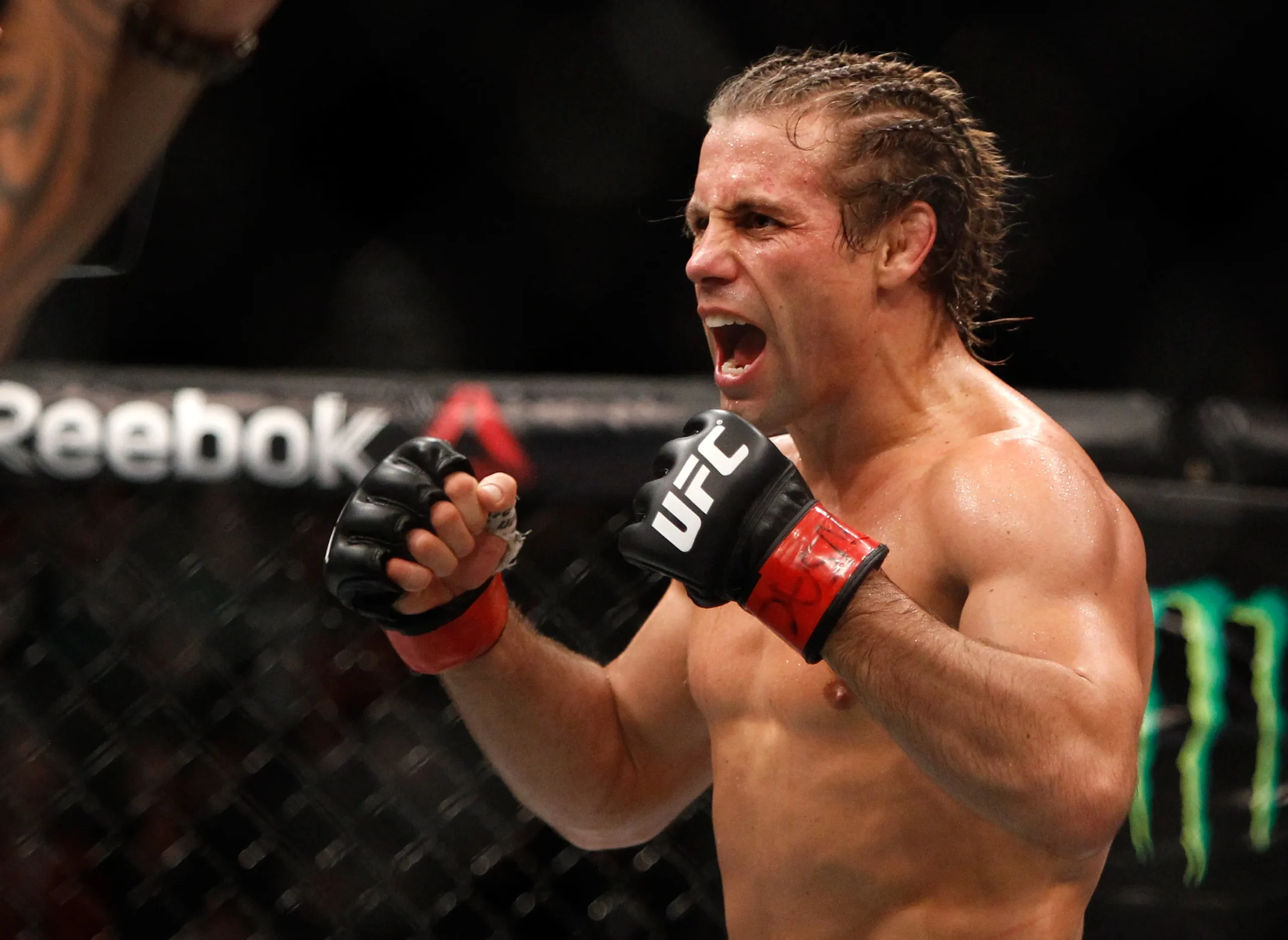
In the sprawling history of mixed martial arts, there are champions who held gold, and then there are pioneers who built the stage that the gold now rests upon. Urijah Faber is undeniably both, but his true legacy lies in the latter.
Before “The California Kid” arrived, the lighter weight classes, specifically featherweight and bantamweight, were often viewed as intermission entertainment between the heavyweight collisions that drove the sport’s early box office. Faber changed the equation. With charisma to burn, a blinding smile, and a frantic, relentless fighting style, he forced the world to pay attention to the little guys.
From the blue cage of the WEC to the bright lights of the UFC, and now as the don of one of the sport’s premier academies, Faber’s imprint on MMA is indelible.
From Isla Vista To The Mats: The Foundation
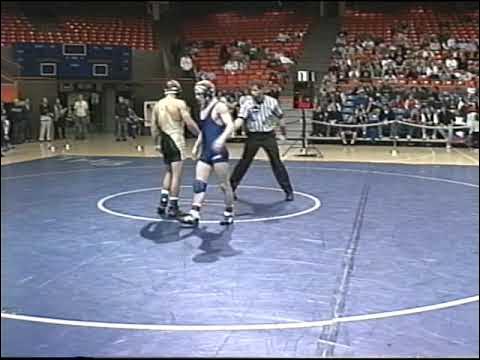
Born in Isla Vista, California, in 1979, Faber’s athletic destiny was forged on the wrestling mats. He wasn’t just an athlete, he was a natural competitor bred in the intense California wrestling circuit.
Faber became a standout at Lincoln High School before taking his talents to the University of California Davis. At UC Davis, he didn’t just compete, he excelled, becoming a two-time NCAA Division I national qualifier. More importantly, college was where Faber developed the engine that would become his trademark. His style wasn’t about stalling, it was about constant movement, chain wrestling, and an unbreakable will, attributes that translated seamlessly into the nascent world of MMA in the early 2000s.
Graduating with a degree in Human Development, Faber quickly realized his development as a combatant was far from over. He dove headfirst into the regional MMA scene, tearing through promotions like Gladiator Challenge and King of the Cage, building a record and a reputation that the big leagues could no longer ignore.
The King Of The Blue Cage: The WEC Peak
To understand Urijah Faber, you must understand the World Extreme Cagefighting (WEC) era. Before Zuffa purchased the promotion and eventually folded it into the UFC, the WEC was the premier battleground for weight classes 155 pounds and below. And Faber was its king.
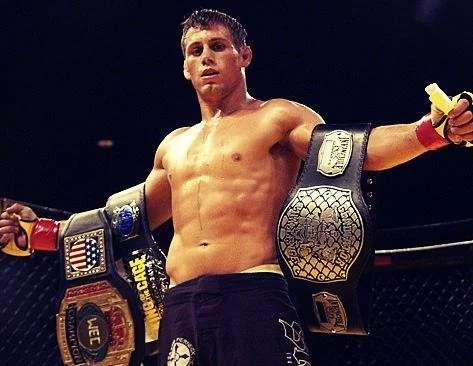
When Faber captured the WEC Featherweight Championship in 2006, he became the face of the promotion. He was the perfect ambassador, articulate and friendly outside the cage, a whirlwind of violence inside it.
This era produced some of the most vital fights in lighter-weight history. His 2008 war against Jens Pulver was a symbolic passing of the torch from the old guard to the new. His rivalry with Mike Brown brought humility and forced evolution. Perhaps most notoriously, his 2010 bout against José Aldo, where Faber fought for five rounds while his lead leg was brutalized into a unrecognizable shade of purple, cemented his legendary toughness.
During his WEC reign, Faber didn’t just defend a belt, he proved that 145-pounders could headline cards, sell tickets, and deliver main-event caliber drama.
The UFC Era And The Elusive Gold
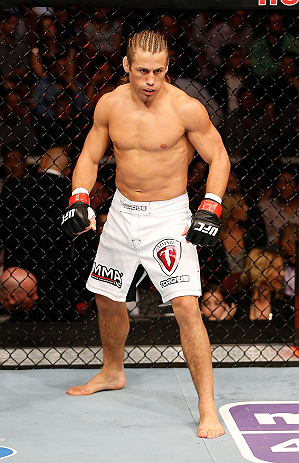
When the WEC merged into the UFC in 2011, Faber arrived as breathtakingly famous as nearly any UFC champion. He dropped to bantamweight (135 lbs) and immediately entered the title picture.
This phase of Faber’s career is defined by incredible consistency at the elite level, marked by a singular, frustrating narrative, “The Bridesmaid.” (…’always the bridemaid, never the bride’…)
Faber’s UFC tenure was hallmarked by his bitter rivalry with Dominick Cruz, a stylistic clash that defined the division for years. Faber challenged for undisputed UFC gold four times (twice at bantamweight, twice at featherweight) and for an interim belt once. He fell short in those specific bouts, losing to killers like Cruz, Renan Barao, and Frankie Edgar.
However, focusing only on the title losses misses the point. For nearly a decade in the UFC, Faber remained a top-five fighter. He was the gatekeeper to greatness, if you couldn’t beat Faber, you had no business discussing a title shot. He was a perennial contender who adapted to multiple generations of fighters, reinventing his striking game under Duane Ludwig while maintaining his devastating guillotine choke and grappling dominance.
The Don Of Sacramento: The Next Chapter
Faber officially “retired” in Sacramento in 2016 after defeating Brad Pickett, though the itch brought him back for appearances in 2019, proving he could still hang with young lions like Ricky Simon.
But today, Faber’s primary role is that of a mentor, mogul, and architect. He is the founder and patriarch of Team Alpha Male (TAM) in Sacramento. For years, TAM has been a factory for elite smaller-weight fighters, producing champions like T.J. Dillashaw (acrimonious departure notwithstanding) and Cody Garbrandt, and top contenders like Chad Mendes and Josh Emmett.
Faber has transitioned seamlessly into the role of the “Godfather” of California MMA. He manages fighters, runs multiple businesses, and serves as a crucial bridge between the raw prospects entering his gym and the corporate machine of the UFC. He can be found cornering his fighters, his notoriously laid-back demeanor offering a calming presence amidst the chaos of fight night.

While he may never have wrapped the undisputed UFC belt around his waist, Urijah Faber’s legacy is secure. He is a UFC Hall of Famer who took the “little guys” out of the prelims and put them on the poster, ensuring that speed, technique, and non-stop scrambles were given the respect they deserved. The modern landscape of combat sports, lit up by stars at 135 and 145 pounds, was built on the foundation laid by The California Kid.


