

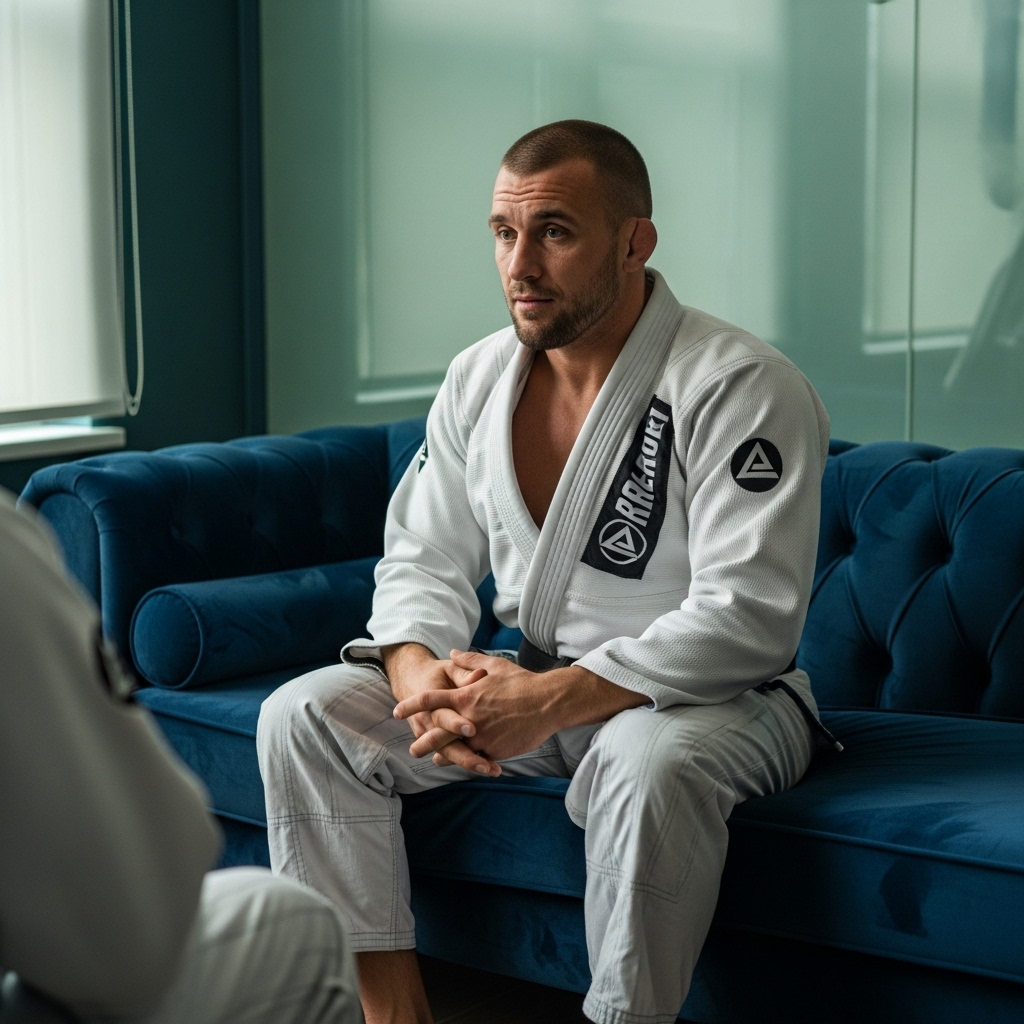

Cleveland, OH – In a move that has baffled mental health professionals and delighted local grappling enthusiasts, Cleveland resident, Dale Plimpton, has traded his therapist’s couch for the unforgiving embrace of the jiu-jitsu mat. Plimpton, 37, claims he was inspired by a podcast featuring a “motivational guru” who espoused the healing power of “choking out your demons” – literally.
“I was listening to The Alpha Bro Experience,” Plimpton explained, wincing slightly as he adjusted his cauliflower ear. “This guy was saying how jiu-jitsu is like, a metaphor for life, man. You get taken down, you get submitted, but you keep fighting. It’s like, a journey, you know?”
Plimpton, who had been attending therapy for anxiety and mild depression, decided to take the podcast’s advice to heart. “I figured, why pay someone to listen to my problems when I can pay someone to choke me until I see stars?” he reasoned.
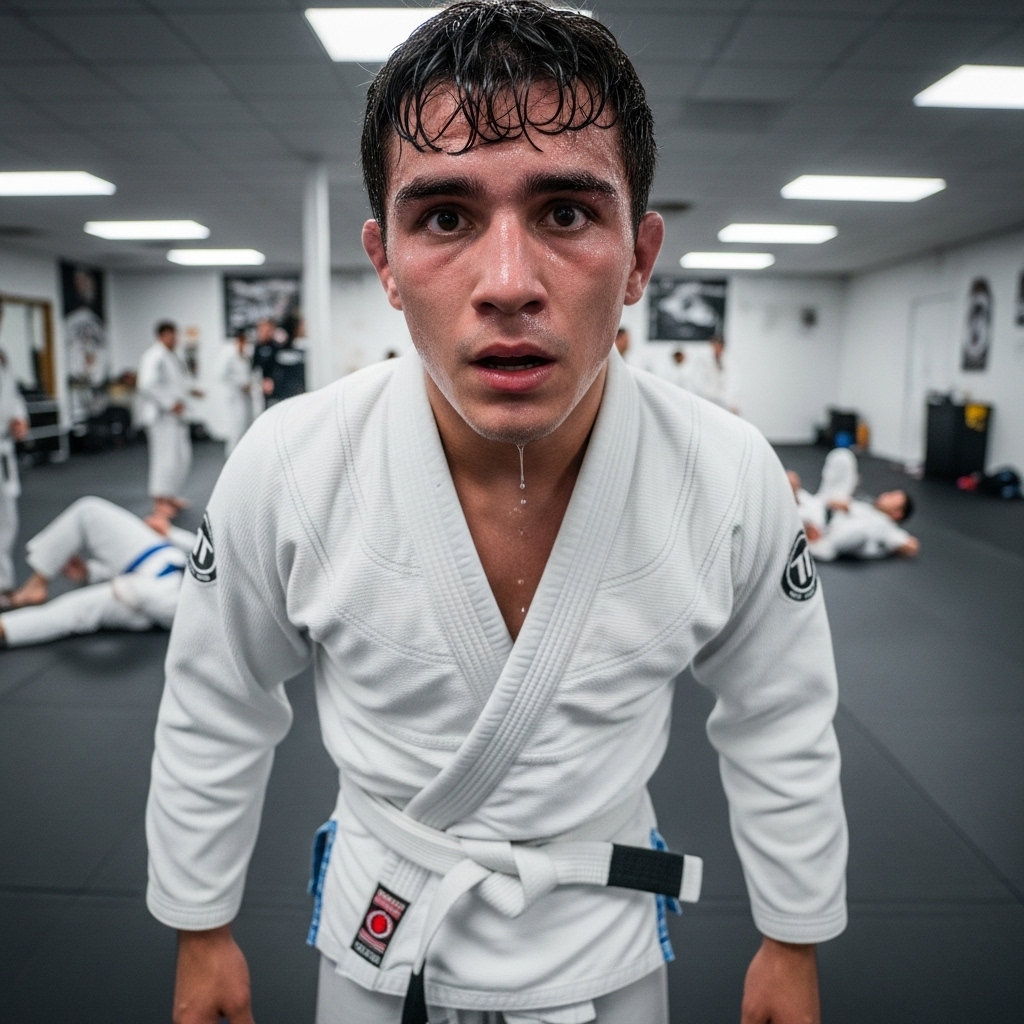
Initially, Plimpton’s jiu-jitsu journey seemed promising. He enjoyed the physical exertion, the camaraderie of his training partners (who mostly ignored his attempts to discuss his feelings), and the occasional fleeting moment of triumph when he managed to escape a particularly brutal side control.
However, the initial euphoria soon wore off. Plimpton’s anxiety, far from being “choked out,” began manifesting in new and exciting ways. He developed an irrational fear of being double-legged in public, started having nightmares about being trapped in an inescapable triangle choke, and found himself obsessively analyzing his training partners’ body language for signs of impending attacks.
His depression, too, took a turn for the worse. The constant physical pain, the frustration of being repeatedly submitted by smaller, more skilled opponents, and the growing realization that his life was not, in fact, a jiu-jitsu metaphor, led to a profound sense of hopelessness.
“I thought I was going to become some kind of zen warrior,” Plimpton lamented, nursing a bruised rib. “Instead, I’m just sore, tired, and increasingly convinced that everyone is out to get me.”
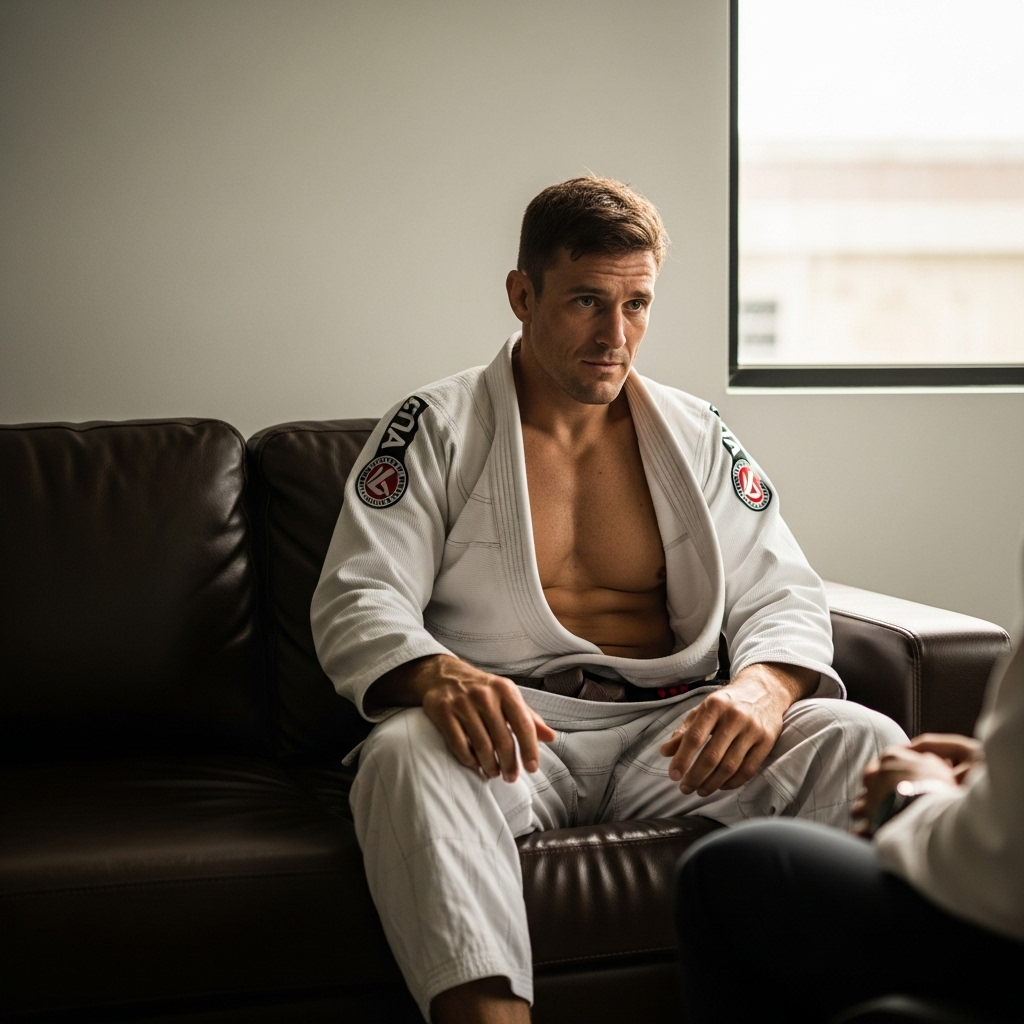
Plimpton’s therapist, Dr. Emily Carter, expressed concern. “While exercise can be beneficial for mental health, it’s not a substitute for therapy,” she stated. “Jiu-jitsu is a great sport, but it’s not designed to address underlying emotional issues. In Dale’s case, it seems to have exacerbated his problems.”
Despite the mounting evidence that his jiu-jitsu-only approach is backfiring, Plimpton remains undeterred. “I’m not giving up,” he declared, his voice filled with a mixture of stubbornness and delusion. “I just need a new gi. I heard that it really steps up your game!”
Meanwhile, local mental health professionals are bracing for a potential influx of patients inspired by self-help podcasts and the misguided belief that physical violence is a viable form of therapy.


